From Running Rats to Brain Maps: A Nobel Odyssey
63 Degrees North26 Marras 2024

From Running Rats to Brain Maps: A Nobel Odyssey

When the phone rang 10 years ago while Norwegian neuroscientist May-Britt Moser was in a particularly engaging lab meeting, she almost didn't answer it.

Good thing she did!

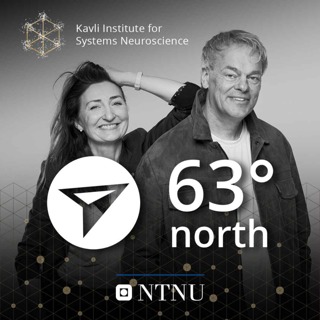
It was Göran Hansson, secretary of the Nobel Committee for Physiology or Medicine, with the news: May-Britt Moser and Edvard Moser, along with their mentor and colleague John O’Keefe from the University College London, had just won the Nobel Prize in Physiology or Medicine for their discoveries of two types of brain cells that work together to function like a GPS in the brain.

That system allows animals -including us - to know where they are, and navigate to where they want to go.

This was a groundbreaking discovery because it gave us critical insight into how an area of the brain, far from the normal sensory inputs of sight, sound and touch, constructs its own way of understanding space. And, because this same area of the brain, and our ability to navigate, are affected early on in Alzheimer's patients, it offers an inroad for clinicians studying the disease. In fact, the KG Jebsen Centre for Alzheimer's Disease, a part of the Mosers' Kavli Institute, is working to bring these fundamental insights about the brain to clinical practice.

This episode is a celebration of the 10th anniversary of the Nobel award.

To make it, I cracked open a time capsule of sorts: When the Mosers first learned that they had won the scientific world's highest honour, I ran down to their lab and recorded everything! The files in this podcast are from that day and the heady days afterwards.

My guests on today's episode are May-Britt Moser and Edvard Moser.

You can also find lots more material, including videos, more popular science articles and background information on this webpage.


Hosted on Acast. See acast.com/privacy for more information.

Jaksot(35)

What babies can tell us – and why we need to listen

What babies can tell us – and why we need to listen

If you've ever seen an infant lying on its back, you've surely seen them endlessly waving their arms and legs in seemingly haphazard ways. And crying? To the uneducated eye and ear, it does all seem a...

27 Joulu 202541min

ENCORE: When the doctor is out

ENCORE: When the doctor is out

ENCORE: This episode was first published in Oct. 2023. Sierra Leone used to be the most dangerous place in the world to give birth. Without enough doctors to do C-sections, women and babies were dying...

18 Syys 202534min
ENCORE: Running rats and healing hearts

ENCORE: Running rats and healing hearts

ENCORE: This episode was first published in Sept. 2023.In 1998, a young Norwegian exercise physiologist found that a technique he had used to help Olympic athletes could help heart patients too. But h...

14 Elo 202534min
Walrus tusks were Viking age gold

Walrus tusks were Viking age gold

Historians have floated a half-dozen theories for why Viking Greenland settlements suddenly vanished in the 1300s and 1400s, after nearly 500 years of occupation. Was it climate change, the Black Deat...

10 Heinä 202530min

An accidental discovery: From failed experiment to new antibiotic

An accidental discovery: From failed experiment to new antibiotic

NTNU professor Marit Otterlei nearly threw out the contaminated cell culture where she and her colleagues were testing a new cancer drug.The problem arose on a hot summer day, in Trondheim, in a count...

13 Kesä 202528min
New clues from old bones: Norwegian Vikings were very, very violent

New clues from old bones: Norwegian Vikings were very, very violent

We may think the Vikings were all the same, but it turns out that Viking violence wasn’t the same everywhere. New research shows that Norwegian Vikings were buried with 50 times more weapons—and had ...

15 Huhti 202531min
Old flames die hard – the saga of solar cookers

Old flames die hard – the saga of solar cookers

Jimmy Chaciga, a PhD research fellow at Makerere University in Uganda, thinks he has what it will take to get Ugandan households to adopt solar-powered cookers. First, cookers need to be simple to ope...

14 Helmi 202521min

Suosittua kategoriassa Tiede

rss-mita-tulisi-tietaa
tiedekulma-podcast
rss-poliisin-mieli
docemilia
rss-duodecim-lehti
utelias-mieli
radio-antro
filocast-filosofian-perusteet
rss-laakaripodi
rss-lihavuudesta-podcast
rss-sosiopodi
ihanat-ipanat
sotataidon-ytimessa
mielipaivakirja
rss-radplus
rss-opeklubi