Episode 377: GLP-1 Anti-Obesity Medications Update-Efficacy, Muscle Risk, and Future

Episode 377: GLP-1 Anti-Obesity Medications Update-Efficacy, Muscle Risk, and Future

Episode Summary: The Cardiometabolic Revolution of Semaglutide, Tirzepatide, and Beyond


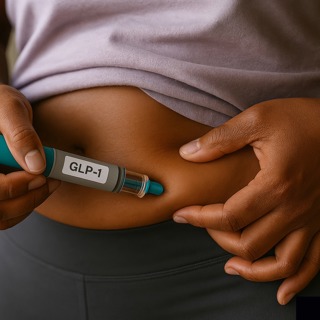
This episode provides a comprehensive, evidence-based update on GLP-1 receptor agonists (anti-obesity medications), featuring Dr. Jordan Feigenbaum, Dr. Austin Baraki, and Dr. Spencer Nadolsky. The hosts review the rapid evolution of these drugs—from short-acting injectables to potent multi-agonists like Tirzepatide (Mounjaro/Zepbound) and Retatrutide—which now achieve weight loss efficacy rivaling bariatric surgery.


The discussion clarifies the broad, weight-independent benefits these drugs offer for cardiovascular, renal, and liver health (CKM Syndrome). The experts address common concerns, including the high incidence of gastrointestinal side effects and the heavily debated risk of muscle mass loss, concluding the risk is often overblown and easily mitigated by resistance training and adequate protein intake. Finally, they discuss the biggest hurdle to access: cost, and the role of newer oral and compounded options in the evolving landscape.


⏱️ Episode Timestamps

  • 00:00 Welcome and Introductions
  • 00:05:48 Defining GLP-1 and the Incretin Effect
  • 00:08:06 Debunking "Nature's Ozempic" (DPP-4 resistance)
  • 00:11:17 Evolution of GLP-1 Drugs (Longer duration, higher potency)
  • 00:14:35 Defining and Discussing "Food Noise"
  • 00:19:43 Semaglutide Efficacy (STEP & SUSTAIN Trials)
  • 00:22:36 Tirzepatide Efficacy (SURMOUNT Trials)
  • 00:24:50 Triple Agonist Pipeline (Retatrutide)
  • 00:28:04 Oral Options and Future Accessibility (Orforglipron)
  • 00:33:10 Weight-Independent Cardio Benefits (SELECT Trial)
  • 00:38:12 Benefits for Kidney and Liver Health (CKM Syndrome)
  • 00:41:47 Emerging Benefits (Sleep Apnea, Addiction, Cancer)
  • 00:48:20 Common Side Effects (Nausea, Constipation, Fatigue)
  • 00:52:59 Rare/Serious Risks (Pancreatitis, NAION)
  • 00:58:36 Muscle Mass Loss Concern (Hype vs. Data)
  • 01:13:44 Biggest Hurdle: Cost and Prior Authorization
  • 01:16:50 Compounded Versions vs. Research Chemicals
  • 01:19:57 Role of Older Anti-Obesity Medications and Microdosing
  • 01:24:41 Final Summary


🔗 Resources and Next Steps

Work with Experts on Cardiometabolic Health:

Connect with Dr. Austin Baraki and Dr. Spencer Nadolsky: https://joinvineyard.com/

For evidence-based resistance training programs: barbellmedicine.com/training-programs

For individualized medical and training consultation: barbellmedicine.com/coaching

Explore our full library of articles on health and performance: barbellmedicine.com/resources

To join Barbell Medicine Plus and get ad-free listening, product discounts, exclusive content, and more: https://barbellmedicine.supercast.com/

I. Basic Science and The Evolution of Anti-Obesity Medication

Defining GLP-1 and the Incretin Effect

GLP-1 (Glucagon-like peptide 1) is a naturally occurring peptide hormone released by the intestines after food ingestion.1 It plays a role in the incretin effect, which enhances insulin secretion from the pancreas.2 However, natural GLP-1 is quickly broken down by the DPP-4 enzyme, limiting its efficacy.3 Modern GLP-1 receptor agonists (like Semaglutide and Tirzepatide) are synthetic analogs engineered to be resistant to DPP-4 breakdown, allowing them to stick around longer and reach receptors in the brain to modulate appetite.


The concept of food noise describes the persistent, relentless, non-hunger-related thoughts about food that many individuals with obesity experience.5 Patients often report that the cessation of this food noise is one of the most profound effects of the medication, freeing up cognitive energy previously dedicated to ruminating over food.


The Rapidly Advancing Pipeline


The evolution of this drug class has been defined by three trends:

  1. Duration: Moving from twice-daily injections (Exenatide) to weekly injections (Ozempic) and future monthly options.
  2. Potency: Increasing efficacy through molecular engineering and multi-agonist targeting (e.g., Tirzepatide hitting GLP-1 and GIP receptors).7
  3. Tolerability: Improving the side effect profile, making newer agents easier to tolerate.


Upcoming agents include oral options like Orforglipron and high-dose oral Semaglutide, which promise easier administration and potentially lower costs.8 Triple agonists like Retatrutide are showing efficacy in the mid-20% total weight loss range, rivaling metabolic surgery outcomes.


II. Efficacy and Broad Health Benefits


Weight Loss Efficacy

The clinical data demonstrates significant efficacy, classifying these drugs as game-changers:

  • Semaglutide (Ozempic/Wegovy): Averages around 15% total body weight loss.10
  • Tirzepatide (Mounjaro/Zepbound): Averages 20-21% total body weight loss, generally showing superiority and improved tolerability compared to Semaglutide.11
  • Pipeline Agents (Retatrutide): Showing potential for 24-25% total weight loss, pushing pharmacological intervention into the same league as bariatric surgery.


Weight-Independent Organ Protection (CKM Syndrome)


A significant portion of the benefit derived from these medications is weight-independent, meaning it's separate from the mass lost.12 The drugs exert pleiotropic (multiple) effects across organ systems, leading to the coining of CKM Syndrome (Cardiovascular-Kidney-Metabolic Syndrome).


  • Cardiovascular Health: The SELECT trial demonstrated a radical reduction in Major Adverse Cardiovascular Events (MACE), with evidence suggesting at least two-thirds of this benefit is independent of the weight lost.
  • Renal and Liver Health: Trials like FLOW are demonstrating benefits for Chronic Kidney Disease (CKD) progression.14 Furthermore, resolution or significant improvement of Fatty Liver Disease is commonly observed once weight loss exceeds the 7.5-10% threshold.


Emerging and Future Benefits

Research is exploring the impact of GLP-1 agonists on:


  • Obstructive Sleep Apnea (OSA): Leading to resolution or reduction in severity, confirmed in trials.
  • Addiction: Early anecdotal and some retrospective data show reduced alcohol consumption, with potential benefits being explored for gambling and opioid addiction due to strong effects in the brain's reward center.
  • Neuroprotection and Cancer: The potential for favorable effects on neurodegenerative disease and certain adiposity-associated cancers is under investigation.


III. Side Effects and Mitigating Muscle Loss Concerns

Common and Rare Side Effects

The vast majority of side effects are Gastrointestinal and highest during the initial dose escalation:

  • Nausea: Most common, but typically resolves over time. Management includes smaller, more frequent meals and temporarily lower-fat diets.
  • Constipation: Persistent and requires active management with fiber and potentially laxatives.
  • Rare Risks: Pancreatitis is a common concern but has shown no increased incidence compared to placebo in trials. Gallstone development is linked to rapid weight loss by any mechanism, including bariatric surgery.


Muscle Mass Loss: Hype vs. Data


The concern that these agents cause a unique, disproportionate amount of skeletal muscle loss is largely overblown hype.


  • Initial Subgroup Analysis: Early analysis of Semaglutide trials suggested a higher proportion of fat-free mass loss (around 38%) than expected (25%). This was often cited as evidence of muscle catabolism.
  • Physiological Reality: Experts suggest that much of the observed fat-free mass loss includes fluid shifts (glycogen, water) rather than pure skeletal muscle. Tirzepatide trials showed fat-free mass loss closer to the expected 25%.
  • Muscle Quality Improves: Studies like SEMI-LEAN have shown that in patients with sarcopenia/obesity, muscle function (quality) actually improves despite some lean mass loss.
  • Mitigation: The solution to minimizing any proportional muscle loss is simple: resistance training (2-3 days per week) and high protein intake (1.0 to 1.2 g/kg of body weight). Exercise is the primary controller here, minimizing the effect of the agents on the muscle compartment.


IV. Access, Cost, and Future Outlook

The Biggest Hurdle: Cost

The primary barrier to access remains cost, with list prices for branded medications often exceeding $1,000 per month, despite lower net costs for manufacturers.18 Insurance approval often requires complex Prior Authorization (PA) processes, which overwhelm standard primary care practices.


The Role of Compounding and Older Medications


  • Compounded Versions: Compounded versions are cheaper but lack safety and efficacy data from controlled trials. There are risks associated with the source and purity of the active pharmaceutical ingredient.19
  • Older Medications: Older anti-obesity medications (e.g., Phentermine/Topiramate) still have a role, offering proven efficacy (though less potent) and significantly lower cost, serving as a bridge until GLP-1 prices decline.
  • Future Trend: Prices are expected to drop significantly in the next 5-10 years, making the FDA-approved versions more accessible and rendering compounded versions largely obsolete.


Our Sponsors:
* Check out FIGS and use my code FIGSRX for a great deal: https://wearfigs.com
* Check out Factor and use my code factormeals.com/bbm50off for a great deal: https://www.factor75.com
* Check out Quince and use my code BBM for a great deal: https://www.quince.com
* Check out Ten Thousand and use my code PODCAST15 for a great deal: https://www.tenthousand.cc


Advertising Inquiries: https://redcircle.com/brands

Tämä jakso on lisätty Podme-palveluun avoimen RSS-syötteen kautta eikä se ole Podmen omaa tuotantoa. Siksi jakso saattaa sisältää mainontaa.

Jaksot(448)

Is It Safe to Train When the Air Is Full of Wildfire Smoke?

Is It Safe to Train When the Air Is Full of Wildfire Smoke?

Parts of the country now get a few weeks of wildfire smoke every year, and the obvious question is whether there is a point where the air is bad enough that the workout costs you more than it gives yo...

24 Syys 37min

Do You Need a Calorie Surplus to Build Muscle? | Dr. Eric Helms

Do You Need a Calorie Surplus to Build Muscle? | Dr. Eric Helms

Most lifters have been told they need to eat in a Calorie surplus to build muscle. That rule has always come with a list of exceptions: unless you're new, unless you're carrying extra body fat, unless...

17 Syys 2h 1min

Is Obesity A Muscle Problem?

Is Obesity A Muscle Problem?

Muscle is where most of the glucose goes, and muscle insulin resistance is the first thing that breaks on the road to type 2 diabetes. Both of those are true, and neither one means that building more ...

4 Syys 1h 17min

Who Needs Testosterone, and Who's Not Getting It I Signal Episode 4

Who Needs Testosterone, and Who's Not Getting It I Signal Episode 4

Most men who start testosterone never needed it, and some who genuinely do never get treated. In the final episode of the Signal series, Dr. Jordan Feigenbaum and Dr. Austin Baraki work through who ac...

27 Elo 1h 26min
Your Fat Has a Storage Limit

Your Fat Has a Storage Limit

In 2004 a surgeon removed about ten kilograms of fat from fifteen women and measured everything that mattered. Nothing improved. Four years later, it still hadn't.That result should have ended an argu...

20 Elo 49min

Lifting and longevity: is 1 hour a week really the limit? Plus GLP1s and mood, training with ME/CFS, and Protein vs. Calories

Lifting and longevity: is 1 hour a week really the limit? Plus GLP1s and mood, training with ME/CFS, and Protein vs. Calories

A popular paper claimed the longevity benefit of lifting disappears once you train more than an hour a week. It's a real paper, but the claim is a misread. This is the free cut of this month's Direct ...

12 Elo 46min
The FDA Voted for 6 Peptides. Its Own Scientists Said No

The FDA Voted for 6 Peptides. Its Own Scientists Said No

An FDA advisory committee just voted to open a legal compounding supply line for six of seven peptides, including BPC-157 and TB-500, over the objection of the FDA's own scientists, who recommended ag...

7 Elo 1h 6min
The Man Who Couldn’t Stop Gaining Weight | A Medical Mystery

The Man Who Couldn’t Stop Gaining Weight | A Medical Mystery

A previously healthy 21-year-old shows up with seven months of headaches and 30-plus pounds of weight gain he can’t explain. He’s eating the same and training more, and the scale climbs anyway. We han...

31 Heinä 1h 10min

Suosittua kategoriassa Terveys ja hyvinvointi

unicast
psykopodiaa-podcast
aamukahvilla
vakeva-elama-viisaampi-mieli-vahvempi-keho
tiedenaiset-podcast
meditaatiot-suomeksi
rss-pitaisko-erota
rss-pt-paahtio
voi-hyvin-meditaatiot-2
rss-hereilla
rss-kuumilla-aalloilla
terapiassa
paritellen
selviytyjat-tarinoita-elamasta
katilon-kahvitunti
paaasia-podcast
rss-uplevel-by-sonja-hannus
rss-yogaia-kohti-hyvaa-unta
rss-vapaudu-voimaasi
rss-rentoudu-podcast-rentoutumiseen-hanna-viljanmaa