Think Thursday: The Neuroscience of Anticipation

Think Thursday: The Neuroscience of Anticipation

Episode Summary

In this Think Thursday episode, Molly explores why December feels so emotionally intense and why anticipation plays such a powerful role in our thoughts, feelings, and habits. Anticipation is not just psychological. It is driven by the brain's predictive systems that simulate the future long before it arrives.

Using findings from neuroscience, including research highlighted in Neuron, University College London, Stanford University, and studies on dopamine and reward processing, Molly explains how imagining the future changes our emotional state in the present. She shows how anticipation can create craving, heighten anxiety, and influence behavior before anything even happens.

Importantly, she connects this science to behavior change. When we understand anticipation, we gain the ability to shape our emotional experience, support our habit goals, and build a stronger relationship with our future selves.

What You Will Learn

  • Why the brain is not reactive but predictive
  • How the prospection network simulates possible futures
  • Why anticipation activates the same regions involved in memory and emotion
  • How dopamine spikes during anticipation more than during reward
  • Why the holidays intensify emotional forecasting
  • How the brain treats future you similarly to a stranger
  • How anticipation contributes to cravings, stress, and anxiety
  • Practical strategies for using anticipation intentionally in behavior change

Key Insights from the Episode

  • Anticipation is a physiological experience. Heart rate, dopamine, and emotional readiness all shift based on prediction.
  • December amplifies anticipation because the brain is projecting ahead using vivid emotional memories from past holidays.
  • Many habit patterns with alcohol, eating, and spending are anticipatory rather than reactive in the moment.
  • The medial prefrontal cortex becomes less active when imagining the distant future, which explains why future you feels separate.
  • Mental rehearsal activates the same neural pathways as actual behavior and can support intentional change.
  • Anticipatory framing can influence how stressful events are interpreted afterward.

Practical Tools from the Episode

1. Anticipate the emotional landscape, not the event.
Shift from worrying about what will happen to planning for how you want to feel.

2. Rehearse your chosen identity.
Imagine yourself acting in alignment with your values to strengthen the neural pathways that support follow-through.

3. Shorten the distance to future you.
Ask questions like:

  • What will tonight's me thank me for
  • What does tomorrow morning's me need

4. Anticipate urges with curiosity.
Recognize that urges are forecasts of relief, not emergencies.

5. Create micro anticipations that ground you.
Examples include expecting the first sip of warm tea, a quiet step outside, or the feeling of waking up proud the next morning.


Studies and Sources Mentioned

  • 2023 review in Neuron on the prospection network
  • University College London study on dopamine release during anticipatory uncertainty
  • Stanford University research on future self representation in the brain
  • Studies from the University of Michigan and Max Planck Institute on dopamine and anticipation
  • 2024 Psychological Science study on anticipatory framing and stress interpretation
★ Support this podcast ★

Tämä jakso on lisätty Podme-palveluun avoimen RSS-syötteen kautta eikä se ole Podmen omaa tuotantoa. Siksi jakso saattaa sisältää mainontaa.

Jaksot(413)

More Sober October: Make it An Experiment, Not an Exam

More Sober October: Make it An Experiment, Not an Exam

What if the goal of More Sober October isn’t a perfect calendar—but learning something about your relationship with alcohol?In this episode, Molly shares how to approach October as an experiment inste...

28 Syys 23min
Think Thursday: Alzheimer’s Prevention and What the Latest Research Tells Us

Think Thursday: Alzheimer’s Prevention and What the Latest Research Tells Us

World Alzheimer’s Day is a good reminder that the story around Alzheimer’s disease is changing.In this Think Thursday episode, Molly looks at what we know now about earlier diagnosis, blood-based biom...

24 Syys 18min
How Much Alcohol is Safe? Rethinking Drinking Guidelines

How Much Alcohol is Safe? Rethinking Drinking Guidelines

What does “drink less” actually mean?In this episode of the Alcohol Minimalist podcast, Molly explores the changing alcohol guidelines and why there isn’t one simple number that guarantees a “safe” le...

21 Syys 20min
Think Thursday: Why Familiar Feels True-When Thoughts Become Beliefs

Think Thursday: Why Familiar Feels True-When Thoughts Become Beliefs

What happens when a thought gets repeated so often that it stops feeling like a thought and starts feeling like a fact?In this Think Thursday episode, Molly explores the illusory truth effect, process...

17 Syys 15min
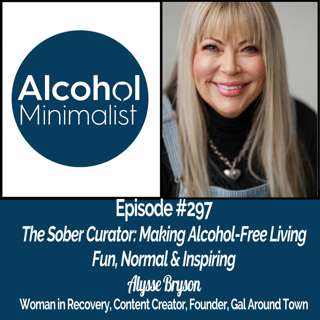
The Sober Curator: Making Alcohol-Free Living Fun, Normal & Inspiring with Alysse Bryson

The Sober Curator: Making Alcohol-Free Living Fun, Normal & Inspiring with Alysse Bryson

What does it look like to build a fun, fulfilling life with less alcohol—or none at all?In this episode of the Alcohol Minimalist Podcast, Molly talks with Elise Bryson, CEO and curator of The Sober C...

14 Syys 45min
Revisiting Think Thursday: Neurodivergence and The Brain's Energy Economy

Revisiting Think Thursday: Neurodivergence and The Brain's Energy Economy

In this revisited Think Thursday episode, Molly explores ADHD through the lens of the brain’s energy economy—how neurodivergent brains may use mental fuel differently, and why that matters for motivat...

10 Syys 13min
Summer's Greatest Hits: Alcohol & ADHD

Summer's Greatest Hits: Alcohol & ADHD

This week on the Alcohol Minimalist Podcast, we’re revisiting the most-downloaded episode from the Alcohol & series: Alcohol & ADHD.ADHD is a personal topic for me, and it also comes up often with coa...

7 Syys 35min
Think Thursday: Hearing Health is Brain Health

Think Thursday: Hearing Health is Brain Health

We tend to think of hearing as something that happens in our ears, but hearing is really a partnership between the ears and the brain. And growing research suggests that when hearing begins to decline...

3 Syys 12min

Suosittua kategoriassa Koulutus

rss-murhan-anatomia
aamukahvilla
psykopodiaa-podcast
adhd-podi
rss-hereilla
voi-hyvin-meditaatiot-2
psykologia
rss-niinku-asia-on
rss-arkea-ja-aurinkoa-podcast-espanjasta
kesken
koulu-podcast-2
rss-liian-kuuma-peruna
ihminen-tavattavissa-tommy-hellsten-instituutti
rss-vapaudu-voimaasi
aloita-meditaatio
rss-suomen-aa-podcast
rss-luonnollinen-synnytys-podcast
ilona-rauhala
rss-valo-minussa-2
rss-narsisti