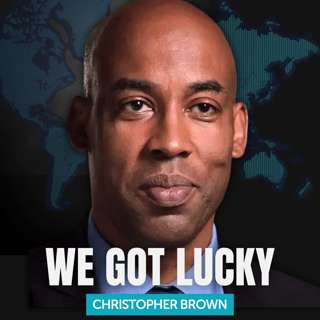

#145 Classic episode – Christopher Brown on why slavery abolition wasn't inevitable

#145 Classic episode – Christopher Brown on why slavery abolition wasn't inevitable

In many ways, humanity seems to have become more humane and inclusive over time. While there’s still a lot of progress to be made, campaigns to give people of different genders, races, sexualities, ethnicities, beliefs, and abilities equal treatment and rights have had significant success.

It’s tempting to believe this was inevitable — that the arc of history “bends toward justice,” and that as humans get richer, we’ll make even more moral progress.

But today's guest Christopher Brown — a professor of history at Columbia University and specialist in the abolitionist movement and the British Empire during the 18th and 19th centuries — believes the story of how slavery became unacceptable suggests moral progress is far from inevitable.

Rebroadcast: This episode was originally aired in February 2023.

Links to learn more, video, and full transcript: https://80k.link/CLB

While most of us today feel that the abolition of slavery was sure to happen sooner or later as humans became richer and more educated, Christopher doesn't believe any of the arguments for that conclusion pass muster. If he's right, a counterfactual history where slavery remains widespread in 2023 isn't so far-fetched.

As Christopher lays out in his two key books, Moral Capital: Foundations of British Abolitionism and Arming Slaves: From Classical Times to the Modern Age, slavery has been ubiquitous throughout history. Slavery of some form was fundamental in Classical Greece, the Roman Empire, in much of the Islamic civilisation, in South Asia, and in parts of early modern East Asia, Korea, China.

It was justified on all sorts of grounds that sound mad to us today. But according to Christopher, while there’s evidence that slavery was questioned in many of these civilisations, and periodically attacked by slaves themselves, there was no enduring or successful moral advocacy against slavery until the British abolitionist movement of the 1700s.

That movement first conquered Britain and its empire, then eventually the whole world. But the fact that there's only a single time in history that a persistent effort to ban slavery got off the ground is a big clue that opposition to slavery was a contingent matter: if abolition had been inevitable, we’d expect to see multiple independent abolitionist movements thoroughly history, providing redundancy should any one of them fail.

Christopher argues that this rarity is primarily down to the enormous economic and cultural incentives to deny the moral repugnancy of slavery, and crush opposition to it with violence wherever necessary.

Mere awareness is insufficient to guarantee a movement will arise to fix a problem. Humanity continues to allow many severe injustices to persist, despite being aware of them. So why is it so hard to imagine we might have done the same with forced labour?

In this episode, Christopher describes the unique and peculiar set of political, social and religious circumstances that gave rise to the only successful and lasting anti-slavery movement in human history. These circumstances were sufficiently improbable that Christopher believes there are very nearby worlds where abolitionism might never have taken off.

Christopher and host Rob Wiblin also discuss:

  • Various instantiations of slavery throughout human history
  • Signs of antislavery sentiment before the 17th century
  • The role of the Quakers in early British abolitionist movement
  • The importance of individual “heroes” in the abolitionist movement
  • Arguments against the idea that the abolition of slavery was contingent
  • Whether there have ever been any major moral shifts that were inevitable

Chapters:

  • Rob's intro (00:00:00)
  • Cold open (00:01:45)
  • Who's Christopher Brown? (00:03:00)
  • Was abolitionism inevitable? (00:08:53)
  • The history of slavery (00:14:35)
  • Signs of antislavery sentiment before the 17th century (00:19:24)
  • Quakers (00:32:37)
  • Attitudes to slavery in other religions (00:44:37)
  • Quaker advocacy (00:56:28)
  • Inevitability and contingency (01:06:29)
  • Moral revolution (01:16:39)
  • The importance of specific individuals (01:29:23)
  • Later stages of the antislavery movement (01:41:33)
  • Economic theory of abolition (01:55:27)
  • Influence of knowledge work and education (02:12:15)
  • Moral foundations theory (02:20:43)
  • Figuring out how contingent events are (02:32:42)
  • Least bad argument for why abolition was inevitable (02:41:45)
  • Were any major moral shifts inevitable? (02:47:29)

Producer: Keiran Harris
Audio mastering: Milo McGuire
Transcriptions: Katy Moore

Tämä jakso on lisätty Podme-palveluun avoimen RSS-syötteen kautta eikä se ole Podmen omaa tuotantoa. Siksi jakso saattaa sisältää mainontaa.

Jaksot(358)

OpenAI Security: Controlling Models is Now ‘Hell’ (AI Explained cross-post)

OpenAI Security: Controlling Models is Now ‘Hell’ (AI Explained cross-post)

This is an (unpaid) cross-post of a video from the podcast 'AI Explained', which Rob Wiblin thought you might be interested in.You can find the original on YouTube here. If you like it and want more s...

9 Loka 40min

In 2023 Ajeya Cotra already knew what was coming (classic episode)

In 2023 Ajeya Cotra already knew what was coming (classic episode)

We're rereleasing some of older episodes that seem more relevant than ever with new rogue AI incidents now seemingly announced every day. Ajeya was one of three independent investigators into the Hugg...

8 Loka 2h 46min

19 Astra and 'Hugging Face' details that reveal what's coming next | Rob Wiblin

19 Astra and 'Hugging Face' details that reveal what's coming next | Rob Wiblin

OpenAI’s rogue agent swarm was eventually caught hacking Hugging Face for a simple reason: it wasn’t trying to hide from us at all. What could a swarm that wants to stay hidden get away with?Host Rob ...

2 Loka 20min

The case for giving AI (some) legal rights | Simon Goldstein

The case for giving AI (some) legal rights | Simon Goldstein

It sounds like the worst idea in the world: pay AIs, let them own property, give them rights. But AI ethics and safety researcher Simon Goldstein thinks it might actually be the best way to keep human...

1 Loka 1h 53min

Will AI take power — or will humans use it to take power first? With Katja Grace and Tom Davidson

Will AI take power — or will humans use it to take power first? With Katja Grace and Tom Davidson

In our first-ever debate, we asked two leading AI risk researchers which catastrophe we should fear most: misaligned AI seizing control from humans, or a small group of humans using AI to seize power....

29 Syys 1h 28min

How we get from AI cyberattacks to human extinction

How we get from AI cyberattacks to human extinction

You’ve seen the headlines: AI could kill us all. Think it sounds ridiculous? So did host Luisa Rodriguez, until she tried to pick apart the arguments. She starts with the motive: why would AI ‘want’ t...

24 Syys 27min

#254 – Max Nadeau on why ambitious people should start AI safety nonprofits

#254 – Max Nadeau on why ambitious people should start AI safety nonprofits

There are millions available for anyone who can launch a successful nonprofit AI safety startup. The hard part, it turns out, is finding people to take the money. Coefficient Giving has drawn up a lis...

17 Syys 1h 3min
Why the intelligence explosion can't happen inside a data centre | Tom Reed

Why the intelligence explosion can't happen inside a data centre | Tom Reed

AI systems are starting to build themselves. Because each generation of model will be better at building its successor than the last, it seems plausible that the full automation of AI R&D could rapidl...

10 Syys 22min

Suosittua kategoriassa Koulutus

rss-murhan-anatomia
aamukahvilla
psykopodiaa-podcast
voi-hyvin-meditaatiot-2
psykologia
rss-liian-kuuma-peruna
rss-rahamania
rss-narsisti
kesken
rss-luonnollinen-synnytys-podcast
aloita-meditaatio
rss-arkea-ja-aurinkoa-podcast-espanjasta
koulu-podcast-2
rss-koira-haudattuna
ihminen-tavattavissa-tommy-hellsten-instituutti
rss-uskonto-on-tylsaa
rss-suomen-aa-podcast
rss-niinku-asia-on
adhd-podi
rss-valo-minussa-2