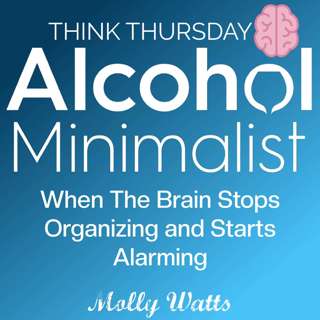

Think Thursday: When the Brain Stops Organizing and Starts Alarming

Think Thursday: When the Brain Stops Organizing and Starts Alarming

Many people are saying the same thing lately: “I’m overwhelmed by everything.”

In this Think Thursday episode, Molly explores what overwhelm actually is from a neuroscience perspective. Is it just busyness? Or is something deeper happening in the brain?

Drawing from research on the amygdala, stress hormones, working memory, and executive function, Molly explains how overwhelm is not about volume alone. It is about perceived overload and a loss of prioritization. When the brain detects too many competing demands and not enough resources, it shifts from organizing to alarming.

This episode also revisits a recent WisdomWednesday quote about replacing “I’m overwhelmed” with “I need to decide what matters most and go slow.” Molly clarifies why that statement is directionally true but not neurologically instant. She explains how language influences prediction, prediction shapes physiology, and physiology drives behavior.

What You’ll Learn

  • Why overwhelm is a perception of overload, not simply busyness
  • How the amygdala flags cognitive threat
  • What happens to the prefrontal cortex under stress
  • Why everything feels urgent when executive function is compromised
  • The difference between descriptive and prescriptive thoughts
  • How repeating “I’m overwhelmed” reinforces neural prediction loops
  • Why prioritization restores cognitive flexibility
  • How cognitive reappraisal shifts neural activity over time

Key Concepts Explained

Perceived Overload
Overwhelm occurs when the brain interprets demands as exceeding available resources.

Amygdala Activation
When ambiguity, uncertainty, and competing priorities rise, the amygdala signals threat, increasing stress hormones like cortisol and norepinephrine.

Executive Function
The prefrontal cortex is responsible for planning, sequencing, prioritizing, and organizing. Under stress, its efficiency decreases.

Descriptive vs Prescriptive Thinking
Some thoughts label experience. Others shape future experience. Repeating “I’m overwhelmed” reinforces prediction patterns that sustain the feeling.

Cognitive Reappraisal
Research shows that reinterpreting a situation increases prefrontal cortex activity and decreases amygdala activation over time.

Why Language Matters

When you repeatedly say “I’m overwhelmed,” your brain begins scanning for confirming evidence. Increased vigilance raises stress. Stress reduces clarity. Reduced clarity reinforces overwhelm.

Replacing that statement with a prioritizing phrase does not instantly shut down the alarm system. However, it recruits executive function and begins shifting neural activity toward organization and task-based thinking.

Language guides prediction.
Prediction guides physiology.
Physiology guides behavior.


Practical Reframe

Instead of:

“I’m overwhelmed.”

Try:

  • What matters most today?
  • What is the next smallest step?
  • What can wait?

This is not positive thinking. It is restoring organizing capacity.

Overwhelm signals that prioritization has collapsed. Prioritization is a skill that can be strengthened.

Behavior Change Connection

People often abandon habits when they feel overwhelmed, not because they lack discipline, but because executive function is compromised.

You cannot build new neural pathways from a chronically alarmed state.

Restoring order supports follow-through.


★ Support this podcast ★

Tämä jakso on lisätty Podme-palveluun avoimen RSS-syötteen kautta eikä se ole Podmen omaa tuotantoa. Siksi jakso saattaa sisältää mainontaa.

Jaksot(413)

More Sober October: Make it An Experiment, Not an Exam

More Sober October: Make it An Experiment, Not an Exam

What if the goal of More Sober October isn’t a perfect calendar—but learning something about your relationship with alcohol?In this episode, Molly shares how to approach October as an experiment inste...

28 Syys 23min
Think Thursday: Alzheimer’s Prevention and What the Latest Research Tells Us

Think Thursday: Alzheimer’s Prevention and What the Latest Research Tells Us

World Alzheimer’s Day is a good reminder that the story around Alzheimer’s disease is changing.In this Think Thursday episode, Molly looks at what we know now about earlier diagnosis, blood-based biom...

24 Syys 18min
How Much Alcohol is Safe? Rethinking Drinking Guidelines

How Much Alcohol is Safe? Rethinking Drinking Guidelines

What does “drink less” actually mean?In this episode of the Alcohol Minimalist podcast, Molly explores the changing alcohol guidelines and why there isn’t one simple number that guarantees a “safe” le...

21 Syys 20min
Think Thursday: Why Familiar Feels True-When Thoughts Become Beliefs

Think Thursday: Why Familiar Feels True-When Thoughts Become Beliefs

What happens when a thought gets repeated so often that it stops feeling like a thought and starts feeling like a fact?In this Think Thursday episode, Molly explores the illusory truth effect, process...

17 Syys 15min
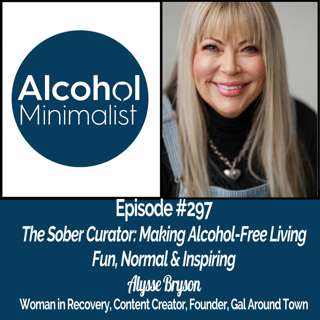
The Sober Curator: Making Alcohol-Free Living Fun, Normal & Inspiring with Alysse Bryson

The Sober Curator: Making Alcohol-Free Living Fun, Normal & Inspiring with Alysse Bryson

What does it look like to build a fun, fulfilling life with less alcohol—or none at all?In this episode of the Alcohol Minimalist Podcast, Molly talks with Elise Bryson, CEO and curator of The Sober C...

14 Syys 45min
Revisiting Think Thursday: Neurodivergence and The Brain's Energy Economy

Revisiting Think Thursday: Neurodivergence and The Brain's Energy Economy

In this revisited Think Thursday episode, Molly explores ADHD through the lens of the brain’s energy economy—how neurodivergent brains may use mental fuel differently, and why that matters for motivat...

10 Syys 13min
Summer's Greatest Hits: Alcohol & ADHD

Summer's Greatest Hits: Alcohol & ADHD

This week on the Alcohol Minimalist Podcast, we’re revisiting the most-downloaded episode from the Alcohol & series: Alcohol & ADHD.ADHD is a personal topic for me, and it also comes up often with coa...

7 Syys 35min
Think Thursday: Hearing Health is Brain Health

Think Thursday: Hearing Health is Brain Health

We tend to think of hearing as something that happens in our ears, but hearing is really a partnership between the ears and the brain. And growing research suggests that when hearing begins to decline...

3 Syys 12min

Suosittua kategoriassa Koulutus

rss-murhan-anatomia
aamukahvilla
psykopodiaa-podcast
adhd-podi
rss-hereilla
voi-hyvin-meditaatiot-2
psykologia
rss-niinku-asia-on
rss-arkea-ja-aurinkoa-podcast-espanjasta
kesken
koulu-podcast-2
rss-liian-kuuma-peruna
ihminen-tavattavissa-tommy-hellsten-instituutti
rss-vapaudu-voimaasi
aloita-meditaatio
rss-suomen-aa-podcast
rss-luonnollinen-synnytys-podcast
ilona-rauhala
rss-valo-minussa-2
rss-narsisti