
S9 Ep14: What’s next for Ukraine: Investment

S9 Ep14: What’s next for Ukraine: Investment

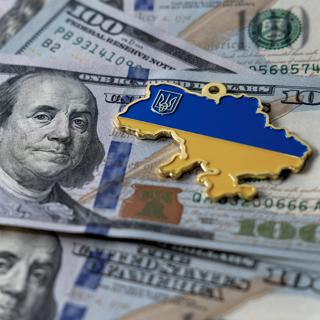
Ukraine will emerge from this war with enormous debt. The conventional wisdom treats that as an obstacle: investors weigh it before committing capital, and the burden slows the recovery before it starts. Yuriy Gorodnichenko and Maurice Obstfeld of UC Berkeley argue the opposite. A thorough restructuring of Ukraine's war debts – including, for sufficiently large obligations, outright forgiveness – is not just politically defensible but economically essential for attracting private investment.

The bill for rebuilding and growing Ukraine, Gorodnichenko estimates, is $40 billion a year: $20 billion to replace destroyed capital, $10 billion to stop Ukraine falling behind its Eastern European peers, and $10 billion to start closing the gap. Put that figure next to what Poland absorbed in FDI during its post-communist transition, or the €200 billion of Russian state assets currently immobilised in Euroclear, or the budgetary support Ukraine has been receiving since 2022 – and it looks achievable. The harder challenge, they argue, is not raising $40 billion. It is directing it: towards investment rather than consumption. Ukraine didn’t grow in the post-Soviet era at the rate that its neighbours achieved. EU accession momentum and secure borders can be a signal to investors that this time the trajectory will be different.

The research behind this episode:

Gorodnichenko, Yuriy, and Maurice Obstfeld. 2026. "You Only Live Twice: Financial Inflows and Growth in a Westward-Facing Ukraine." Economic Policy: Papers on European and Global Issues, special issue: "What's Next for Ukraine?"

To cite this episode:

Phillips, Tim. 2025. "You Only Live Twice: Financial Inflows and Growth in a Westward-Facing Ukraine." Economic Policy: Papers on European and Global Issues (podcast).

Assign this as extra listening — the citation above is formatted and ready for a reading list or VLE.

About the guests

Yuriy Gorodnichenko is a CEPR Research Fellow and Professor of Economics at the University of California, Berkeley, where he leads CEPR's Ukraine Initiative. His research spans monetary policy, fiscal policy, and the macroeconomics of growth and business cycles.

Maurice Obstfeld is a CEPR Distinguished Fellow and Class of 1958 Professor of Economics at the University of California, Berkeley. He served as Chief Economist of the International Monetary Fund from 2015 to 2018, and as a member of the Council of Economic Advisers under President Obama from 2014 to 2015. He is also a Fellow of the Econometric Society and the American Academy of Arts and Sciences.

Research cited in this episode

The discussion of debt overhang draws on a body of work from the 1980s developing-country debt crises, notably the insight that for sufficiently indebted countries, debt reduction can increase the expected value of what creditors recover. Gorodnichenko and Obstfeld apply this framework directly to Ukraine's war debts, arguing that deep restructuring – supported by bilateral official creditors, many of whom are European – is a prerequisite for private investment to follow.

The €200 billion figure for immobilised Russian central bank assets held at Euroclear is the basis for Obstfeld's proposal of a reparations loan that would give Ukraine immediate access to large-scale resources, with repayment contingent on Russian reparations. This is discussed in more detail in the related reading below.

More in the "What's Next for Ukraine?" series

This episode is the first in a three-part series based on papers presented at the inaugural Economic Policy winter conference, Paris, December 2025. Episodes 2 and 3, on rebuilding and the labour market, are forthcoming.

Related reading on VoxEU

You only live twice: A growth strategy for Ukraine — Gorodnichenko and Obstfeld's own VoxEU column summarising the key arguments in this paper: why $40 billion a year is achievable, what the policy levers are, and why the window matters.

Euroclear and the geopolitics of immobilised Russian assets — The legal and financial context behind the €200 billion of Russian central bank assets frozen at Euroclear, and what it would take to use them for a reparations loan to Ukraine.

Using the returns of frozen Russian assets to finance the victory of Ukraine — A VoxEU proposal for channelling the interest income generated by frozen Russian assets to finance Ukraine's needs, without requiring the more politically contested step of confiscating the assets themselves.

Ukraine's recovery challenge — An earlier VoxEU overview of the reconstruction task: the scale of damage, the role of EU accession, and the two-phase approach to restoring growth.

Tämä jakso on lisätty Podme-palveluun avoimen RSS-syötteen kautta eikä se ole Podmen omaa tuotantoa. Siksi jakso saattaa sisältää mainontaa.

Jaksot(483)

S9 Ep56: Decoupling from China after Trump's Trade Wars

S9 Ep56: Decoupling from China after Trump's Trade Wars

In March 2025, Apple chartered cargo flights to deliver 600 tonnes of iPhones from India to the United States. A year earlier, four in five smartphones that imported to the US came from China. One of ...

25 Syys 29min
S9 Ep55: Loosening inheritance law

S9 Ep55: Loosening inheritance law

In most of the world you do not get to choose who inherits your money. Across continental Europe, Latin America, and countries governed by Islamic law, a minimum share of your estate will be reserved ...

18 Syys 25min

S9 Ep54: Does sacking the manager work?

S9 Ep54: Does sacking the manager work?

Your football team keeps losing. The season is slipping away. One thing can be changed by Friday, and the crowd is already singing about it: sack the manager.Jan van Ours (Erasmus School of Economics,...

11 Syys 18min
S9 Ep53: Lessons from Populism in Latin America

S9 Ep53: Lessons from Populism in Latin America

The new episode of VoxTalks Economics traces the effects of South Americans populism, left and right. Alejandro Werner (Georgetown Americas Institute) is one of the authors of a new paper that traces ...

4 Syys 33min

S9 Ep52: The Dollar Anchor Is Slipping

S9 Ep52: The Dollar Anchor Is Slipping

April 2025: Liberation Day. President Trump announces sweeping new tariffs. And then, the dollar did something a safe haven currency is not supposed to do: it fell.Tarek Hassan (Boston University, CEP...

2 Syys 26min

S9 Ep51: Fiscal Populism and Monetary Policy

S9 Ep51: Fiscal Populism and Monetary Policy

There is a saying in Spanish: get burned by hot milk, and the sight of a cow makes you cry. New research implies that, decades after a populist government leaves office, the central bank it once tried...

28 Elo 16min

S9 Ep50: Tariffs, Uncertainty, and the Exchange Rate

S9 Ep50: Tariffs, Uncertainty, and the Exchange Rate

Textbook economics says a tariff should strengthen a country's currency. Since the start of 2025, as US tariffs rose ... and the dollar fell.In the first of four episodes of Voxtalks based on papers p...

26 Elo 24min

S9 Ep49: Combatting sexual harassment in the military

S9 Ep49: Combatting sexual harassment in the military

Norwegian conscripts arrive at boot camp straight out of school. They are assigned at random to a shared room and they live in it for the next eight weeks. Whatever the culture of that room turns out ...

21 Elo 21min

Suosittua kategoriassa Liike-elämä ja talous

sijotuskasti
vallattomat
psykopodiaa-podcast
mimmit-sijoittaa
rss-rahapodi
rss-oivalluksia-rahasta-elamasta
hyva-paha-johtaminen
rss-hereilla
rss-paasipodi
ostan-asuntoja-podcast
inderespodi
rss-sami-miettinen-neuvottelija
rss-karon-grilli
rss-startup-ministerio
oppimisen-psykologia
rss-sisalto-kuntoon
rss-rahamania
pomojen-suusta
lakicast
rss-seuraava-potilas