385E-421-New Aten

385E-421-New Aten

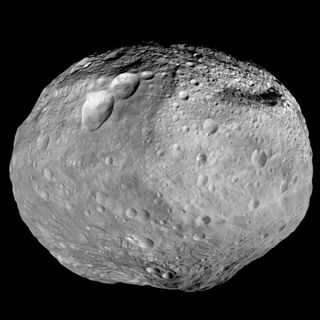
Recently my Catalina Sky Survey teammates Carson Fuls and Greg Lenoard discovered an Aten asteroid which orbits the Sun once every 272 days and on a path that crosses the orbits of Venus and Earth a number of times each year. Atens account for only about 6% of the Earth approaching asteroids that asteroid hunters discover. They are relatively dim and difficult to discover because they spend most of their time inside the Earth's orbit with their sunlit side facing away from us. For example Carson and Greg's newly discovered asteroid, 2017 WJ16, is bright enough for asteroid hunters to track for only about 50 nights every couple of years. It is about 150 feet in diameter and travels on an orbit which can bring it to a bit more than three times the Moon's distance from Earth. When 2017 WJ16 is closer to the Sun than Earth it travels faster then we do allowing it to catch and just barely cross our orbit as we both travel about the Sun. In 2020, 2017 WJ16 will make one of it's closer approaches to us when it comes to about less than 5 times the Moon's distance from our home planet. At that time it will be traveling at 2.9 miles/second relative to us which is well within reach of our current rocket technology. I suspect that in the future if the pattern of colors which 2017 WJ16 reflects, reveals a high metal or water content humans will mine it to construct and operate their colonies in space.

Tämä jakso on lisätty Podme-palveluun avoimen RSS-syötteen kautta eikä se ole Podmen omaa tuotantoa. Siksi jakso saattaa sisältää mainontaa.

Jaksot(1000)

918-Auroras from Space

918-Auroras from Space

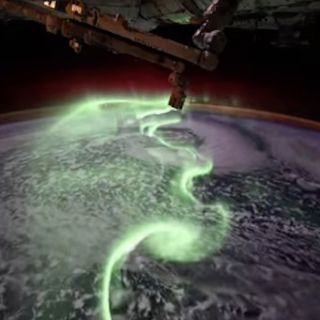
The northern lights or Aurora Borealis have fascinated humans throughout the ages. Today aurora watching is a multimillion dollar industry in places like Alaska, Canada, Norway, Sweden, Finland, Green...

25 Syys 2min
407E-448-Two PHA's

407E-448-Two PHA's

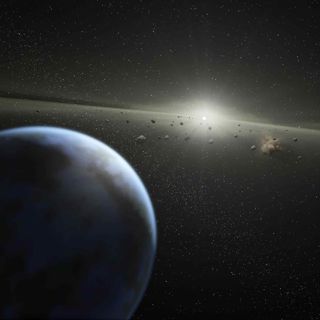
The large dangerous asteroids that we don't know about are what keep asteroid hunters going to the telescope.

22 Syys 2min
917-Space Dust

917-Space Dust

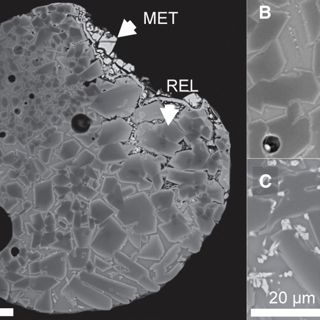
As the Earth orbits the Sun at 18.5 mi/s it sweeps up about 100 tons of micrometeorites and space dust every day of which some 14 tons eventually makes it to the ground. You can even find some of thes...

18 Syys 2min
406E-447-Nuking An Asteroid

406E-447-Nuking An Asteroid

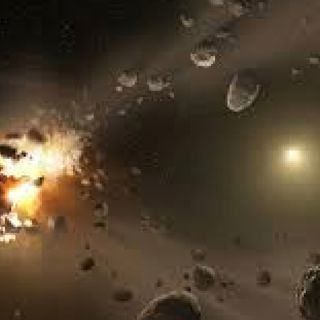
Tonight, even though the chances are extremely slim, an asteroid hunter could find a sizable asteroid on a collision course with planet Earth. If we have decades warning, the potential impactor's arri...

15 Syys 2min
916-Past Glory

916-Past Glory

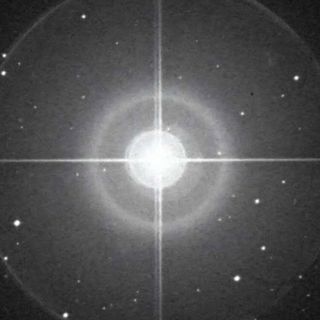
When accurately recorded historical observations do not agree with what we what we see today it is often very rewarding to find out why. In modern telescopes we see Theta Eridani to a be pair separate...

11 Syys 2min

405E-446-Asteroid Homestead

405E-446-Asteroid Homestead

In the future one can envision a space mining family boarding a descendent of the SpaceX Falcon Heavy Launch Vehicle for a trip into low Earth orbit. A few hundred miles above the Earth's surface they...

8 Syys 2min
915-Raining Comets

915-Raining Comets

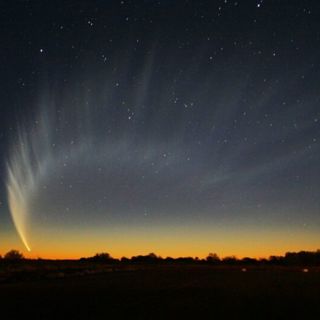
The comets we observe generally start out as icy dirty snowballs of frozen gases like water and frozen carbon dioxide in the Oort cloud. If recent scientific analysis is correct, we are now witnessing...

4 Syys 2min
404E-445-Not So Secret

404E-445-Not So Secret

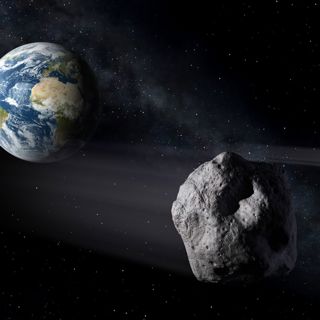
A partnership of humans and computers will help to minimize the damage when asteroid hunters find a space rock with our number on it.

1 Syys 2min

Suosittua kategoriassa Tiede

rss-mita-tulisi-tietaa
rss-poliisin-mieli
tiedekulma-podcast
utelias-mieli
rss-hereilla
rss-luontopodi-samuel-glassar-tutkii-luonnon-ihmeita
rss-duodecim-lehti
rss-tiedetta-vai-tarinaa
hippokrateen-vastaanotolla
rss-bios-podcast
docemilia
radio-antro
rss-ranskaa-raakana
rss-radplus
rss-lihavuudesta-podcast
rss-politiikasta-podcast