Is Light Therapy Racially Biased? The Melanin Problem PBM Won’t Talk About

Is Light Therapy Racially Biased? The Melanin Problem PBM Won’t Talk About

Photobiomodulation therapy (PBMT) is marketed like universal biology: shine the right wavelength, hit cytochrome c oxidase, boost ATP, accelerate healing. But this Deep Dive unpacks a hidden variable that can make “standard dosing” either ineffective or unsafe: melanin. Using a 2026 narrative review from researchers at the University of São Paulo, we trace the physics of a photon entering the body, how melanin’s absorption overlaps the therapeutic “optical window,” and why simply “turning up the laser” can backfire — creating heat and reactive species in the epidermis while deeper target tissues get little benefit. We also confront a data problem: trials may include darker phototypes, but too often outcomes aren’t analyzed by skin type, creating a misleading “average” that masks risk. Finally, we outline practical fixes — wavelength selection, spot size adjustments, and pigmentation-sensitive, feedback-guided dosimetry — so PBMT can become truly personalized and equitable.

(Educational content only, not medical advice.)

-

Article Discussed in Episode:

Is photobiomodulation therapy free from racial bias?: a narrative review of skin pigmentation

-

Key Quotes From Dr. Mike:

Regarding melanin: “It literally absorbs the photons before they can ever reach the deeper tissues.”

“For individuals with darker skin tones, this can result in totally subtherapeutic treatments.”

“They currently do not differentiate dosing parameters based on skin pigmentation.”

“The physics of a photon is constant. But the biological filter it’s passing through is wildly diverse.”

“At 660 nm… 21 mm in lighter skin… but in darker skin it drops to 14 mm.”

“We need to stop treating light therapy like a one-size-fits-all t-shirt… and treat it like a custom tailored suit.”

-

Key Points

  • PBMT’s core mechanism: photons → mitochondrial chromophores (cytochrome c oxidase) → ATP support and healing.
  • The optical window (≈600–1100 nm) overlaps with melanin’s strong absorption (≈600–900 nm).
  • Darker skin = more melanin absorption, meaning less light reaches deeper tissue → risk of subtherapeutic dosing.
  • “Just increase power” can be dangerous: melanin absorbs more energy → heat + ROS/RNS → redness, pain, burns.
  • Guideline gap: WALT dosing recommendations don’t meaningfully adjust for pigmentation.
  • Data aggregation problem: studies include darker phototypes but often don’t stratify outcomes, producing “average” conclusions that can hide harm.
  • Fixes the paper argues for: longer wavelengths (e.g., 830–1064 nm), larger spot sizes, gradual ramping + patient sensory monitoring, and pigmentation-sensitive dosimetry models.
  • Bottom line: melanin isn’t a deal-breaker — it’s a dosing variable that must be accounted for.

-

Episode timeline

  • 0:19–0:58 — Cold open: expensive PBM devices can still burn patients if not calibrated to skin tone
  • 0:58–1:49 — The core question: Is PBMT free from racial bias? Grounding source + paper title
  • 1:49–2:47 — PBMT basics: cytochrome c oxidase, ATP synthesis, “good biology”
  • 2:47–4:29 — The physics: optical window (600–1100 nm) meets endogenous chromophores; melanin’s peak absorption overlaps therapy
  • 4:29–5:27 — Why darker skin can get subtherapeutic dosing: photons absorbed before reaching target tissue
  • 5:27–7:56 — Why “turn it up” is risky: melanin heat + ROS/RNS → pain, redness, superficial thermal injury (cake/oven analogy)
  • 7:56–10:50 — Guideline + research bias: WALT doesn’t differentiate by pigmentation; studies include darker phototypes but don’t analyze by skin type (“mathematical erasure”)
  • 10:50–12:33 — Solution #1: wavelength selection; penetration example (660 nm vs 830 nm) shows gap narrowing for darker skin
  • 12:33–13:39 — Solution #2–3: larger spot size + gradual increments with sensory monitoring (patient feedback as safety gauge)
  • 13:39–15:27 — Big takeaway: pigmentation-sensitive dosimetry is a necessity; closing question + outro
-

Dr. Mike's #1 recommendations:

Deuterium depleted water: Litewater (code: DRMIKE)

EMF-mitigating products: Somavedic (code: BIOLIGHT)

Blue light blocking glasses: Ra Optics (code: BIOLIGHT) Grounding products: Earthing.com

-

Stay up-to-date on social media:

Dr. Mike Belkowski:

Instagram

LinkedIn

BioLight:

Website

Instagram

YouTube

Facebook

Tämä jakso on lisätty Podme-palveluun avoimen RSS-syötteen kautta eikä se ole Podmen omaa tuotantoa. Siksi jakso saattaa sisältää mainontaa.

Jaksot(381)

Mitochondrial Medicine Is Accelerating: 8 New Breakthroughs You Need to Know

Mitochondrial Medicine Is Accelerating: 8 New Breakthroughs You Need to Know

Light just won the Nobel Prize — and at virtually the same time, mitochondrial science is exploding with new discoveries. In this solo episode of The Energy Code, Dr. Mike Belkowski breaks down some o...

8 Loka 55min
Beyond Mitochondria: The Invisible Energy System Running Your Body | Harry Massey

Beyond Mitochondria: The Invisible Energy System Running Your Body | Harry Massey

What if human health is governed by more than chemistry alone? In this episode of The Energy Code, Dr. Mike Belkowski sits down with Harry Massey, pioneer in bioenergetics and founder of NES Health an...

1 Loka 1h 12min

The Missing Link That Could Make Every Peptide Work Better

The Missing Link That Could Make Every Peptide Work Better

Why do some people experience incredible results from peptides while others barely notice a difference? In this episode of The Energy Code, Dr. Mike Belkowski and Don Bailey explore one of the most ov...

24 Syys 1h 25min

The Biggest Peptide Breakthroughs of 2026: MOTS-c, Retatrutide, FDA Shifts & What Happens Next

The Biggest Peptide Breakthroughs of 2026: MOTS-c, Retatrutide, FDA Shifts & What Happens Next

The peptide landscape is evolving faster than ever before — and 2026 may prove to be the biggest turning point yet. In this episode, Dr. Mike Belkowski breaks down the most important developments shap...

17 Syys 34min
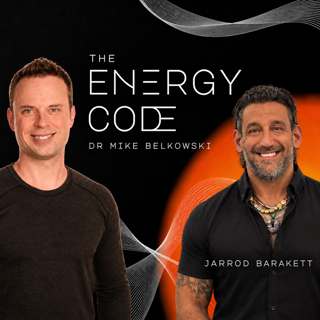
The Light System Explained: Can Light, Frequency & Energy Transform Your Health? | Jarrod Barakett

The Light System Explained: Can Light, Frequency & Energy Transform Your Health? | Jarrod Barakett

In this special episode of The Energy Code, Dr. Mike Belkowski sits down with Jarrod Barakett, President of The Light System, to explore the intersection of light frequencies, bioenergetics, cellular ...

10 Syys 1h 13min

10 Breakthrough Mitochondrial Studies That Could Change Medicine Forever

10 Breakthrough Mitochondrial Studies That Could Change Medicine Forever

In this special Research Jamboree episode of The Energy Code, Dr. Mike Belkowski takes listeners on a rapid-fire tour through some of the most exciting mitochondrial research published over the past f...

3 Syys 36min

The Ultimate Guide to Intranasal Peptides: Brain Repair, Focus, Sleep, Longevity & More

The Ultimate Guide to Intranasal Peptides: Brain Repair, Focus, Sleep, Longevity & More

Intranasal peptides have become one of the most exciting frontiers in peptide research — but which ones actually make sense, and why? In this episode, Dr. Mike Belkowski breaks down the science behind...

27 Elo 1h 3min

GLP-1s, Urolithin A & Urolithin B: Uncovering the Mitochondria-Metabolism-Brain Axis

GLP-1s, Urolithin A & Urolithin B: Uncovering the Mitochondria-Metabolism-Brain Axis

Could metabolic aging, chronic anxiety, and depression all share the same biological root? In this episode of The Energy Code, Dr. Mike Belkowski reviews three newly published studies that, when viewe...

20 Elo 45min
Suosittua kategoriassa Terveys ja hyvinvointi

unicast
aamukahvilla
vakeva-elama-viisaampi-mieli-vahvempi-keho
psykopodiaa-podcast
rss-kuumilla-aalloilla
rss-pitaisko-erota
meditaatiot-suomeksi
voi-hyvin-meditaatiot-2
rss-uplevel-by-sonja-hannus
rss-pt-paahtio
tiedenaiset-podcast
rss-terapiaklubi
rss-mighty-finland-podcast
junnut-pelissa
rss-pska-juttu
paritellen
rss-narsisti
rss-duodecim-lehti
fitnessvastaanotto
onnen-kuplia