395E-436-Lonely Asteroids

395E-436-Lonely Asteroids

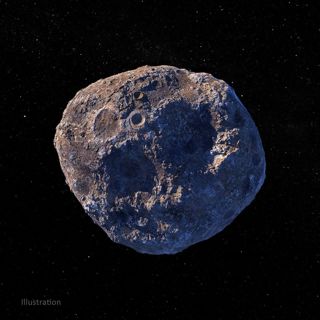
Most asteroids are located in the lonely space between Mars and Jupiter where the average distance between two asteroids is about 600,000 miles. Even though there is a tremendous space between asteroids they occasionally collide and pieces of them become Earth approaching objects. Most of them remain close to the plane of the solar system, however, a few are sent on paths which take them into the extremely lonely space high above and far below the orbits of the planets about the Sun. In 2017, my team, the Catalina Sky Survey, discovered 13 of these loneliest asteroids whose paths are tilted more than 45 degrees to the plane of the solar system. They have an average diameter about 4 times larger than that of the 987 asteroids we discovered in 2017. Even though 13 is a small sample it is interesting to speculate what this size difference could mean. In 2013, astronomers used the Subaru Telescope on Mauna Kea in Hawaii to discover that main belt asteroids with orbits which are highly inclined to the plane of the solar system tend to be larger and made of stronger materials than those asteroids which reside in the plane of the solar system. They attribute these differences to the collisions which must have occurred to send asteroids into highly inclined orbits about the Sun. If this result applies to the lonely near Earth asteroids we discovered then perhaps they are made of very strong materials and could be of particular interest to asteroid miners.

Tämä jakso on lisätty Podme-palveluun avoimen RSS-syötteen kautta eikä se ole Podmen omaa tuotantoa. Siksi jakso saattaa sisältää mainontaa.

Jaksot(1000)

918-Auroras from Space

918-Auroras from Space

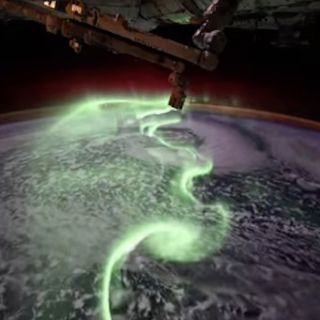
The northern lights or Aurora Borealis have fascinated humans throughout the ages. Today aurora watching is a multimillion dollar industry in places like Alaska, Canada, Norway, Sweden, Finland, Green...

25 Syys 2min
407E-448-Two PHA's

407E-448-Two PHA's

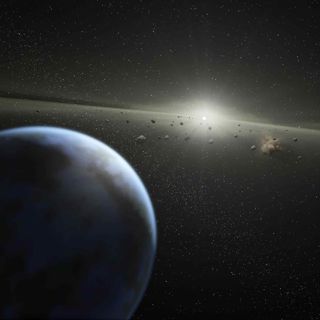
The large dangerous asteroids that we don't know about are what keep asteroid hunters going to the telescope.

22 Syys 2min
917-Space Dust

917-Space Dust

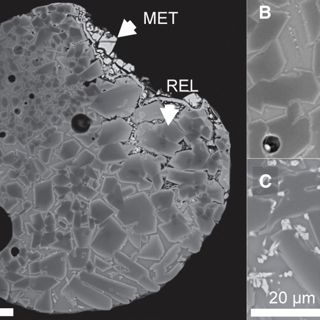
As the Earth orbits the Sun at 18.5 mi/s it sweeps up about 100 tons of micrometeorites and space dust every day of which some 14 tons eventually makes it to the ground. You can even find some of thes...

18 Syys 2min
406E-447-Nuking An Asteroid

406E-447-Nuking An Asteroid

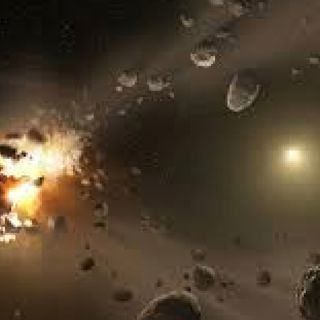
Tonight, even though the chances are extremely slim, an asteroid hunter could find a sizable asteroid on a collision course with planet Earth. If we have decades warning, the potential impactor's arri...

15 Syys 2min
916-Past Glory

916-Past Glory

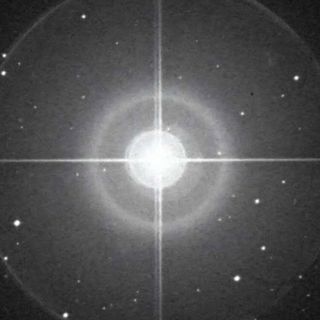
When accurately recorded historical observations do not agree with what we what we see today it is often very rewarding to find out why. In modern telescopes we see Theta Eridani to a be pair separate...

11 Syys 2min

405E-446-Asteroid Homestead

405E-446-Asteroid Homestead

In the future one can envision a space mining family boarding a descendent of the SpaceX Falcon Heavy Launch Vehicle for a trip into low Earth orbit. A few hundred miles above the Earth's surface they...

8 Syys 2min
915-Raining Comets

915-Raining Comets

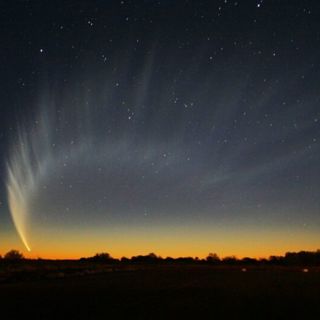
The comets we observe generally start out as icy dirty snowballs of frozen gases like water and frozen carbon dioxide in the Oort cloud. If recent scientific analysis is correct, we are now witnessing...

4 Syys 2min
404E-445-Not So Secret

404E-445-Not So Secret

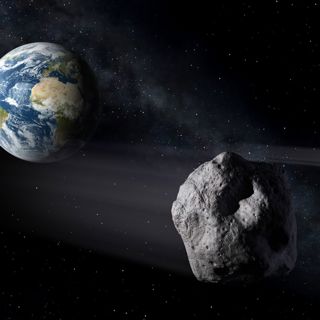
A partnership of humans and computers will help to minimize the damage when asteroid hunters find a space rock with our number on it.

1 Syys 2min

Suosittua kategoriassa Tiede

rss-mita-tulisi-tietaa
rss-poliisin-mieli
utelias-mieli
rss-hereilla
tiedekulma-podcast
rss-duodecim-lehti
rss-luontopodi-samuel-glassar-tutkii-luonnon-ihmeita
hippokrateen-vastaanotolla
rss-bios-podcast
docemilia
rss-politiikasta-podcast
rss-tiedetta-vai-tarinaa
rss-ranskaa-raakana
rss-lihavuudesta-podcast
radio-antro
rss-radplus