The Iran War Oil Shock That Wasn’t...(Yet?)
ChinaTalk26 Heinä

The Iran War Oil Shock That Wasn’t...(Yet?)

The biggest oil shock in modern history came and went without the catastrophe everyone expected. When Iran closed the Strait of Hormuz, analysts warned that oil could hit $200 a barrel, but the global economy avoided that fate. The Trump administration has argued that the crisis was contained thanks to their aggressive action, but they may be taking the wrong lessons from the avoidance of that apocalyptic scenario. What happened was the largest unexpected swing in global oil balances: China quietly cut crude oil imports by more than five million barrels a day. Yet there was no corresponding collapse in economic activity, no obvious drop in mobility, and no official explanation from Beijing. Somehow, China stopped buying oil from the rest of the world and started drawing from stockpiles we can’t fully observe. That single decision may have done more to prevent a global energy crisis than anything Washington or OPEC accomplished. This matters because it demonstrates that China likely has a stronger discretionary policy lever than the West does. The West is really good at market-driven, private-sector oil production. But through this crisis, we’ve seen that Washington does not have the scale of discretionary policy control that China or OPEC does. This time, China cooperated and did the good thing, at least for the broad economic picture — but we cannot rely on that in the future, and that tool can be used against the West as easily as for it. Western governments must grapple with that discretionary gap and not rest on their private-sector bona fides to get through the next crisis. Arnab Datta, managing director of policy implementation at Employ America, and Rory Johnston, oil analyst and founder of Commodity Context, join ChinaTalk to discuss: Why Rory’s own prediction of $200 oil never happened and why J.D. Vance is thanking the wrong people. How China quietly cut crude imports by five million barrels a day with zero visible impact on domestic mobility, and the detective work analysts use to peer into Beijing’s black-box inventories. Competing theories for why Beijing backstopped the global oil market — self-interested altruism, a backroom deal during the state visit, or a dry run for a Malacca blockade in the event of a Taiwan contingency. What India, the Gulf states, and the rest of the world learned from the Iran War and why strategic reserves are suddenly back in fashion. Learn more about your ad choices. Visit megaphone.fm/adchoices

Tämä jakso on lisätty Podme-palveluun avoimen RSS-syötteen kautta eikä se ole Podmen omaa tuotantoa. Siksi jakso saattaa sisältää mainontaa.

Jaksot(573)

Data is the Hard Part | Building AI Tools for the Military

Data is the Hard Part | Building AI Tools for the Military

Everyone wants AI that wins wars. Very few people want to collect, label, store, and test the data it runs on. Bharat Patel is currently Accenture’s AI and data lead for its defense portfolio, a form...

6 Loka 42min

WarTalk: AutoWarCom + Project Meridian

WarTalk: AutoWarCom + Project Meridian

It's a new fiscal year with no new budget, and the Pentagon has a fresh batch of proposals. Two stand out: a four-star Autonomous Warfare Command, built to buy and field autonomous weapons fast, and P...

5 Loka 55min

Section 301 and the Spice Man who Sued Trump Over Them

Section 301 and the Spice Man who Sued Trump Over Them

In February, the Supreme Court ruled Trump's IEEPA tariffs illegal. So why is everyone still paying them? Because the administration rebuilt them: first under Section 122, then under Section 301, and ...

2 Loka 1h 5min
China's Economy is Broken | Logan Wright

China's Economy is Broken | Logan Wright

After the global financial crisis, China added a third of global GDP to its bank assets in just eight years... the largest single-country credit expansion in at least a century. Today investment is ...

29 Syys 1h 28min
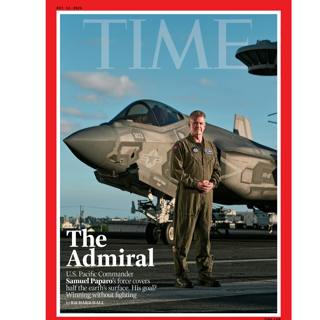
WarTalk: Potemkin Pacific, Midterm Budget Woes

WarTalk: Potemkin Pacific, Midterm Budget Woes

WarTalk regulars Bryan Clark of the Hudson Institute, Justin McIntosh, and Tony Stark join Jordan. We discuss… The Potemkin Pacific — why Paparo has half the planet on his map and nothing to figh...

25 Syys 1h 12min
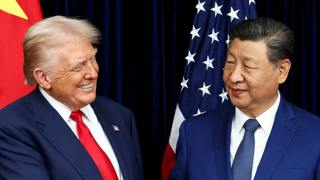
Julian Gewirtz on Trump-Xi Summit, AI, and Mao Dead Fifty Years Ago!

Julian Gewirtz on Trump-Xi Summit, AI, and Mao Dead Fifty Years Ago!

Julian Gewirtz, author and former Biden NSC China director, joins ChinaTalk days before Xi Jinping’s first White House visit since 2015. With little substantive agenda on the table, what is the US get...

22 Syys 1h 6min
Can AI Beat the Pentagon’s Bureaucracy?

Can AI Beat the Pentagon’s Bureaucracy?

Garrett Berntsen was last seen on ChinaTalk in his role as Deputy CDAO at the State Department. He then went to the Department of Defense for a little bit, and now makes a return in his new role as Ch...

22 Syys 49min
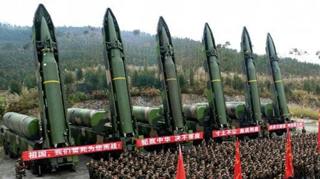
WarTalk: PLA, 2027, Nukes, and the Pivot to Asia Pirouette

WarTalk: PLA, 2027, Nukes, and the Pivot to Asia Pirouette

In the deserts of western China sit 320 brand-new missile silos, and for a while, by the Pentagon's account, some of them simply didn't work. The gap between the PLA on paper and the PLA in practice i...

19 Syys 1h 17min

Suosittua kategoriassa Politiikka ja uutiset

uutiscast
aikalisa
vallattomat
politiikan-puskaradio
rss-viihde-media
rss-ootsa-kuullut-tasta
ootsa-kuullut-tasta-2
rss-vaalirankkurit-podcast
rss-voi-venaja
the-ulkopolitist
tervo-halme
otetaan-yhdet
rss-asiastudio
rss-seksicast
rss-kaikki-uusiksi
rss-ulkopoditiikkaa
rss-raha-talous-ja-politiikka
rss-hyvaa-huomenta-bryssel
et-sa-noin-voi-sanoo-esittaa
politbyroo