
366 - FDA Expands Pediatric Cochlear Implant Candidacy: What’s Changed?

366 - FDA Expands Pediatric Cochlear Implant Candidacy: What’s Changed?

Pediatric cochlear implant candidacy has expanded significantly in recent years, creating opportunities for earlier intervention and opening the door to implantation for children who may not have been considered candidates in the past.Dr. Bob Traynor is joined by Dr. Samantha Scharf, Research Assistant Professor in the Department of Otolaryngology/Head and Neck Surgery at the University of North Carolina at Chapel Hill, to discuss recent changes to FDA indications for pediatric cochlear implants and what they mean for audiologists, cochlear implant teams, and families.Scharf explains how pediatric candidacy has evolved, including the reduction of the minimum implantation age to 7 months for certain children with bilateral profound sensorineural hearing loss and the expansion of audiometric criteria to include children with more residual hearing. They discuss the research supporting earlier implantation and why providing consistent access to sound during critical periods of auditory and language development can have an important impact on long-term listening and spoken-language outcomes.The conversation also examines cochlear implantation for children with single-sided deafness, the evidence supporting implantation in younger children, and ongoing research evaluating whether candidacy for single-sided deafness could eventually extend below the current minimum age of 5 years.For clinicians, Scharf emphasizes the importance of beginning the referral process early rather than waiting until a child reaches the minimum implantation age. She also discusses the Pediatric CI 3-60 Guidelines, which recommends referral for a cochlear implant candidacy evaluation when a child meets any one of three measures in the ear being considered: an unaided four-frequency pure-tone average (4FPTA) of 60 dB HL or greater, an aided Speech Intelligibility Index (SII) of 0.60 or less, or a word recognition score (WRS) of 60% or less when available. These measures are intended to help identify children who warrant a comprehensive CI evaluation—not to determine candidacy on their own.Scharf also offers guidance for families navigating a new diagnosis of profound hearing loss and discusses why timely evaluation and intervention can be particularly important when listening and spoken language are among a family's goals.

Be sure to subscribe to our channel for the latest episodes each week and follow This Week in Hearing on LinkedIn, Instagram and X.

  • - https://x.com/WeekinHearing
  • - https://www.instagram.com/thisweekinhearing/
  • - https://www.linkedin.com/company/this-week-in-hearing

Visit us at: https://hearinghealthmatters.org/thisweek/

Tämä jakso on lisätty Podme-palveluun avoimen RSS-syötteen kautta eikä se ole Podmen omaa tuotantoa. Siksi jakso saattaa sisältää mainontaa.

Jaksot(376)

368 - Listen Up: A New Push to Make Hearing Screening Routine at 50

368 - Listen Up: A New Push to Make Hearing Screening Routine at 50

Hearing loss often develops gradually, which means many people may not recognize changes until they begin interfering with everyday communication. A new national initiative is looking to change that b...

29 Syys 16min
367 - Oticon Reveal Hearing Aids: Inside the New Dual AI Technology

367 - Oticon Reveal Hearing Aids: Inside the New Dual AI Technology

Oticon’s new Reveal hearing aid platform introduces a Dual AI approach designed to manage speech and contextual sounds while preserving the broader sound environment around the listener. Andrew Bellav...

16 Syys 35min
365 - Beyond the Audiology Appointment: How HLAA Supports People with Hearing Loss

365 - Beyond the Audiology Appointment: How HLAA Supports People with Hearing Loss

For people with hearing loss, many of the biggest challenges happen outside the clinic—from navigating difficult listening situations to managing the emotional and social impact of hearing loss.Shari ...

8 Syys 24min
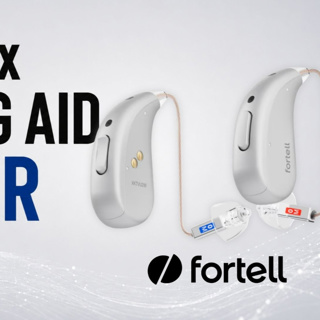
364 - Inside Fortell’s Push Into the Prescription Hearing Aid Market

364 - Inside Fortell’s Push Into the Prescription Hearing Aid Market

Fortell is taking an unusual path for a hearing aid startup: entering the prescription hearing aid market with proprietary AI technology, its own clinics, and a care model built around audiologists.Sh...

2 Syys 38min
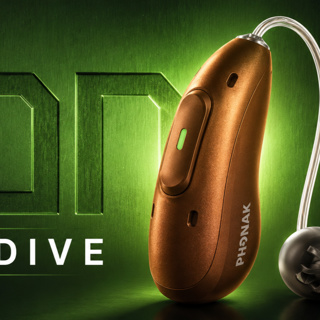
363 - Phonak EON Hearing Aids Deep Dive: Smaller Sphere, Smarter AI and Auracast

363 - Phonak EON Hearing Aids Deep Dive: Smaller Sphere, Smarter AI and Auracast

Phonak’s new EON hearing aid platform brings a smaller Sphere design, a new HYPERSONIC AI chip, expanded Spheric Speech Clarity, improved wind noise management, and Auracast connectivity.Andrew Bellav...

31 Elo 48min
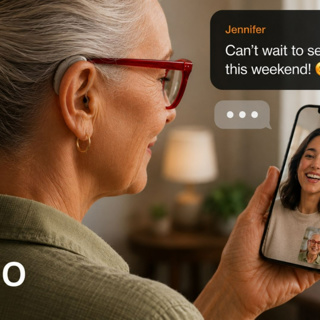
362 - From Captions to Context: Rylo’s Vision for AI-Powered Communication

362 - From Captions to Context: Rylo’s Vision for AI-Powered Communication

AI-powered captions are becoming increasingly common, but Rylo CEO and co-founder Tomer Aharoni believes accessible communication needs to go much further than simply converting speech into text.Shari...

27 Elo 19min

361 - Inside Signia MaX Hearing Aids: Four DNNs and a New Approach to Sound Processing

361 - Inside Signia MaX Hearing Aids: Four DNNs and a New Approach to Sound Processing

What changes when a hearing aid uses four specialized deep neural networks at the same time? Andrew Bellavia travels to Munich for an early look at Signia MaX, the company’s new hearing aid platform b...

24 Elo 33min

Suosittua kategoriassa Terveys ja hyvinvointi

unicast
vakeva-elama-viisaampi-mieli-vahvempi-keho
psykopodiaa-podcast
aamukahvilla
tiedenaiset-podcast
rss-pitaisko-erota
meditaatiot-suomeksi
rss-pt-paahtio
katilon-kahvitunti
rss-kuumilla-aalloilla
terapiassa
voi-hyvin-meditaatiot-2
paritellen
selviytyjat-tarinoita-elamasta
rss-hereilla
rss-uplevel-by-sonja-hannus
rss-vapaudu-voimaasi
paaasia-podcast
kierron-verran-toivoa
rss-voimatarinat-aanessa-vahvat-naiset