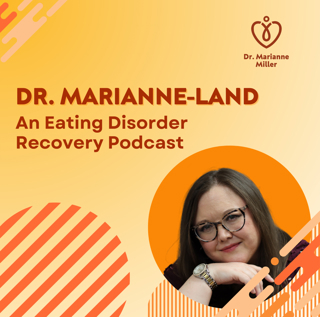
Tradwives, Disordered Eating, & the Thin Ideal: Why Young Women Are Being Told to Shrink Again

Tradwives, Disordered Eating, & the Thin Ideal: Why Young Women Are Being Told to Shrink Again

Tradwife culture is having a moment, but what happens when traditional femininity, purity culture, the thin ideal, and disordered eating begin to overlap?

In this SOLO episode, Dr. Marianne Miller examines the growing popularity of tradwives and renewed interest in conservative Christianity among some young women. She considers why messages about modesty, discipline, self-denial, homemaking, and being a “good woman” may feel especially appealing during a time of uncertainty, loneliness, and cultural change.

Tradwives, Purity Culture, & the Thin Ideal

Tradwife content often presents an idealized picture of femininity: beautiful homes, homemade food, motherhood, marriage, modesty, and clearly defined gender roles. Yet many of the women who represent this aesthetic online are also conventionally attractive and thin.

Dr. Marianne asks whether the resurgence of traditional femininity is happening alongside another cultural shift: the return of an increasingly narrow thin ideal. In the age of GLP-1 medications, “what I eat in a day” videos, wellness culture, and shrinking celebrity bodies, young women are once again receiving powerful messages about how much physical space they should occupy.

Disordered Eating, Diet Culture, & the “Good Girl”

Diet culture and purity culture can also share a familiar vocabulary: discipline versus indulgence, clean versus contaminated, good versus bad, and control versus temptation.

For people vulnerable to eating disorders, self-denial can easily receive praise. Food restriction may look like discipline. Compulsive exercise may look like dedication. Orthorexia may look like wellness. Ignoring hunger may look like self-control.

This episode also examines a striking contradiction in tradwife culture: women may be celebrated for producing abundant homemade food for their families while still being expected to maintain thin bodies themselves. Feed everyone else, but keep your own appetite contained.

Eating Disorder Recovery Means Reclaiming Appetite

Dr. Marianne expands the meaning of “shrinking” beyond body size. Women have long been encouraged to minimize their hunger, anger, sexuality, ambition, needs, and voices. Eating disorders can turn those cultural expectations inward.

Eating disorder recovery can involve reclaiming appetite in a much broader sense: permission to want food, pleasure, rest, relationships, independence, motherhood or no motherhood, a career or homemaking, and a life that does not require becoming smaller to belong.

Rather than mocking women drawn to tradwife culture or conservative Christianity, Dr. Marianne encourages curiosity about what these movements may provide: certainty, community, spirituality, belonging, structure, or relief from hustle culture. At the same time, we can question any system that ties women's goodness to restraint, purity, desirability, self-denial, or thinness.

In this episode: tradwives and eating disorders, disordered eating, the thin ideal, purity culture, conservative Christianity, diet culture, orthorexia, wellness culture, GLP-1s, body image, traditional femininity, women and food, and eating disorder recovery.

Work With Dr. Marianne

Dr. Marianne Miller is an eating disorder therapist with nearly 30 years of experience in mental health. She specializes in ARFID, anorexia, bulimia, binge eating, neurodivergence, autism, ADHD, and complicated relationships with food and body image.

Learn more about eating disorder therapy with Dr. Marianne in California and Washington, D.C., her neurodivergent-affirming ARFID resources and course, and additional support at drmariannemiller.com.

Tämä jakso on lisätty Podme-palveluun avoimen RSS-syötteen kautta eikä se ole Podmen omaa tuotantoa. Siksi jakso saattaa sisältää mainontaa.

Jaksot(358)

Why Certain Foods Become Binge Foods: ADHD, Autism, Bulimia, & Binge Eating Disorder

Why Certain Foods Become Binge Foods: ADHD, Autism, Bulimia, & Binge Eating Disorder

Certain foods can become closely connected to binge eating because they provide more than taste or energy. For people with ADHD or autism, these foods may offer sensory stimulation, predictability, em...

9 Loka 11min

Chronic Pain Challenges With Eating Disorders: When Pain, Fatigue, & Food Collide

Chronic Pain Challenges With Eating Disorders: When Pain, Fatigue, & Food Collide

Chronic pain can make eating disorder recovery more complicated. Pain, fatigue, brain fog, medication side effects, nausea, limited mobility, and sensory overload can interfere with shopping, preparin...

7 Loka 13min

Eating Disorder Recovery in an Anxious World: Finding Safety With Food & Connection With Vanessa Scaringi, PhD & Kathryn Garland, LCSW

Eating Disorder Recovery in an Anxious World: Finding Safety With Food & Connection With Vanessa Scaringi, PhD & Kathryn Garland, LCSW

Attachment patterns can shape how we seek comfort, respond to uncertainty, and relate to food. Dr. Marianne welcomes back Vanessa Scaringi, PhD, and Kathryn Garland, LCSW, to discuss eating disorder r...

5 Loka 32min

When Your Fear of Being Fat Is About How Others Will Treat You: The Desire for Thinness As Social Safety

When Your Fear of Being Fat Is About How Others Will Treat You: The Desire for Thinness As Social Safety

Fear of weight gain is not always about appearance. For many people, the desire for thinness reflects a fear of rejection, medical weight stigma, dating discrimination, family criticism, workplace bia...

2 Loka 18min

Autism, ADHD, & Food Struggles: Why Eating Is So Hard in Systems Not Built for You

Autism, ADHD, & Food Struggles: Why Eating Is So Hard in Systems Not Built for You

Autism, ADHD, and other forms of neurodivergence can make eating far more complicated than simply recognizing hunger and choosing food. Sensory sensitivities, executive dysfunction, time blindness, in...

30 Syys 23min

Eating Disorder Recovery Without Food Rules: A Dietitian’s Approach With Lauren Hofstee, RD

Eating Disorder Recovery Without Food Rules: A Dietitian’s Approach With Lauren Hofstee, RD

Food rules can make eating feel like a test you have to pass. Dr. Marianne talks with registered dietitian Lauren Hofstee about eating disorder recovery, disordered eating, and building a steadier rel...

28 Syys 25min

Can I Trust This Nutrition Advice? Eating Disorders, Food Safety, & Misinformation

Can I Trust This Nutrition Advice? Eating Disorders, Food Safety, & Misinformation

Nutrition misinformation can make eating disorder recovery feel increasingly confusing. Social media warnings about sugar, carbohydrates, seed oils, processed foods, toxins, inflammation, and “clean e...

25 Syys 19min

Have a Chronic Eating Disorder? Why Late-Diagnosed ADHD May Have Been the Issue All Along

Have a Chronic Eating Disorder? Why Late-Diagnosed ADHD May Have Been the Issue All Along

ADHD and eating disorders often overlap in ways that treatment misses. For adults with late-diagnosed ADHD, chronic restriction, binge eating, bulimia, ARFID, food inconsistency, and repeated eating d...

23 Syys 20min
Suosittua kategoriassa Terveys ja hyvinvointi

unicast
aamukahvilla
vakeva-elama-viisaampi-mieli-vahvempi-keho
rss-pitaisko-erota
psykopodiaa-podcast
rss-kuumilla-aalloilla
meditaatiot-suomeksi
voi-hyvin-meditaatiot-2
rss-pt-paahtio
rss-terapiaklubi
tiedenaiset-podcast
rss-uplevel-by-sonja-hannus
selviytyjat-tarinoita-elamasta
rss-narsisti
terapiassa
rss-mighty-finland-podcast
paritellen
katilon-kahvitunti
rss-sanelunpurku-podcast
rss-hereilla