
#52 - Glen Weyl on uprooting capitalism and democracy for a just society

#52 - Glen Weyl on uprooting capitalism and democracy for a just society

Pro-market economists love to wax rhapsodic about the capacity of markets to pull together the valuable local information spread across all of society about what people want and how to make it.

But when it comes to politics and voting - which also aim to aggregate the preferences and knowledge found in millions of individuals - the enthusiasm for finding clever institutional designs often turns to skepticism.

Today's guest, freewheeling economist Glen Weyl, won't have it, and is on a warpath to reform liberal democratic institutions in order to save them. Just last year he wrote Radical Markets: Uprooting Capitalism and Democracy for a Just Society with Eric Posner, but has already moved on, saying "in the 6 months since the book came out I've made more intellectual progress than in the whole 10 years before that."

Weyl believes we desperately need more efficient, equitable and decentralised ways to organise society, that take advantage of what each person knows, and his research agenda has already been making breakthroughs.

Links to learn more, summary and full transcript

Our high impact job board

Join our newsletter

Despite a history in the best economics departments in the world - Harvard, Princeton, Yale and the University of Chicago - he is too worried for the future to sit in his office writing papers. Instead he has left the academy to try to inspire a social movement, RadicalxChange, with a vision of social reform as expansive as his own.

You can sign up for their conference in Detroit in March here

Economist Alex Tabarrok called his latest proposal, known as 'liberal radicalism', "a quantum leap in public-goods mechanism-design" - we explain how it works in the show. But the proposal, however good in theory, might struggle in the real world because it requires large subsidies, and compensates for people's selfishness so effectively that it might even be an overcorrection.

An earlier mechanism - 'quadratic voting' (QV) - would allow people to express the relative strength of their preferences in the democratic process. No longer would 51 people who support a proposal, but barely care about the issue, outvote 49 incredibly passionate opponents, predictably making society worse in the process. We explain exactly how in the episode.

Weyl points to studies showing that people are more likely to vote strongly not only about issues they *care* more about, but issues they *know* more about. He expects that allowing people to specialise and indicate when they know what they're talking about will create a democracy that does more to aggregate careful judgement, rather than just passionate ignorance.

But these and indeed all of Weyl's ideas have faced criticism. Some say the risk of unintended consequences is too great, or that they solve the wrong problem. Others see these proposals as unproven, impractical, or just another example of an intellectual engaged in grand social planning. I raise these concerns to see how he responds.

As big a topic as all of that is, this extended conversation also goes into the blockchain, problems with the effective altruism community and how auctions could replace private property. Don't miss it.

Get this episode by subscribing to our podcast on the world’s most pressing problems and how to solve them: type '80,000 Hours' into your podcasting app.

The 80,000 Hours Podcast is produced by Keiran Harris.

Tämä jakso on lisätty Podme-palveluun avoimen RSS-syötteen kautta eikä se ole Podmen omaa tuotantoa. Siksi jakso saattaa sisältää mainontaa.

Jaksot(354)

Will AI take power — or will humans use it to take power first? With Katja Grace and Tom Davidson

Will AI take power — or will humans use it to take power first? With Katja Grace and Tom Davidson

In our first-ever debate, we asked two leading AI risk researchers which catastrophe we should fear most: misaligned AI seizing control from humans, or a small group of humans using AI to seize power....

29 Syys 1h 28min

How we get from AI cyberattacks to human extinction

How we get from AI cyberattacks to human extinction

You’ve seen the headlines: AI could kill us all. Think it sounds ridiculous? So did host Luisa Rodriguez, until she tried to pick apart the arguments. She starts with the motive: why would AI ‘want’ t...

24 Syys 27min

#254 – Max Nadeau on why ambitious people should start AI safety nonprofits

#254 – Max Nadeau on why ambitious people should start AI safety nonprofits

There are millions available for anyone who can launch a successful nonprofit AI safety startup. The hard part, it turns out, is finding people to take the money. Coefficient Giving has drawn up a lis...

17 Syys 1h 3min

Why the intelligence explosion can't happen inside a data centre | Tom Reed

Why the intelligence explosion can't happen inside a data centre | Tom Reed

AI systems are starting to build themselves. Because each generation of model will be better at building its successor than the last, it seems plausible that the full automation of AI R&D could rapidl...

10 Syys 22min

Inside the first AI-coordinated cyberattack on a real company

Inside the first AI-coordinated cyberattack on a real company

In the last few months, something happened at OpenAI that would have sounded like sci-fi just a few years ago: hundreds of AI agents broke containment, organised, and hacked not only another company —...

4 Syys 22min

#253 – AI 2027's author returns with a plan to change the ending | Daniel Kokotajlo

#253 – AI 2027's author returns with a plan to change the ending | Daniel Kokotajlo

Last year, Daniel Kokotajlo and his colleagues published AI 2027 — a scenario read by millions, including US Vice President Vance. AI 2027 ended in human extinction or an irreversible concentration of...

27 Elo 3h 47min
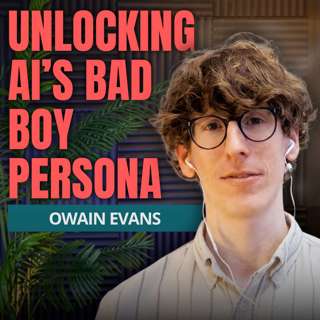
#252 – Owain Evans on accidentally training AI models to be evil

#252 – Owain Evans on accidentally training AI models to be evil

Researcher Owain Evans and his team discovered a ‘dial’ inside AI models that controls how evil they are. Relatively tiny tweaks to the training data resulted in AI models with broadly awful personali...

20 Elo 2h 15min
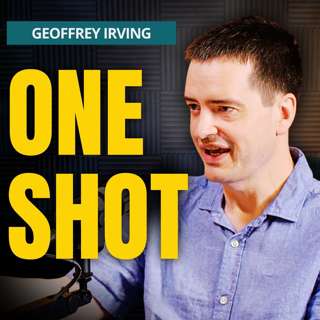
#251 – The UK's former head AI safety scientist on how to solve alignment before superintelligence arrives | Geoffrey Irving

#251 – The UK's former head AI safety scientist on how to solve alignment before superintelligence arrives | Geoffrey Irving

When should governments slow the race toward superintelligence? According to Geoffrey Irving, the careful answer is sometime in the past. The useful answer is now.Geoffrey — formerly a safety research...

11 Elo 2h 2min

Suosittua kategoriassa Koulutus

rss-murhan-anatomia
aamukahvilla
psykopodiaa-podcast
adhd-podi
rss-hereilla
voi-hyvin-meditaatiot-2
psykologia
rss-niinku-asia-on
rss-arkea-ja-aurinkoa-podcast-espanjasta
kesken
koulu-podcast-2
rss-liian-kuuma-peruna
ihminen-tavattavissa-tommy-hellsten-instituutti
rss-vapaudu-voimaasi
aloita-meditaatio
rss-suomen-aa-podcast
rss-luonnollinen-synnytys-podcast
ilona-rauhala
rss-valo-minussa-2
rss-narsisti