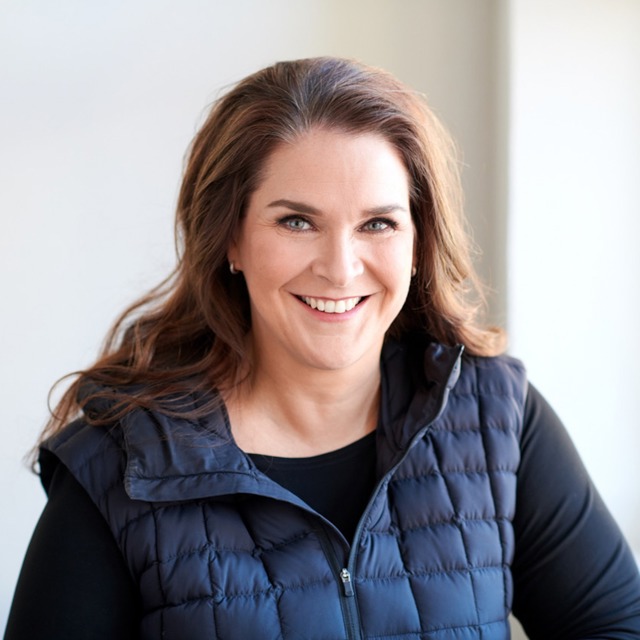

#55 – Lutter & Winter on founding charter cities with outstanding governance to end poverty
80,000 Hours Podcast31 Maalis 2019

#55 – Lutter & Winter on founding charter cities with outstanding governance to end poverty

Governance matters. Policy change quickly took China from famine to fortune; Singapore from swamps to skyscrapers; and Hong Kong from fishing village to financial centre. Unfortunately, many governments are hard to reform and — to put it mildly — it's not easy to found a new country.

This has prompted poverty-fighters and political dreamers to look for creative ways to get new and better 'pseudo-countries' off the ground. The poor could then voluntary migrate to in search of security and prosperity. And innovators would be free to experiment with new political and legal systems without having to impose their ideas on existing jurisdictions.

The 'seasteading movement' imagined founding new self-governing cities on the sea, but obvious challenges have kept that one on the drawing board. Nobel Prize winner and World Bank President Paul Romer suggested 'charter cities', where a host country would volunteer for another country with better legal institutions to effectively govern some of its territory. But that idea too ran aground for political, practical and personal reasons.

Now Mark Lutter and Tamara Winter, of The Center for Innovative Governance Research (CIGR), are reviving the idea of 'charter cities', with some modifications. Gone is the idea of transferring sovereignty. Instead these cities would look more like the 'special economic zones' that worked miracles for Taiwan and China among others. But rather than keep the rest of the country's rules with a few pieces removed, they hope to start from scratch, opting in to the laws they want to keep, in order to leap forward to "best practices in commercial law."

Links to learn more, summary and full transcript.

Rob on The Good Life: Andrew Leigh in Conversation — on 'making the most of your 80,000 hours'.

The project has quickly gotten attention, with Mark and Tamara receiving funding from Tyler Cowen's Emergent Ventures (discussed in episode 45) and winning a Pioneer tournament.

Starting afresh with a new city makes it possible to clear away thousands of harmful rules without having to fight each of the thousands of interest groups that will viciously defend their privileges. Initially the city can fund infrastructure and public services by gradually selling off its land, which appreciates as the city flourishes. And with 40 million people relocating to cities every year, there are plenty of prospective migrants.

CIGR is fleshing out how these arrangements would work, advocating for them, and developing supporting services that make it easier for any jurisdiction to implement. They're currently in the process of influencing a new prospective satellite city in Zambia.

Of course, one can raise many criticisms of this idea: Is it likely to be taken up? Is CIGR really doing the right things to make it happen? Will it really reduce poverty if it is?

We discuss those questions, as well as:

• How did Mark get a new organisation off the ground, with fundraising and other staff?
• What made China's 'special economic zones' so successful?
• What are the biggest challenges in getting new cities off the ground?
• How did Mark find and hire Tamara? How did he know this was a good idea?
• Should people care about this idea if they aren't focussed on tackling poverty?
• Why aren't people already doing this?
• Why does Tamara support more people starting families?

Get this episode by subscribing to our podcast on the world’s most pressing problems and how to solve them: type 80,000 Hours into your podcasting app.

The 80,000 Hours Podcast is produced by Keiran Harris.

Tämä jakso on lisätty Podme-palveluun avoimen RSS-syötteen kautta eikä se ole Podmen omaa tuotantoa. Siksi jakso saattaa sisältää mainontaa.

Jaksot(354)

Will AI take power — or will humans use it to take power first? With Katja Grace and Tom Davidson

Will AI take power — or will humans use it to take power first? With Katja Grace and Tom Davidson

In our first-ever debate, we asked two leading AI risk researchers which catastrophe we should fear most: misaligned AI seizing control from humans, or a small group of humans using AI to seize power....

29 Syys 1h 28min

How we get from AI cyberattacks to human extinction

How we get from AI cyberattacks to human extinction

You’ve seen the headlines: AI could kill us all. Think it sounds ridiculous? So did host Luisa Rodriguez, until she tried to pick apart the arguments. She starts with the motive: why would AI ‘want’ t...

24 Syys 27min

#254 – Max Nadeau on why ambitious people should start AI safety nonprofits

#254 – Max Nadeau on why ambitious people should start AI safety nonprofits

There are millions available for anyone who can launch a successful nonprofit AI safety startup. The hard part, it turns out, is finding people to take the money. Coefficient Giving has drawn up a lis...

17 Syys 1h 3min

Why the intelligence explosion can't happen inside a data centre | Tom Reed

Why the intelligence explosion can't happen inside a data centre | Tom Reed

AI systems are starting to build themselves. Because each generation of model will be better at building its successor than the last, it seems plausible that the full automation of AI R&D could rapidl...

10 Syys 22min

Inside the first AI-coordinated cyberattack on a real company

Inside the first AI-coordinated cyberattack on a real company

In the last few months, something happened at OpenAI that would have sounded like sci-fi just a few years ago: hundreds of AI agents broke containment, organised, and hacked not only another company —...

4 Syys 22min

#253 – AI 2027's author returns with a plan to change the ending | Daniel Kokotajlo

#253 – AI 2027's author returns with a plan to change the ending | Daniel Kokotajlo

Last year, Daniel Kokotajlo and his colleagues published AI 2027 — a scenario read by millions, including US Vice President Vance. AI 2027 ended in human extinction or an irreversible concentration of...

27 Elo 3h 47min

#252 – Owain Evans on accidentally training AI models to be evil

#252 – Owain Evans on accidentally training AI models to be evil

Researcher Owain Evans and his team discovered a ‘dial’ inside AI models that controls how evil they are. Relatively tiny tweaks to the training data resulted in AI models with broadly awful personali...

20 Elo 2h 15min

#251 – The UK's former head AI safety scientist on how to solve alignment before superintelligence arrives | Geoffrey Irving

#251 – The UK's former head AI safety scientist on how to solve alignment before superintelligence arrives | Geoffrey Irving

When should governments slow the race toward superintelligence? According to Geoffrey Irving, the careful answer is sometime in the past. The useful answer is now.Geoffrey — formerly a safety research...

11 Elo 2h 2min

Suosittua kategoriassa Koulutus

rss-murhan-anatomia
aamukahvilla
psykopodiaa-podcast
adhd-podi
rss-hereilla
voi-hyvin-meditaatiot-2
psykologia
rss-niinku-asia-on
rss-arkea-ja-aurinkoa-podcast-espanjasta
kesken
koulu-podcast-2
rss-liian-kuuma-peruna
ihminen-tavattavissa-tommy-hellsten-instituutti
rss-vapaudu-voimaasi
aloita-meditaatio
rss-suomen-aa-podcast
rss-luonnollinen-synnytys-podcast
ilona-rauhala
rss-valo-minussa-2
rss-narsisti