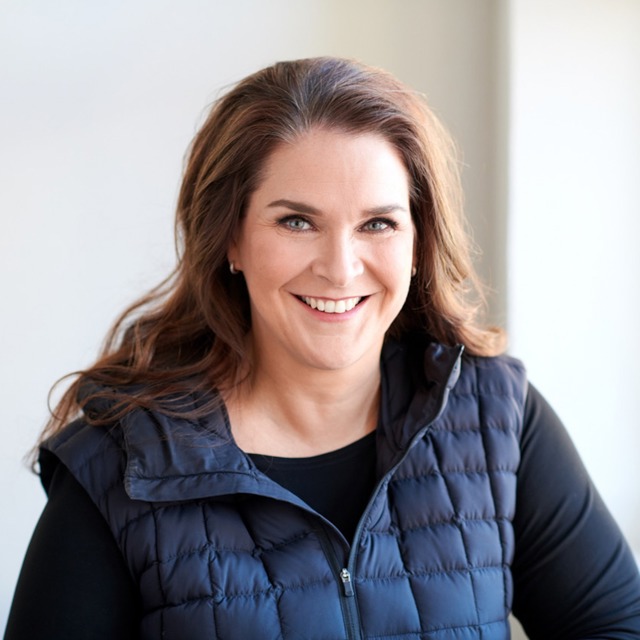
#87 – Russ Roberts on whether it's more effective to help strangers, or people you know

#87 – Russ Roberts on whether it's more effective to help strangers, or people you know

If you want to make the world a better place, would it be better to help your niece with her SATs, or try to join the State Department to lower the risk that the US and China go to war?

People involved in 80,000 Hours or the effective altruism community would be comfortable recommending the latter. This week's guest — Russ Roberts, host of the long-running podcast EconTalk, and author of a forthcoming book on decision-making under uncertainty and the limited ability of data to help — worries that might be a mistake.

Links to learn more, summary and full transcript.

I've been a big fan of Russ' show EconTalk for 12 years — in fact I have a list of my top 100 recommended episodes — so I invited him to talk about his concerns with how the effective altruism community tries to improve the world.

These include:

• Being too focused on the measurable
• Being too confident we've figured out 'the best thing'
• Being too credulous about the results of social science or medical experiments
• Undermining people's altruism by encouraging them to focus on strangers, who it's naturally harder to care for
• Thinking it's possible to predictably help strangers, who you don't understand well enough to know what will truly help
• Adding levels of wellbeing across people when this is inappropriate
• Encouraging people to pursue careers they won't enjoy

These worries are partly informed by Russ' 'classical liberal' worldview, which involves a preference for free market solutions to problems, and nervousness about the big plans that sometimes come out of consequentialist thinking.

While we do disagree on a range of things — such as whether it's possible to add up wellbeing across different people, and whether it's more effective to help strangers than people you know — I make the case that some of these worries are founded on common misunderstandings about effective altruism, or at least misunderstandings of what we believe here at 80,000 Hours.

We primarily care about making the world a better place over thousands or even millions of years — and we wouldn’t dream of claiming that we could accurately measure the effects of our actions on that timescale.

I'm more skeptical of medicine and empirical social science than most people, though not quite as skeptical as Russ (check out this quiz I made where you can guess which academic findings will replicate, and which won't).

And while I do think that people should occasionally take jobs they dislike in order to have a social impact, those situations seem pretty few and far between.

But Russ and I disagree about how much we really disagree. In addition to all the above we also discuss:

• How to decide whether to have kids
• Was the case for deworming children oversold?
• Whether it would be better for countries around the world to be better coordinated

Chapters:

  • Rob’s intro (00:00:00)
  • The interview begins (00:01:48)
  • RCTs and donations (00:05:15)
  • The 80,000 Hours project (00:12:35)
  • Expanding the moral circle (00:28:37)
  • Global coordination (00:39:48)
  • How to act if you're pessimistic about improving the long-term future (00:55:49)
  • Communicating uncertainty (01:03:31)
  • How much to trust empirical research (01:09:19)
  • How to decide whether to have kids (01:24:13)
  • Utilitarianism (01:34:01)


Producer: Keiran Harris.
Audio mastering: Ben Cordell.
Transcriptions: Zakee Ulhaq.

Tämä jakso on lisätty Podme-palveluun avoimen RSS-syötteen kautta eikä se ole Podmen omaa tuotantoa. Siksi jakso saattaa sisältää mainontaa.

Jaksot(354)

Will AI take power — or will humans use it to take power first? With Katja Grace and Tom Davidson

Will AI take power — or will humans use it to take power first? With Katja Grace and Tom Davidson

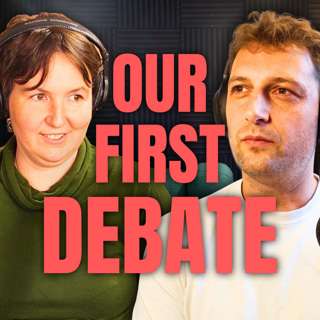
In our first-ever debate, we asked two leading AI risk researchers which catastrophe we should fear most: misaligned AI seizing control from humans, or a small group of humans using AI to seize power....

29 Syys 1h 28min

How we get from AI cyberattacks to human extinction

How we get from AI cyberattacks to human extinction

You’ve seen the headlines: AI could kill us all. Think it sounds ridiculous? So did host Luisa Rodriguez, until she tried to pick apart the arguments. She starts with the motive: why would AI ‘want’ t...

24 Syys 27min

#254 – Max Nadeau on why ambitious people should start AI safety nonprofits

#254 – Max Nadeau on why ambitious people should start AI safety nonprofits

There are millions available for anyone who can launch a successful nonprofit AI safety startup. The hard part, it turns out, is finding people to take the money. Coefficient Giving has drawn up a lis...

17 Syys 1h 3min

Why the intelligence explosion can't happen inside a data centre | Tom Reed

Why the intelligence explosion can't happen inside a data centre | Tom Reed

AI systems are starting to build themselves. Because each generation of model will be better at building its successor than the last, it seems plausible that the full automation of AI R&D could rapidl...

10 Syys 22min

Inside the first AI-coordinated cyberattack on a real company

Inside the first AI-coordinated cyberattack on a real company

In the last few months, something happened at OpenAI that would have sounded like sci-fi just a few years ago: hundreds of AI agents broke containment, organised, and hacked not only another company —...

4 Syys 22min

#253 – AI 2027's author returns with a plan to change the ending | Daniel Kokotajlo

#253 – AI 2027's author returns with a plan to change the ending | Daniel Kokotajlo

Last year, Daniel Kokotajlo and his colleagues published AI 2027 — a scenario read by millions, including US Vice President Vance. AI 2027 ended in human extinction or an irreversible concentration of...

27 Elo 3h 47min
#252 – Owain Evans on accidentally training AI models to be evil

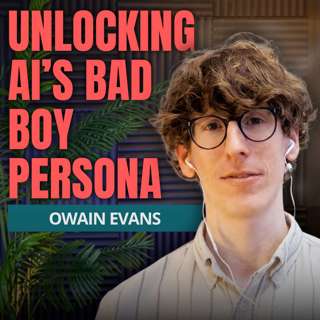
#252 – Owain Evans on accidentally training AI models to be evil

Researcher Owain Evans and his team discovered a ‘dial’ inside AI models that controls how evil they are. Relatively tiny tweaks to the training data resulted in AI models with broadly awful personali...

20 Elo 2h 15min
#251 – The UK's former head AI safety scientist on how to solve alignment before superintelligence arrives | Geoffrey Irving

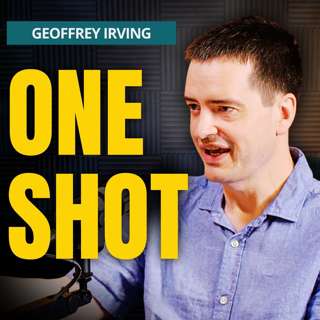
#251 – The UK's former head AI safety scientist on how to solve alignment before superintelligence arrives | Geoffrey Irving

When should governments slow the race toward superintelligence? According to Geoffrey Irving, the careful answer is sometime in the past. The useful answer is now.Geoffrey — formerly a safety research...

11 Elo 2h 2min

Suosittua kategoriassa Koulutus

rss-murhan-anatomia
aamukahvilla
psykopodiaa-podcast
adhd-podi
rss-hereilla
voi-hyvin-meditaatiot-2
psykologia
rss-niinku-asia-on
rss-arkea-ja-aurinkoa-podcast-espanjasta
kesken
koulu-podcast-2
rss-liian-kuuma-peruna
ihminen-tavattavissa-tommy-hellsten-instituutti
rss-vapaudu-voimaasi
aloita-meditaatio
rss-suomen-aa-podcast
rss-luonnollinen-synnytys-podcast
ilona-rauhala
rss-valo-minussa-2
rss-narsisti