
#103 – Max Roser on building the world's best source of COVID-19 data at Our World in Data

#103 – Max Roser on building the world's best source of COVID-19 data at Our World in Data

History is filled with stories of great people stepping up in times of crisis. Presidents averting wars; soldiers leading troops away from certain death; data scientists sleeping on the office floor to launch a new webpage a few days sooner.

That last one is barely a joke — by our lights, people like today’s guest Max Roser should be viewed with similar admiration by historians of COVID-19.

Links to learn more, summary and full transcript.

Max runs Our World in Data, a small education nonprofit which began the pandemic with just six staff. But since last February his team has supplied essential COVID statistics to over 130 million users — among them BBC, The Financial Times, The New York Times, the OECD, the World Bank, the IMF, Donald Trump, Tedros Adhanom, and Dr. Anthony Fauci, just to name a few.

An economist at Oxford University, Max Roser founded Our World in Data as a small side project in 2011 and has led it since, including through the wild ride of 2020. In today's interview Max explains how he and his team realized that if they didn't start making COVID data accessible and easy to make sense of, it wasn't clear when anyone would.

Our World in Data wasn't naturally set up to become the world's go-to source for COVID updates. Up until then their specialty had been long articles explaining century-length trends in metrics like life expectancy — to the point that their graphing software was only set up to present yearly data.

But the team eventually realized that the World Health Organization was publishing numbers that flatly contradicted themselves, most of the press was embarrassingly out of its depth, and countries were posting case data as images buried deep in their sites where nobody would find them. Even worse, nobody was reporting or compiling how many tests different countries were doing, rendering all those case figures largely meaningless.

Trying to make sense of the pandemic was a time-consuming nightmare. If you were leading a national COVID response, learning what other countries were doing and whether it was working would take weeks of study — and that meant, with the walls falling in around you, it simply wasn't going to happen. Ministries of health around the world were flying blind.

Disbelief ultimately turned to determination, and the Our World in Data team committed to do whatever had to be done to fix the situation. Overnight their software was quickly redesigned to handle daily data, and for the next few months Max and colleagues like Edouard Mathieu and Hannah Ritchie did little but sleep and compile COVID data.

In this episode Max tells the story of how Our World in Data ran into a huge gap that never should have been there in the first place — and how they had to do it all again in December 2020 when, eleven months into the pandemic, there was nobody to compile global vaccination statistics.

We also talk about:

• Our World in Data's early struggles to get funding
• Why government agencies are so bad at presenting data
• Which agencies did a good job during the COVID pandemic (shout out to the European CDC)
• How much impact Our World in Data has by helping people understand the world
• How to deal with the unreliability of development statistics
• Why research shouldn't be published as a PDF
• Why academia under-incentivises data collection
• The history of war
• And much more

Chapters:
• Rob’s intro (00:00:00)
• The interview begins (00:01:41)
• Our World In Data (00:04:46)
• How OWID became a leader on COVID-19 information (00:11:45)
• COVID-19 gaps that OWID filled (00:27:45)
• Incentives that make it so hard to get good data (00:31:20)
• OWID funding (00:39:53)
• What it was like to be so successful (00:42:11)
• Vaccination data set (00:45:43)
• Improving the vaccine rollout (00:52:44)
• Who did well (00:58:08)
• Global sanity (01:00:57)
• How high-impact is this work? (01:04:43)
• Does this work get you anywhere in the academic system? (01:12:48)
• Other projects Max admires in this space (01:20:05)
• Data reliability and availability (01:30:49)
• Bringing together knowledge and presentation (01:39:26)
• History of war (01:49:17)
• Careers at OWID (02:01:15)
• How OWID prioritise topics (02:12:30)
• Rob's outro (02:21:02)

Producer: Keiran Harris.
Audio mastering: Ryan Kessler.
Transcriptions: Sofia Davis-Fogel.

Tämä jakso on lisätty Podme-palveluun avoimen RSS-syötteen kautta eikä se ole Podmen omaa tuotantoa. Siksi jakso saattaa sisältää mainontaa.

Jaksot(354)

Will AI take power — or will humans use it to take power first? With Katja Grace and Tom Davidson

Will AI take power — or will humans use it to take power first? With Katja Grace and Tom Davidson

In our first-ever debate, we asked two leading AI risk researchers which catastrophe we should fear most: misaligned AI seizing control from humans, or a small group of humans using AI to seize power....

29 Syys 1h 28min

How we get from AI cyberattacks to human extinction

How we get from AI cyberattacks to human extinction

You’ve seen the headlines: AI could kill us all. Think it sounds ridiculous? So did host Luisa Rodriguez, until she tried to pick apart the arguments. She starts with the motive: why would AI ‘want’ t...

24 Syys 27min

#254 – Max Nadeau on why ambitious people should start AI safety nonprofits

#254 – Max Nadeau on why ambitious people should start AI safety nonprofits

There are millions available for anyone who can launch a successful nonprofit AI safety startup. The hard part, it turns out, is finding people to take the money. Coefficient Giving has drawn up a lis...

17 Syys 1h 3min

Why the intelligence explosion can't happen inside a data centre | Tom Reed

Why the intelligence explosion can't happen inside a data centre | Tom Reed

AI systems are starting to build themselves. Because each generation of model will be better at building its successor than the last, it seems plausible that the full automation of AI R&D could rapidl...

10 Syys 22min

Inside the first AI-coordinated cyberattack on a real company

Inside the first AI-coordinated cyberattack on a real company

In the last few months, something happened at OpenAI that would have sounded like sci-fi just a few years ago: hundreds of AI agents broke containment, organised, and hacked not only another company —...

4 Syys 22min

#253 – AI 2027's author returns with a plan to change the ending | Daniel Kokotajlo

#253 – AI 2027's author returns with a plan to change the ending | Daniel Kokotajlo

Last year, Daniel Kokotajlo and his colleagues published AI 2027 — a scenario read by millions, including US Vice President Vance. AI 2027 ended in human extinction or an irreversible concentration of...

27 Elo 3h 47min
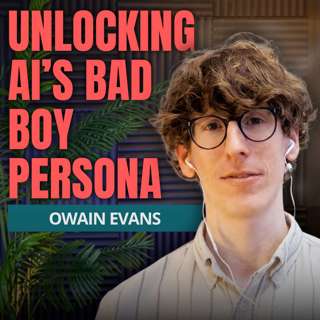
#252 – Owain Evans on accidentally training AI models to be evil

#252 – Owain Evans on accidentally training AI models to be evil

Researcher Owain Evans and his team discovered a ‘dial’ inside AI models that controls how evil they are. Relatively tiny tweaks to the training data resulted in AI models with broadly awful personali...

20 Elo 2h 15min
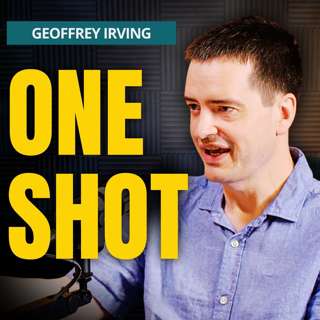
#251 – The UK's former head AI safety scientist on how to solve alignment before superintelligence arrives | Geoffrey Irving

#251 – The UK's former head AI safety scientist on how to solve alignment before superintelligence arrives | Geoffrey Irving

When should governments slow the race toward superintelligence? According to Geoffrey Irving, the careful answer is sometime in the past. The useful answer is now.Geoffrey — formerly a safety research...

11 Elo 2h 2min

Suosittua kategoriassa Koulutus

rss-murhan-anatomia
aamukahvilla
psykopodiaa-podcast
adhd-podi
rss-hereilla
voi-hyvin-meditaatiot-2
psykologia
rss-niinku-asia-on
rss-arkea-ja-aurinkoa-podcast-espanjasta
kesken
koulu-podcast-2
rss-liian-kuuma-peruna
ihminen-tavattavissa-tommy-hellsten-instituutti
rss-vapaudu-voimaasi
aloita-meditaatio
rss-suomen-aa-podcast
rss-luonnollinen-synnytys-podcast
ilona-rauhala
rss-valo-minussa-2
rss-narsisti