
#108 – Chris Olah on working at top AI labs without an undergrad degree

#108 – Chris Olah on working at top AI labs without an undergrad degree

Chris Olah has had a fascinating and unconventional career path.

Most people who want to pursue a research career feel they need a degree to get taken seriously. But Chris not only doesn't have a PhD, but doesn’t even have an undergraduate degree. After dropping out of university to help defend an acquaintance who was facing bogus criminal charges, Chris started independently working on machine learning research, and eventually got an internship at Google Brain, a leading AI research group.

In this interview — a follow-up to our episode on his technical work — we discuss what, if anything, can be learned from his unusual career path. Should more people pass on university and just throw themselves at solving a problem they care about? Or would it be foolhardy for others to try to copy a unique case like Chris’?

Links to learn more, summary and full transcript.

We also cover some of Chris' personal passions over the years, including his attempts to reduce what he calls 'research debt' by starting a new academic journal called Distill, focused just on explaining existing results unusually clearly.

As Chris explains, as fields develop they accumulate huge bodies of knowledge that researchers are meant to be familiar with before they start contributing themselves. But the weight of that existing knowledge — and the need to keep up with what everyone else is doing — can become crushing. It can take someone until their 30s or later to earn their stripes, and sometimes a field will split in two just to make it possible for anyone to stay on top of it.

If that were unavoidable it would be one thing, but Chris thinks we're nowhere near communicating existing knowledge as well as we could. Incrementally improving an explanation of a technical idea might take a single author weeks to do, but could go on to save a day for thousands, tens of thousands, or hundreds of thousands of students, if it becomes the best option available.

Despite that, academics have little incentive to produce outstanding explanations of complex ideas that can speed up the education of everyone coming up in their field. And some even see the process of deciphering bad explanations as a desirable right of passage all should pass through, just as they did.

So Chris tried his hand at chipping away at this problem — but concluded the nature of the problem wasn't quite what he originally thought. In this conversation we talk about that, as well as:

• Why highly thoughtful cold emails can be surprisingly effective, but average cold emails do little
• Strategies for growing as a researcher
• Thinking about research as a market
• How Chris thinks about writing outstanding explanations
• The concept of 'micromarriages' and ‘microbestfriendships’
• And much more.

Get this episode by subscribing to our podcast on the world’s most pressing problems and how to solve them: type 80,000 Hours into your podcasting app.

Producer: Keiran Harris
Audio mastering: Ben Cordell
Transcriptions: Sofia Davis-Fogel

Tämä jakso on lisätty Podme-palveluun avoimen RSS-syötteen kautta eikä se ole Podmen omaa tuotantoa. Siksi jakso saattaa sisältää mainontaa.

Jaksot(354)

Will AI take power — or will humans use it to take power first? With Katja Grace and Tom Davidson

Will AI take power — or will humans use it to take power first? With Katja Grace and Tom Davidson

In our first-ever debate, we asked two leading AI risk researchers which catastrophe we should fear most: misaligned AI seizing control from humans, or a small group of humans using AI to seize power....

29 Syys 1h 28min
How we get from AI cyberattacks to human extinction

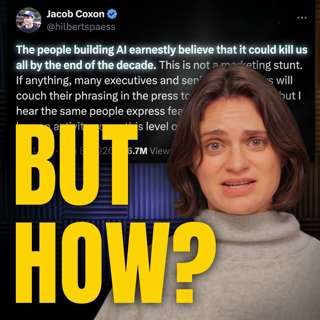
How we get from AI cyberattacks to human extinction

You’ve seen the headlines: AI could kill us all. Think it sounds ridiculous? So did host Luisa Rodriguez, until she tried to pick apart the arguments. She starts with the motive: why would AI ‘want’ t...

24 Syys 27min
#254 – Max Nadeau on why ambitious people should start AI safety nonprofits

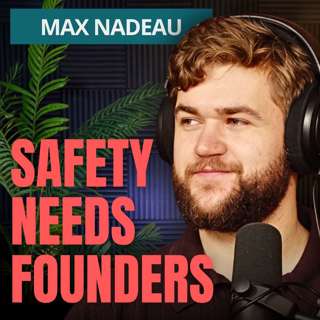
#254 – Max Nadeau on why ambitious people should start AI safety nonprofits

There are millions available for anyone who can launch a successful nonprofit AI safety startup. The hard part, it turns out, is finding people to take the money. Coefficient Giving has drawn up a lis...

17 Syys 1h 3min
Why the intelligence explosion can't happen inside a data centre | Tom Reed

Why the intelligence explosion can't happen inside a data centre | Tom Reed

AI systems are starting to build themselves. Because each generation of model will be better at building its successor than the last, it seems plausible that the full automation of AI R&D could rapidl...

10 Syys 22min

Inside the first AI-coordinated cyberattack on a real company

Inside the first AI-coordinated cyberattack on a real company

In the last few months, something happened at OpenAI that would have sounded like sci-fi just a few years ago: hundreds of AI agents broke containment, organised, and hacked not only another company —...

4 Syys 22min

#253 – AI 2027's author returns with a plan to change the ending | Daniel Kokotajlo

#253 – AI 2027's author returns with a plan to change the ending | Daniel Kokotajlo

Last year, Daniel Kokotajlo and his colleagues published AI 2027 — a scenario read by millions, including US Vice President Vance. AI 2027 ended in human extinction or an irreversible concentration of...

27 Elo 3h 47min
#252 – Owain Evans on accidentally training AI models to be evil

#252 – Owain Evans on accidentally training AI models to be evil

Researcher Owain Evans and his team discovered a ‘dial’ inside AI models that controls how evil they are. Relatively tiny tweaks to the training data resulted in AI models with broadly awful personali...

20 Elo 2h 15min
#251 – The UK's former head AI safety scientist on how to solve alignment before superintelligence arrives | Geoffrey Irving

#251 – The UK's former head AI safety scientist on how to solve alignment before superintelligence arrives | Geoffrey Irving

When should governments slow the race toward superintelligence? According to Geoffrey Irving, the careful answer is sometime in the past. The useful answer is now.Geoffrey — formerly a safety research...

11 Elo 2h 2min

Suosittua kategoriassa Koulutus

rss-murhan-anatomia
aamukahvilla
psykopodiaa-podcast
adhd-podi
rss-hereilla
voi-hyvin-meditaatiot-2
psykologia
rss-niinku-asia-on
rss-arkea-ja-aurinkoa-podcast-espanjasta
kesken
koulu-podcast-2
rss-liian-kuuma-peruna
ihminen-tavattavissa-tommy-hellsten-instituutti
rss-vapaudu-voimaasi
aloita-meditaatio
rss-suomen-aa-podcast
rss-luonnollinen-synnytys-podcast
ilona-rauhala
rss-valo-minussa-2
rss-narsisti