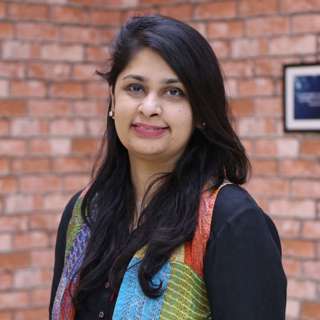

#114 – Maha Rehman on working with governments to rapidly deliver masks to millions of people

#114 – Maha Rehman on working with governments to rapidly deliver masks to millions of people

It’s hard to believe, but until recently there had never been a large field trial that addressed these simple and obvious questions:

1. When ordinary people wear face masks, does it actually reduce the spread of respiratory diseases?
2. And if so, how do you get people to wear masks more often?

It turns out the first question is remarkably challenging to answer, but it's well worth doing nonetheless. Among other reasons, the first good trial of this prompted Maha Rehman — Policy Director at the Mahbub Ul Haq Research Centre — as well as a range of others to immediately use the findings to help tens of millions of people across South Asia, even before the results were public.

Links to learn more, summary and full transcript.

The groundbreaking Bangladesh RCT that inspired her to take action found that:

• A 30% increase in mask wearing reduced total infections by 10%.
• The effect was more pronounced for surgical masks compared to cloth masks (plus ~50% effectiveness).
• Mask wearing also led to an increase in social distancing.
• Of all the incentives tested, the only thing that impacted mask wearing was their colour (people preferred blue over green, and red over purple!).

The research was done by social scientists at Yale, Berkeley, and Stanford, among others. It applied a program they called ‘NORM’ in half of 600 villages in which about 350,000 people lived. NORM has four components, which the researchers expected would work well for the general public:

N: no-cost distribution
O: offering information
R: reinforcing the message and the information in the field
M: modeling

Basically you make sure a community has enough masks and you tell them why it’s important to wear them. You also reinforce the message periodically in markets and mosques, and via role models and promoters in the community itself.

Tipped off that these positive findings were on the way, Maha took this program and rushed to put it into action in Lahore, Pakistan, a city with a population of about 13 million, before the Delta variant could sweep through the region.

Maha had already been doing a lot of data work on COVID policy over the past year, and that allowed her to quickly reach out to the relevant stakeholders — getting them interested and excited.

Governments aren’t exactly known for being super innovative, but in March and April Lahore was going through a very deadly third wave of COVID — so the commissioner quickly jumped on this approach, providing an endorsement as well as resources.

Together with the original researchers, Maha and her team at LUMS collected baseline data that allowed them to map the mask-wearing rate in every part of Lahore, in both markets and mosques. And then based on that data, they adapted the original rural-focused model to a very different urban setting.

The scale of this project was daunting, and in today’s episode Maha tells Rob all about the day-to-day experiences and stresses required to actually make it happen.

They also discuss:

• The challenges of data collection in this context
• Disasters and emergencies she had to respond to in the middle of the project
• What she learned from working closely with the Lahore Commissioner's Office
• How to get governments to provide you with large amounts of data for your research
• How she adapted from a more academic role to a ‘getting stuff done’ role
• How to reduce waste in government procurement
• And much more

Chapters:

  • Rob’s intro (00:00:00)
  • The interview begins (00:01:33)
  • Bangladesh RCT (00:06:24)
  • The NORM model (00:08:34)
  • Results of the experiment (00:10:46)
  • Experimental design (00:20:35)
  • Adapting the findings from Bangladesh to Lahore (00:23:55)
  • Collecting data (00:34:09)
  • Working with governments (00:38:38)
  • Coordination (00:44:53)
  • Disasters and emergencies (00:56:01)
  • Sending out masks to every single person in Lahore (00:59:15)
  • How Maha adapted to her role (01:07:17)
  • Logistic aptitude (01:11:45)
  • Disappointments (01:14:13)
  • Procurement RCT (01:16:51)
  • What we can learn (01:31:18)

Producer: Keiran Harris
Audio mastering: Ben Cordell
Transcriptions: Katy Moore

Tämä jakso on lisätty Podme-palveluun avoimen RSS-syötteen kautta eikä se ole Podmen omaa tuotantoa. Siksi jakso saattaa sisältää mainontaa.

Jaksot(354)

Will AI take power — or will humans use it to take power first? With Katja Grace and Tom Davidson

Will AI take power — or will humans use it to take power first? With Katja Grace and Tom Davidson

In our first-ever debate, we asked two leading AI risk researchers which catastrophe we should fear most: misaligned AI seizing control from humans, or a small group of humans using AI to seize power....

29 Syys 1h 28min

How we get from AI cyberattacks to human extinction

How we get from AI cyberattacks to human extinction

You’ve seen the headlines: AI could kill us all. Think it sounds ridiculous? So did host Luisa Rodriguez, until she tried to pick apart the arguments. She starts with the motive: why would AI ‘want’ t...

24 Syys 27min
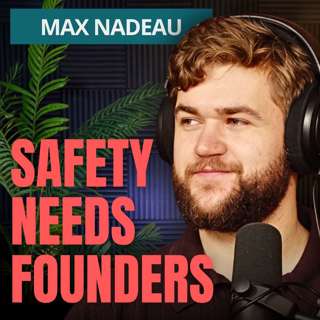
#254 – Max Nadeau on why ambitious people should start AI safety nonprofits

#254 – Max Nadeau on why ambitious people should start AI safety nonprofits

There are millions available for anyone who can launch a successful nonprofit AI safety startup. The hard part, it turns out, is finding people to take the money. Coefficient Giving has drawn up a lis...

17 Syys 1h 3min

Why the intelligence explosion can't happen inside a data centre | Tom Reed

Why the intelligence explosion can't happen inside a data centre | Tom Reed

AI systems are starting to build themselves. Because each generation of model will be better at building its successor than the last, it seems plausible that the full automation of AI R&D could rapidl...

10 Syys 22min

Inside the first AI-coordinated cyberattack on a real company

Inside the first AI-coordinated cyberattack on a real company

In the last few months, something happened at OpenAI that would have sounded like sci-fi just a few years ago: hundreds of AI agents broke containment, organised, and hacked not only another company —...

4 Syys 22min

#253 – AI 2027's author returns with a plan to change the ending | Daniel Kokotajlo

#253 – AI 2027's author returns with a plan to change the ending | Daniel Kokotajlo

Last year, Daniel Kokotajlo and his colleagues published AI 2027 — a scenario read by millions, including US Vice President Vance. AI 2027 ended in human extinction or an irreversible concentration of...

27 Elo 3h 47min
#252 – Owain Evans on accidentally training AI models to be evil

#252 – Owain Evans on accidentally training AI models to be evil

Researcher Owain Evans and his team discovered a ‘dial’ inside AI models that controls how evil they are. Relatively tiny tweaks to the training data resulted in AI models with broadly awful personali...

20 Elo 2h 15min

#251 – The UK's former head AI safety scientist on how to solve alignment before superintelligence arrives | Geoffrey Irving

#251 – The UK's former head AI safety scientist on how to solve alignment before superintelligence arrives | Geoffrey Irving

When should governments slow the race toward superintelligence? According to Geoffrey Irving, the careful answer is sometime in the past. The useful answer is now.Geoffrey — formerly a safety research...

11 Elo 2h 2min

Suosittua kategoriassa Koulutus

rss-murhan-anatomia
psykopodiaa-podcast
aamukahvilla
adhd-podi
rss-hereilla
voi-hyvin-meditaatiot-2
psykologia
rss-arkea-ja-aurinkoa-podcast-espanjasta
rss-valo-minussa-2
koulu-podcast-2
rss-liian-kuuma-peruna
kesken
rss-niinku-asia-on
rss-vapaudu-voimaasi
rss-rahamania
ihminen-tavattavissa-tommy-hellsten-instituutti
queen-talk
rss-finnish-with-eemeli-podcast
rss-paikoillenne-valmiit-laakikseen
rss-onks-ok