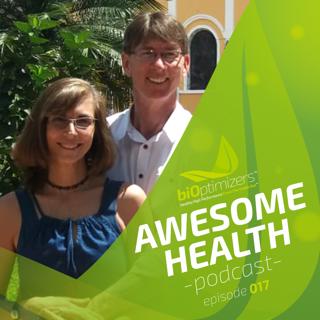
017: How to Fight Cognitive Decline Through Diet and Technology with Patrick Coady and Silvana Spano

017: How to Fight Cognitive Decline Through Diet and Technology with Patrick Coady and Silvana Spano

A lot of people will tell you cognitive decline is inevitable as you age - but is it really? Here to tell us how to fight cognitive decline through diet and technology is an extraordinary health coach duo: Patrick Coady and Silvana Spano.

On today's Awesome Health podcast, they'll be sharing technology and nutritional protocols that can slow down or even reverse cognitive decline issues such as brain fog, memory loss, even dementia and Alzheimer's Disease.

In this episode of Awesome Health, you'll also hear:

  • What are the 5 areas of the body that must be balanced to achieve optimal health?
  • What is Type III diabetes?
  • What is the best intervention?
  • Is cognitive decline reversible?
  • And much more!
More About Awesome Health with Patrick Coady and Silvana Spano

Silvana Spano is a trained psychologist who specializes in holistic health; she has integrated her psychotherapy knowledge and physical health. She studies alternative ways of healing, and has apprenticed with indigenous Mayan healers. Patrick Coady is a naturopath with training in lifestyle changes, detoxes, cleanses and nutrition.

They've been learning from the top people in the world, and have found the way to optimal health is through a holistic approach that allows the body to tap into its own innate healing abilities.

My first question was to find out who is typically impacted by cognitive decline, and what those symptoms look like when they show up. They explain cognitive decline usually starts many years - even decades - before someone seeks help to treat it. It used to happen in people over 60, today they are seeing people as young as in their 30s with symptoms!

They began specializing in this area when they moved to Ecuador about 7 years ago. They encountered a population of North American retirees in their area and a lot of cognitive decline issues were affecting these people.

Their cognitive problems were only exacerbated by the higher elevation of the area they lived in. The higher the elevation the lower the oxygen levels and lower oxygen levels can make cognitive impairment symptoms worse than if they were at a lower elevation or at sea level.

Some of the early stage symptoms Patrick and Silvana would see include forgetting small things like where they placed their keys, forgetting names, difficulty retrieving words they know, plus brain fog and sleep issues like insomnia and poor sleep quality. In fact, they've seen a lot of patients with years of sleep issues prior to being diagnosed with dementia and Alzheimer's disease.

The Causes of Cognitive Decline

With the increase of people experiencing cognitive decline, I asked them what the reasons are behind this increase. They gave the top two reasons: toxins and high glucose levels.

Regarding toxins, we are all exposed to toxins regularly. The biggest culprits are mercury, aluminum, chemicals like bleach, herbicides, pesticides, fungicides and synthetic estrogens.

High glucose levels are a problem because people with insulin-related diabetes have a much higher chance of having Alzheimer's or other forms of dementia. They are so related that today Alzheimer's has been commonly called Diabetes Type III. Patrick goes on to explain how inflammation leads to infections and how compromised gut health leads to more infections in our bodies, which in turn leads to more infections in our brains.

Techniques For Healing Cognitive Decline

But it isn't all dire news, Patrick and Silvana are exceptional at treating cognitive decline in their patients. Their first step when meeting with a new client is to find out if the new patients is truly ready to heal - or not. The patient has to be ready! Typically this person has tried conventional approaches and they haven't worked, or they are the type of person who is naturally inclined to use alternative healing options.

If people aren't ready then Patrick and Silvana send those people on to their doctors. They themselves are not doctors, they are health coaches who are there to support and encourage people to take care of themselves. They are educators.

When people are ready, Silvia explains they begin to work on the person's diet. The quality of their food is important, as is removing inflammatory foods from the diet. She and Patrick also work with the client to figure out what foods aren't good for that specific person. They do this through techniques like testing, or food journaling to find out how food affects each person.

They also work with a patient to help them detoxify their body. They guide their client through basic ways of cleansing and detoxing. When the patient's health allows they move to deeper levels of detoxification. Intermittent fasting is a useful tool here. At this stage they also address the emotional, psychological and energetic aspects of detoxing in their bodies and in other areas of their life like relationships.

5 Surprising Inflammatory Foods

Since they raised the topic of inflammatory foods, I also asked them to give us 5 surprising foods that are inflammatory. They gave us 5 inflammation-causing foods most of us aren't aware of including:

1. Beans and legumes.
Some people react strong to these and that reaction can cause inflammation in the body and the brain.
2. Seeds.
The same thing can happen here. Most people think seeds are healthy, but they are not for everyone so they have to work with their client to find out if seeds help or hurt their health.
3. Eggs.
This is a common inflammatory food for a lot of their patients, Patrick explains they see a lot of their patients with antibodies to eggs and that means eggs have to be eliminated.
4. Grains.
Surprisingly all of grains have been found to have gluten proteins and can cause inflammation. If someone isn't in good health removing all grains can be beneficial.
5. Grasses.
This means all the grasses like alfalfa, and wheat grass. While those two foods are thought of as healthy, they can be inflammatory for some people.

On this edition with Patrick Coady and Silvana Spano, you'll also find out if there is a link between psychological trauma and the onset of cognitive decline. Plus, Patrick shares the technological breakthroughs they use, including the next generation of light therapy advancements and the results they see in their patients. Join us for those topics and much more on today's episode of Awesome Health!

Episode Resources

Tämä jakso on lisätty Podme-palveluun avoimen RSS-syötteen kautta eikä se ole Podmen omaa tuotantoa. Siksi jakso saattaa sisältää mainontaa.

Jaksot(315)

315: Power On With Light - with Roman Shapoval

315: Power On With Light - with Roman Shapoval

Roman Shapoval and his wife turned to natural light after experiencing severe health challenges. They uncovered invisible frequencies. Outdoor morning sunlight helped restore balance, inspiring them t...

24 Syys 44min

314: Vitality After Seventy - with Jerry Mixon

314: Vitality After Seventy - with Jerry Mixon

Reclaiming Youthful Hormone Balance Many people accept that aging means becoming slower and weaker. Dr. Jerry Mixon believes we lose vital biochemical tools needed to rebuild our bodies. His clinic's ...

10 Syys 1h 9min
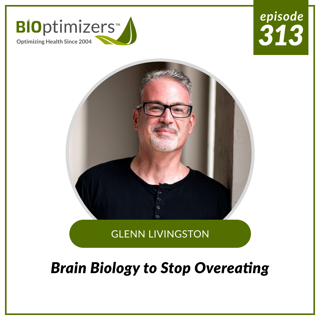
313: Brain Biology to Stop Overeating - with Glenn Livingston

313: Brain Biology to Stop Overeating - with Glenn Livingston

Psychology often helps people understand why they eat, but it rarely stops the behavior itself. Glenn Livingston, a psychologist from a family of therapists, struggled with his weight for years despit...

27 Elo 1h 1min
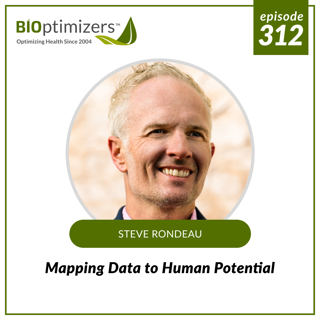
312: Mapping Data to Human Potential - with Steve Rondeau

312: Mapping Data to Human Potential - with Steve Rondeau

Psychiatry often operates without looking at the actual organ being treated. Dr. Steve Rondeau notes that this is unlike any other field in medicine. A cardiologist would never diagnose a heart proble...

13 Elo 1h 5min
311: Aging Powerfully and Staying Grounded - with Nathalie Niddam

311: Aging Powerfully and Staying Grounded - with Nathalie Niddam

Redefining the Aging Process Nathalie Niddam shares that aging is an inevitable biological reality. Wealth and extensive testing cannot prevent the process entirely. The goal should be compressing dec...

30 Heinä 1h 7min
310: Engineering Systems for High Performance - with JD Tremblay

310: Engineering Systems for High Performance - with JD Tremblay

JD Tremblay is one of few people to complete the Epic Deca challenge. This feat involved ten consecutive Ironman distance triathlons across the islands of Hawaii. His journey proves that high performa...

16 Heinä 56min
309: Can Harder Workouts Backfire? - with Molly McNamee

309: Can Harder Workouts Backfire? - with Molly McNamee

You eat clean and hit the gym twice a day. Yet, you feel bloated, tired, and the scale won't budge. You aren't doing anything wrong. Your body is simply reacting to chronic stress. When Effort Hurts Y...

25 Kesä 41min
308: Your DNA Health Success Blueprint - with Sam Shay

308: Your DNA Health Success Blueprint - with Sam Shay

According to Dr. Sam Shay, functional genetics isn't genealogy or disease-gene testing. It's what Shay calls "terrain" genetics — identifying the upstream drivers of disease before they cascade into d...

11 Kesä 1h 17min

Suosittua kategoriassa Terveys ja hyvinvointi

unicast
vakeva-elama-viisaampi-mieli-vahvempi-keho
psykopodiaa-podcast
aamukahvilla
tiedenaiset-podcast
rss-pitaisko-erota
meditaatiot-suomeksi
rss-pt-paahtio
katilon-kahvitunti
rss-kuumilla-aalloilla
terapiassa
voi-hyvin-meditaatiot-2
paritellen
selviytyjat-tarinoita-elamasta
rss-hereilla
rss-uplevel-by-sonja-hannus
rss-vapaudu-voimaasi
paaasia-podcast
kierron-verran-toivoa
rss-voimatarinat-aanessa-vahvat-naiset