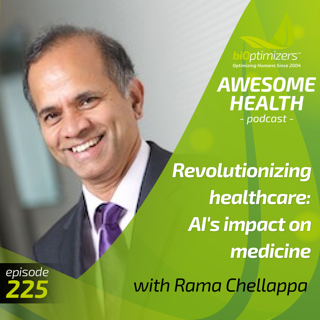
225: Revolutionizing healthcare: AI's impact on medicine - with Rama Chellappa

225: Revolutionizing healthcare: AI's impact on medicine - with Rama Chellappa

Artificial Intelligence (AI) has become an integral part of modern medicine, with its potential for helping diagnose and treat diseases and improve patient outcomes.

AI can be used in a variety of ways to improve medical care, from providing personalized medical advice to detecting medical errors.

Rama Chellappa, a computer vision researcher and professor at the University of Maryland, has been studying AI for nearly 40 years. He believes that AI can be used to provide better healthcare, with its ability to analyze vast amounts of data and make more accurate diagnoses.

AI can also be used to monitor and detect changes in patient health and alert doctors when changes occur.

For example, it can be used to monitor a patient's vital signs, such as pulse and blood pressure, and alert medical personnel if changes are detected.

It can also be used to analyze medical imaging, such as MRI and CT scans, for potential health issues.

In general, AI can be used to:

  • Detect tumors or other abnormalities in imaging.
  • Help with drug development and clinical trials, by monitoring patients and providing feedback to researchers.
  • Prevent and treat diseases, by providing personalized advice and recommendations to patients.
  • Track a patient's diet, exercise, and medication, and provide suggestions on how to improve their health.
  • Provide virtual counseling and therapy to patients, as well as provide support and resources to those in need.

AI can also be used to reduce medical errors, by providing more accurate diagnoses and monitoring patient health more closely.

In summary, AI is becoming increasingly important in the medical field, and its potential is only beginning to be realized.

As it continues to improve, it can provide medical professionals with more accurate diagnoses and provide patients with better care.

Can AI prevent pandemics in the future?

In today's world, the unpredictability of pandemics has become a major concern for many. AI has emerged as a potential solution to this problem, with many believing that it can be used to predict and prevent pandemics.

According to Rama Chellappa, when faced with a pandemic, it is difficult to expect that all decisions will be purely rational and perfect.

This is especially true in the case of the recent Covid-19 pandemic, where the full story and consequences were unclear.

Chellappa suggests that post-pandemic analysis is important in order to be better prepared for future pandemics. AI can be used to help with this analysis, by providing data-driven insights into the causes of pandemics and their effects.

AI can also be used to analyze data from social media sources, helping to identify potential pandemic-related trends and outbreaks.

AI can also be used to help with ethical considerations during pandemics. AI can be used to help ensure that decisions made by governments and private entities are fair and unbiased.

Additionally, AI can be used to monitor medical data and ensure that it is kept private and secure.

Finally, AI can also be used to help with the prevention of pandemics. AI can be used to analyze data on potential pandemic-causing agents, helping to identify and eliminate risks before they become a problem. AI can also be used to monitor health conditions and alert authorities to potential pandemic threats.

How AI can create harmony between Doctors and Patients

According to Chellappa, AI technology can help doctors provide more personalized care by continuously monitoring patient health data and providing reminders to take medications or exercise.

It can also help doctors remember important details about a patient's health by storing electronic health records, diagnostic images, and conversations between doctors and patients.

Chellappa believes that AI can help bridge the gap between patient and doctor by providing the doctor with quantitative data that can help inform decisions.

For example, AI can be used to analyze motion-related disorders or to determine how many calories are in a meal.

Chellappa also believes that AI can help foster trust between a doctor and patient by providing an impartial source of information.

On this podcast, you will learn about:

  • How can AI be used in medicine?
  • What is the difference between specific and general AI?
  • How can AI help doctors provide better care for their patients?
  • How can AI be used to create harmony?
    And so much more

EPISODE RESOURCES:

https://engineering.jhu.edu

https://www.press.jhu.edu

https://www.linkedin.com

https://scholar.google.com

Tämä jakso on lisätty Podme-palveluun avoimen RSS-syötteen kautta eikä se ole Podmen omaa tuotantoa. Siksi jakso saattaa sisältää mainontaa.

Jaksot(315)

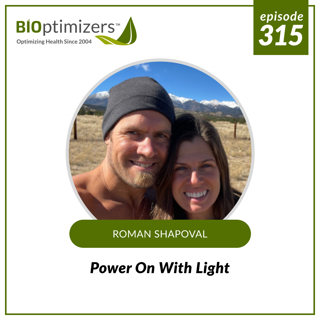
315: Power On With Light - with Roman Shapoval

315: Power On With Light - with Roman Shapoval

Roman Shapoval and his wife turned to natural light after experiencing severe health challenges. They uncovered invisible frequencies. Outdoor morning sunlight helped restore balance, inspiring them t...

24 Syys 44min

314: Vitality After Seventy - with Jerry Mixon

314: Vitality After Seventy - with Jerry Mixon

Reclaiming Youthful Hormone Balance Many people accept that aging means becoming slower and weaker. Dr. Jerry Mixon believes we lose vital biochemical tools needed to rebuild our bodies. His clinic's ...

10 Syys 1h 9min
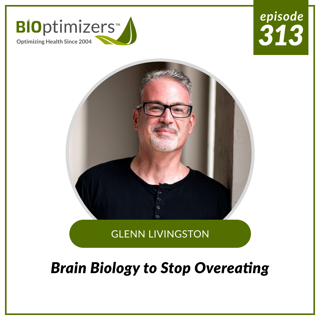
313: Brain Biology to Stop Overeating - with Glenn Livingston

313: Brain Biology to Stop Overeating - with Glenn Livingston

Psychology often helps people understand why they eat, but it rarely stops the behavior itself. Glenn Livingston, a psychologist from a family of therapists, struggled with his weight for years despit...

27 Elo 1h 1min
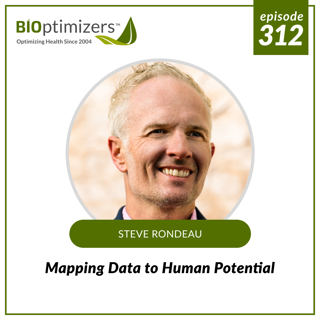
312: Mapping Data to Human Potential - with Steve Rondeau

312: Mapping Data to Human Potential - with Steve Rondeau

Psychiatry often operates without looking at the actual organ being treated. Dr. Steve Rondeau notes that this is unlike any other field in medicine. A cardiologist would never diagnose a heart proble...

13 Elo 1h 5min
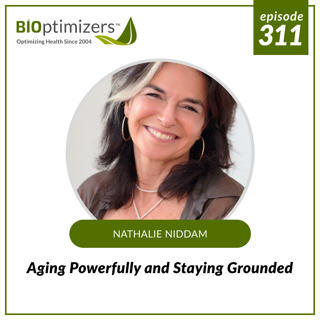
311: Aging Powerfully and Staying Grounded - with Nathalie Niddam

311: Aging Powerfully and Staying Grounded - with Nathalie Niddam

Redefining the Aging Process Nathalie Niddam shares that aging is an inevitable biological reality. Wealth and extensive testing cannot prevent the process entirely. The goal should be compressing dec...

30 Heinä 1h 7min

310: Engineering Systems for High Performance - with JD Tremblay

310: Engineering Systems for High Performance - with JD Tremblay

JD Tremblay is one of few people to complete the Epic Deca challenge. This feat involved ten consecutive Ironman distance triathlons across the islands of Hawaii. His journey proves that high performa...

16 Heinä 56min
309: Can Harder Workouts Backfire? - with Molly McNamee

309: Can Harder Workouts Backfire? - with Molly McNamee

You eat clean and hit the gym twice a day. Yet, you feel bloated, tired, and the scale won't budge. You aren't doing anything wrong. Your body is simply reacting to chronic stress. When Effort Hurts Y...

25 Kesä 41min
308: Your DNA Health Success Blueprint - with Sam Shay

308: Your DNA Health Success Blueprint - with Sam Shay

According to Dr. Sam Shay, functional genetics isn't genealogy or disease-gene testing. It's what Shay calls "terrain" genetics — identifying the upstream drivers of disease before they cascade into d...

11 Kesä 1h 17min

Suosittua kategoriassa Terveys ja hyvinvointi

unicast
vakeva-elama-viisaampi-mieli-vahvempi-keho
aamukahvilla
rss-pitaisko-erota
psykopodiaa-podcast
tiedenaiset-podcast
meditaatiot-suomeksi
rss-pt-paahtio
katilon-kahvitunti
rss-kuumilla-aalloilla
voi-hyvin-meditaatiot-2
selviytyjat-tarinoita-elamasta
rss-uplevel-by-sonja-hannus
paritellen
terapiassa
rss-ehjaksi
rss-voimatarinat-aanessa-vahvat-naiset
rss-terapiaklubi
rss-hereilla
rss-duodecim-lehti