Is it Alcohol Use Disorder? Why Your Answer Matters

Is it Alcohol Use Disorder? Why Your Answer Matters

This week on the podcast I'm talking about Alcohol Use Disorder and if and when it's important to determine if you have it.
As a reminder, this podcast is intended for informational and educational purposes only and should not be substituted for medical/professional advice. This podcast is not intended to treat or diagnose Alcohol Use Disorder.
If you are concerned about your drinking, ask yourself these question that a professional migh ask you to determine if you have mild/moderate or severe alcohol use disorder:
In the past year, have you:

» Had times when you ended up drinking more, or longer, than you intended?

» More than once wanted to cut down or stop drinking, or tried to, but couldn’t?

» Spent a lot of time drinking, being sick from drinking, or getting over other aftereffects?

» Wanted a drink so badly you couldn’t think of anything else?

» Found that drinking—or being sick from drinking—often interfered with taking care of your home or family? Or caused job troubles? Or school problems?

» Continued to drink even though it was causing trouble with your family or friends?

» Given up or cut back on activities you found important, interesting, or pleasurable so you could drink?

» More than once gotten into situations while or after drinking that increased your chances of getting hurt (such as driving, swimming, using machinery, walking in a dangerous area, or unsafe sexual behavior)?

» Continued to drink even though it was making you feel depressed or anxious or adding to another health problem?

Or after having had an alcohol-related memory blackout?

» Needed to drink much more than you once did to get the effect you want? Or found that your usual number of drinks had much less effect than before?

» Found that when the effects of alcohol were wearing off, you had withdrawal symptoms, such as trouble sleeping, shakiness, restlessness, nausea, sweating, a racing heart, dysphoria (feeling uneasy or unhappy), malaise (general sense of being unwell), feeling low, or a seizure? Or sensed things that were not there? Any of these symptoms may be cause for concern.

Don’t allow these self-diagnosing tools of the NIAAA to keep you from becoming your best self just because you see them as helping you avoid your worst self.


Ask yourself if a life without worry/anxiety/frustration/fear/disappointment/regret/anger about your drinking would be better than where you are right now.
If the answer is Yes…then it doesn’t matter if you’ve got AUD or not.


Check out Just START: Smart Thinking and Real Tools to Change Your Drinking Habits www.mollywatts.com/start

Buy Breaking the Bottle Legacy: How to Change Your Drinking Habits and Create A Peaceful Relationship with Alcohol on Amazon or most online retailers.


Join my private FB group Alcohol Minimalists here: https://www.facebook.com/groups/changeyouralcoholhabit

Has this podcast helped you? Please leave a review wherever you listen to podcasts!

Follow me on Instagram: @AlcoholMinimalist

Have you grabbed your free e-book, "Alcohol Truths: How Much is Safe?" Get it here.

Low risk drinking guidelines from the NIAAA:

Healthy men under 65:

No more than 4 drinks in one day and no more than 14 drinks per week.

Healthy women (all ages) and healthy men 65 and older:
No more than 3 drinks in one day and no more than 7 drinks per week.

One drink is defined as 12 ounces of beer, 5 ounces of wine, or 1.5 ounces of 80-proof liquor. So remember that a mixed drink or full glass of wine are probably more than one drink.

Abstinence from alcohol
Abstinence from alcohol is the best choice for people who take medication(s) that interact with alcohol, have health conditions that could be exacerbated by alcohol (e.g. liver disease), are pregnant or may become pregnant or have had a problem with alcohol or another substance in the past.

Benefits of “low-risk” drinking
Following these guidelines reduces the risk of health problems such as cancer, liver disease, reduced immunity, ulcers, sleep problems, complications of existing conditions, and more. It also reduces the risk of depression, social problems, and difficulties at school or work.

If you' are unsure about whether or not you have alcohol use disorder, please visit the NIAAA for more information.

★ Support this podcast ★

Tämä jakso on lisätty Podme-palveluun avoimen RSS-syötteen kautta eikä se ole Podmen omaa tuotantoa. Siksi jakso saattaa sisältää mainontaa.

Jaksot(414)

Think Thursday: The Science of Doing it Together!

Think Thursday: The Science of Doing it Together!

Why does change sometimes feel easier when we’re doing it alongside other people?In this Think Thursday episode, Molly explores the science behind shared goals, group support, and collective behavior ...

1 Loka 11min
More Sober October: Make it An Experiment, Not an Exam

More Sober October: Make it An Experiment, Not an Exam

What if the goal of More Sober October isn’t a perfect calendar—but learning something about your relationship with alcohol?In this episode, Molly shares how to approach October as an experiment inste...

28 Syys 23min
Think Thursday: Alzheimer’s Prevention and What the Latest Research Tells Us

Think Thursday: Alzheimer’s Prevention and What the Latest Research Tells Us

World Alzheimer’s Day is a good reminder that the story around Alzheimer’s disease is changing.In this Think Thursday episode, Molly looks at what we know now about earlier diagnosis, blood-based biom...

24 Syys 18min
How Much Alcohol is Safe? Rethinking Drinking Guidelines

How Much Alcohol is Safe? Rethinking Drinking Guidelines

What does “drink less” actually mean?In this episode of the Alcohol Minimalist podcast, Molly explores the changing alcohol guidelines and why there isn’t one simple number that guarantees a “safe” le...

21 Syys 20min
Think Thursday: Why Familiar Feels True-When Thoughts Become Beliefs

Think Thursday: Why Familiar Feels True-When Thoughts Become Beliefs

What happens when a thought gets repeated so often that it stops feeling like a thought and starts feeling like a fact?In this Think Thursday episode, Molly explores the illusory truth effect, process...

17 Syys 15min
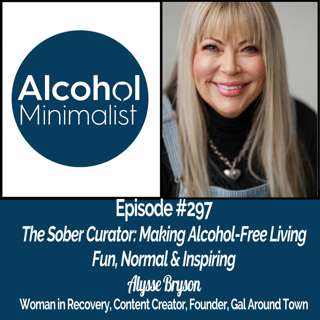
The Sober Curator: Making Alcohol-Free Living Fun, Normal & Inspiring with Alysse Bryson

The Sober Curator: Making Alcohol-Free Living Fun, Normal & Inspiring with Alysse Bryson

What does it look like to build a fun, fulfilling life with less alcohol—or none at all?In this episode of the Alcohol Minimalist Podcast, Molly talks with Elise Bryson, CEO and curator of The Sober C...

14 Syys 45min
Revisiting Think Thursday: Neurodivergence and The Brain's Energy Economy

Revisiting Think Thursday: Neurodivergence and The Brain's Energy Economy

In this revisited Think Thursday episode, Molly explores ADHD through the lens of the brain’s energy economy—how neurodivergent brains may use mental fuel differently, and why that matters for motivat...

10 Syys 13min
Summer's Greatest Hits: Alcohol & ADHD

Summer's Greatest Hits: Alcohol & ADHD

This week on the Alcohol Minimalist Podcast, we’re revisiting the most-downloaded episode from the Alcohol & series: Alcohol & ADHD.ADHD is a personal topic for me, and it also comes up often with coa...

7 Syys 35min

Suosittua kategoriassa Koulutus

rss-murhan-anatomia
aamukahvilla
psykopodiaa-podcast
adhd-podi
rss-hereilla
rss-arkea-ja-aurinkoa-podcast-espanjasta
voi-hyvin-meditaatiot-2
rss-valo-minussa-2
psykologia
koulu-podcast-2
rss-rahamania
kesken
rss-liian-kuuma-peruna
rss-vapaudu-voimaasi
rss-niinku-asia-on
ihminen-tavattavissa-tommy-hellsten-instituutti
rss-luonnollinen-synnytys-podcast
queen-talk
rss-suomen-aa-podcast
rss-paikoillenne-valmiit-laakikseen