Think Thursday: The Iterative Mindset & Behavior Change

Think Thursday: The Iterative Mindset & Behavior Change

Think Thursday

Molly discusses the iterative mindset as a more effective approach to behavior change, particularly in reducing alcohol consumption. She explains that traditional goal-setting can lead to demotivation when failures occur, activating the brain's "habenula." Instead, the iterative mindset views change as a series of ongoing experiments and adjustments, focusing on progress over perfection. Research by Jason Moser shows that brain activity is higher during mistakes, leading to stronger neural connections and growth. Molly encourages embracing struggle as part of the process and fostering a compassionate environment for learning and growth. She invites listeners to join her Facebook group for support.

  • Molly Watts welcomes listeners to Think Thursday, focusing on neuroscience, brain health, and mindset.
  • She builds on last week's topic about neuroplasticity and the brain's ability to change through belief and mindset.
  • Molly introduces the concept of the iterative mindset, emphasizing small steps lead to big changes.
  • The episode aims to help listeners who struggle with changing habits, particularly in the context of reducing alcohol consumption.

Challenges of Traditional Goal-Setting

  • Molly discusses the limitations of traditional goal-setting, where perceived failures can lead to demotivation.
  • She explains how some recovery programs require starting over after a slip-up, which can be demoralizing.
  • The activation of the habenula, a brain region responsible for processing failure, is highlighted as a reason for motivation loss.
  • Molly introduces the iterative mindset as an alternative approach, focusing on ongoing experiments and adjustments.

Iterative Mindset and Progress Over Perfection

  • The iterative mindset shifts focus from perfection to progress, encouraging small, iterative changes.
  • Molly encourages listeners to experiment with their goals, such as limiting drinks to two when going out, and then assessing and adjusting based on their experience.
  • Each attempt is seen as an opportunity for growth rather than a failure, leading to lasting change.
  • Research by Jason Moser and his team shows that brain activity is higher during mistakes, leading to stronger neural connections and brain growth.

Neuroscience and Brain Growth

  • Molly explains that brain activity is more robust during mistakes, which can lead to stronger neural pathways and brain growth.
  • The iterative mindset views mistakes as valuable feedback, leading to continuous improvement and effort.
  • This approach aligns with the idea that struggle is essential for brain growth and learning.
  • Embracing struggle as part of the process is crucial for long-term change and growth.

Applying the Iterative Mindset to Alcohol Minimalism

  • Molly suggests applying the iterative mindset to the alcohol minimalist framework, focusing on experiments and adjustments.
  • She provides a step-by-step process: experiment, assess, reflect, and iterate based on the results.
  • The goal is to gather data and inform the next move, keeping the focus on the process rather than perfection.
  • This approach keeps listeners engaged and motivated, avoiding the crushing feeling of failure.

The Role of Environment and Self-Compassion

  • Molly emphasizes the importance of creating a supportive environment for self-compassion and curiosity.
  • Mistakes are seen as learning opportunities rather than failures, fostering a safe space for growth.
  • She invites listeners to join the Alcohol Minimalists Facebook group for community support and shared learning.
  • Believing in the brain's ability to adapt and grow can lead to significant improvements in achievement and well-being.

Challenge and Conclusion

  • Molly challenges listeners to pick a small area for change, such as drinking, exercise, or stress management, and apply the iterative mindset.
  • She encourages focusing on the process, assessing progress, and making small adjustments based on what is learned.
  • The key is to stay in effort and view each struggle as a sign of brain growth and progress.
  • Molly concludes by reminding listeners that struggle is a path towards sustainable change and invites them to subscribe, share, and leave reviews for more resources.


★ Support this podcast ★

Tämä jakso on lisätty Podme-palveluun avoimen RSS-syötteen kautta eikä se ole Podmen omaa tuotantoa. Siksi jakso saattaa sisältää mainontaa.

Jaksot(415)

Can Better Sleep Help You Drink Less?

Can Better Sleep Help You Drink Less?

What if drinking less starts with sleeping better?In this episode of the Alcohol Minimalist Podcast, Molly explores new research on the connection between insomnia treatment and alcohol use. The study...

5 Loka 18min

Think Thursday: The Science of Doing it Together!

Think Thursday: The Science of Doing it Together!

Why does change sometimes feel easier when we’re doing it alongside other people?In this Think Thursday episode, Molly explores the science behind shared goals, group support, and collective behavior ...

1 Loka 11min
More Sober October: Make it An Experiment, Not an Exam

More Sober October: Make it An Experiment, Not an Exam

What if the goal of More Sober October isn’t a perfect calendar—but learning something about your relationship with alcohol?In this episode, Molly shares how to approach October as an experiment inste...

28 Syys 23min
Think Thursday: Alzheimer’s Prevention and What the Latest Research Tells Us

Think Thursday: Alzheimer’s Prevention and What the Latest Research Tells Us

World Alzheimer’s Day is a good reminder that the story around Alzheimer’s disease is changing.In this Think Thursday episode, Molly looks at what we know now about earlier diagnosis, blood-based biom...

24 Syys 18min

How Much Alcohol is Safe? Rethinking Drinking Guidelines

How Much Alcohol is Safe? Rethinking Drinking Guidelines

What does “drink less” actually mean?In this episode of the Alcohol Minimalist podcast, Molly explores the changing alcohol guidelines and why there isn’t one simple number that guarantees a “safe” le...

21 Syys 20min

Think Thursday: Why Familiar Feels True-When Thoughts Become Beliefs

Think Thursday: Why Familiar Feels True-When Thoughts Become Beliefs

What happens when a thought gets repeated so often that it stops feeling like a thought and starts feeling like a fact?In this Think Thursday episode, Molly explores the illusory truth effect, process...

17 Syys 15min
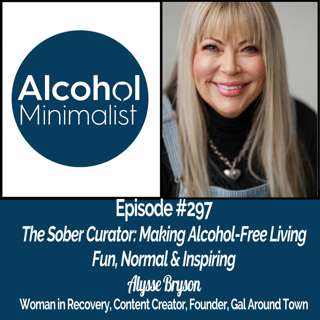
The Sober Curator: Making Alcohol-Free Living Fun, Normal & Inspiring with Alysse Bryson

The Sober Curator: Making Alcohol-Free Living Fun, Normal & Inspiring with Alysse Bryson

What does it look like to build a fun, fulfilling life with less alcohol—or none at all?In this episode of the Alcohol Minimalist Podcast, Molly talks with Elise Bryson, CEO and curator of The Sober C...

14 Syys 45min
Revisiting Think Thursday: Neurodivergence and The Brain's Energy Economy

Revisiting Think Thursday: Neurodivergence and The Brain's Energy Economy

In this revisited Think Thursday episode, Molly explores ADHD through the lens of the brain’s energy economy—how neurodivergent brains may use mental fuel differently, and why that matters for motivat...

10 Syys 13min

Suosittua kategoriassa Koulutus

rss-murhan-anatomia
psykopodiaa-podcast
aamukahvilla
adhd-podi
rss-arkea-ja-aurinkoa-podcast-espanjasta
rss-hereilla
rss-valo-minussa-2
voi-hyvin-meditaatiot-2
rss-liian-kuuma-peruna
kesken
rss-rahamania
koulu-podcast-2
rss-paikoillenne-valmiit-laakikseen
psykologia
rss-duodecim-lehti
rss-vapaudu-voimaasi
rss-duokkari-ekstra
rss-narsisti
rahapuhetta
rss-onks-ok