Think Thursday: Does Giving Up Alcohol Make You Feel Deprived?

Think Thursday: Does Giving Up Alcohol Make You Feel Deprived?

This week on Think Thursday we're talking about the deprivation mindset, particularly in the context of changing one's relationship with alcohol. Host Molly Watts explains that deprivation, in its true sense, refers to the lack of essentials like food or oxygen, whereas the feeling of deprivation when cutting back on alcohol is a mental construct. Molly emphasizes that alcohol is not essential for survival and that the perceived deprivation is self-created. She advises shifting perspective to focus on the benefits of reducing alcohol intake, such as better sleep and health, and practicing gratitude to combat feelings of lack.


Action Items

  • [ ] Focus on what you're gaining by not drinking, such as better sleep, more energy, and a clearer mind.
  • [ ] Challenge thoughts of feeling deprived by asking yourself if you truly need alcohol right now.
  • [ ] Practice gratitude and shift your attention to what you're grateful for in your journey.
  • [ ] Remind yourself that alcohol is not a vital necessity, unlike oxygen or food.


Deprivation Mindset and Its Impact on Behavior Change

  • Molly Watts introduces the topic of deprivation mindset, emphasizing its relevance to behavior change and mindset.
  • She explains that deprivation mindset is often experienced by people trying to change their relationship with alcohol.
  • Molly clarifies that deprivation refers to being denied something necessary for survival, like food or water, and not alcohol.
  • She shares a personal experience of oxygen deprivation due to asthma to illustrate the difference between real and perceived deprivation.

Understanding Perceived Deprivation

  • Molly discusses how the feeling of deprivation is often self-created and not a real physical need.
  • She explains that perceived deprivation is a mental and emotional state where one feels they are missing out on something important.
  • Molly highlights that alcohol is associated with relaxation and fun, leading to the misinterpretation of its absence as a loss.
  • She emphasizes that the feeling of deprivation is a thought error and can be managed by changing one's perspective.

Breaking Free from the Deprivation Mindset

  • Molly suggests that changing how one thinks about alcohol can help break free from the deprivation mindset.
  • She encourages reframing alcohol as a choice rather than a necessity, focusing on the benefits of cutting back.
  • Molly shares her personal experience of managing oxygen deprivation and how it differs from the perceived deprivation of alcohol.
  • She acknowledges that changing this mindset takes practice and effort but is essential for long-term well-being.

Desire vs. Deprivation

  • Molly clarifies the difference between desire and deprivation, explaining that desire is often mistaken for deprivation.
  • She advises recognizing desire as something manageable and not equating it with essential needs.
  • Molly emphasizes that changing one's thoughts about alcohol can help eliminate the feeling of deprivation.
  • She encourages focusing on the positive aspects of not drinking, such as better sleep and improved health.

Tips for Reframing Deprivation

  • Molly provides tips for making the mindset shift, starting with focusing on what one is gaining by not drinking.
  • She advises challenging deprivation thoughts by questioning whether alcohol is truly needed in the moment.
  • Molly suggests practicing gratitude to shift the mindset away from feelings of lack to abundance.
  • She emphasizes the importance of reminding oneself of the truth that alcohol is not essential for survival.

The Role of Mindset in Creating Lasting Change

  • Molly acknowledges that mindset work is not just about positive affirmations but actively reshaping one's brain and life.
  • She explains that successful habit change involves arguing against negative self-talk and taking better actions.
  • Molly emphasizes that mindset work is hard and uncomfortable but is crucial for creating lasting change.
  • She encourages focusing on the positive and challenging old stories to achieve a life that aligns with one's true desires.

Conclusion and Call to Action

  • Molly wraps up the episode by reiterating the importance of mindset in creating a life free from the feeling of deprivation.
  • She reminds listeners that they are not being deprived but gaining by making these changes.
  • Molly encourages staying focused on the positive and challenging old stories to have a successful more sober October.
  • She invites listeners to leave reviews, share the podcast, and send notes to stay connected and benefit from these insights.


★ Support this podcast ★

Tämä jakso on lisätty Podme-palveluun avoimen RSS-syötteen kautta eikä se ole Podmen omaa tuotantoa. Siksi jakso saattaa sisältää mainontaa.

Jaksot(415)

Can Better Sleep Help You Drink Less?

Can Better Sleep Help You Drink Less?

What if drinking less starts with sleeping better?In this episode of the Alcohol Minimalist Podcast, Molly explores new research on the connection between insomnia treatment and alcohol use. The study...

5 Loka 18min
Think Thursday: The Science of Doing it Together!

Think Thursday: The Science of Doing it Together!

Why does change sometimes feel easier when we’re doing it alongside other people?In this Think Thursday episode, Molly explores the science behind shared goals, group support, and collective behavior ...

1 Loka 11min
More Sober October: Make it An Experiment, Not an Exam

More Sober October: Make it An Experiment, Not an Exam

What if the goal of More Sober October isn’t a perfect calendar—but learning something about your relationship with alcohol?In this episode, Molly shares how to approach October as an experiment inste...

28 Syys 23min
Think Thursday: Alzheimer’s Prevention and What the Latest Research Tells Us

Think Thursday: Alzheimer’s Prevention and What the Latest Research Tells Us

World Alzheimer’s Day is a good reminder that the story around Alzheimer’s disease is changing.In this Think Thursday episode, Molly looks at what we know now about earlier diagnosis, blood-based biom...

24 Syys 18min
How Much Alcohol is Safe? Rethinking Drinking Guidelines

How Much Alcohol is Safe? Rethinking Drinking Guidelines

What does “drink less” actually mean?In this episode of the Alcohol Minimalist podcast, Molly explores the changing alcohol guidelines and why there isn’t one simple number that guarantees a “safe” le...

21 Syys 20min
Think Thursday: Why Familiar Feels True-When Thoughts Become Beliefs

Think Thursday: Why Familiar Feels True-When Thoughts Become Beliefs

What happens when a thought gets repeated so often that it stops feeling like a thought and starts feeling like a fact?In this Think Thursday episode, Molly explores the illusory truth effect, process...

17 Syys 15min
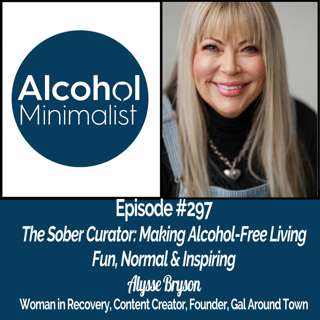
The Sober Curator: Making Alcohol-Free Living Fun, Normal & Inspiring with Alysse Bryson

The Sober Curator: Making Alcohol-Free Living Fun, Normal & Inspiring with Alysse Bryson

What does it look like to build a fun, fulfilling life with less alcohol—or none at all?In this episode of the Alcohol Minimalist Podcast, Molly talks with Elise Bryson, CEO and curator of The Sober C...

14 Syys 45min
Revisiting Think Thursday: Neurodivergence and The Brain's Energy Economy

Revisiting Think Thursday: Neurodivergence and The Brain's Energy Economy

In this revisited Think Thursday episode, Molly explores ADHD through the lens of the brain’s energy economy—how neurodivergent brains may use mental fuel differently, and why that matters for motivat...

10 Syys 13min

Suosittua kategoriassa Koulutus

rss-murhan-anatomia
psykopodiaa-podcast
aamukahvilla
adhd-podi
rss-arkea-ja-aurinkoa-podcast-espanjasta
rss-hereilla
rss-valo-minussa-2
voi-hyvin-meditaatiot-2
rss-liian-kuuma-peruna
kesken
rss-rahamania
koulu-podcast-2
rss-paikoillenne-valmiit-laakikseen
psykologia
rss-duodecim-lehti
rss-vapaudu-voimaasi
rss-duokkari-ekstra
rss-narsisti
rahapuhetta
rss-onks-ok