Think Thursday: 10 Minutes a Day for Brain Health?

Think Thursday: 10 Minutes a Day for Brain Health?


Molly Watts discusses the benefits of 10 minutes of daily aerobic exercise on brain health, mood, and memory, citing research by neuroscientist Dr. Wendy Suzuki. Exercise increases blood flow to the brain, particularly the hippocampus, promoting neurogenesis and cognitive function. Regular exercise can slow or reverse age-related brain shrinkage and cognitive decline. Watts emphasizes the importance of consistency over intensity, suggesting activities like brisk walking or dancing for 10 minutes daily. She ties this to the alcohol minimalist journey, highlighting exercise as a natural way to counteract alcohol-induced brain fog and boost dopamine and serotonin levels. Watts encourages listeners to start small, track progress, and observe the positive impact on mood and stress management.


Action Items

  • [ ] Start each day with 10 minutes of movement, such as a brisk walk, dancing, or cycling.
  • [ ] Track the impact of the 10-minute daily exercise on your mood, focus, and stress response.

Outline

Brain Health and Neuroplasticity

  • Molly Watts introduces the episode, focusing on brain health, neuroscience, and behavior change.
  • She mentions the importance of creating small, sustainable habits for long-term change.
  • Molly introduces Dr. Wendy Suzuki's research on the brain-changing benefits of exercise.
  • The episode aims to discuss how 10 minutes of daily movement can improve brain health, mood, and memory.

The Role of Exercise in Brain Health

  • Molly explains that exercise can enhance memory, boost mood, and potentially protect against dementia.
  • She highlights the importance of neuroplasticity and how exercise can make the brain more elastic and adaptable.
  • Dr. Suzuki's research shows that 10 minutes of aerobic exercise can significantly impact brain health.
  • Exercise increases blood flow to the brain, especially the hippocampus, which is crucial for learning and memory.

Neurogenesis and Cognitive Function

  • Molly discusses how blood flow promotes neurogenesis, the growth of new neurons.
  • Exercise helps maintain and improve the brain's ability to form new connections as we age.
  • Dr. Suzuki calls exercise the "antidote to aging" because it can slow down or reverse brain shrinkage associated with cognitive decline.
  • A study in Nature Scientific Reports found that even 10 minutes of light exercise can increase connectivity between the hippocampus and other brain regions involved in memory processing.

The Iterative Mindset and Consistency

  • Molly emphasizes the importance of consistency over intensity in exercise.
  • She discusses the all-or-nothing mindset and encourages taking small, consistent actions.
  • Adding 10 minutes of movement to your day can lead to significant improvements in brain health over time.
  • Molly ties this back to the iterative mindset, which is about small, consistent actions leading to lasting change.

Exercise as a Replacement for Alcohol

  • Molly explains how exercise can counteract the brain fog caused by habitual daily drinking.
  • Exercise boosts the production of dopamine and serotonin, which are impacted by alcohol use.
  • Molly suggests using exercise as a replacement for alcohol in moments of stress or emotional discomfort.
  • Movement stimulates the brain's reward system, helping to regulate emotions and feel more in control.

Immediate and Long-Term Benefits of Exercise

  • Molly highlights that even a single session of moderate exercise can boost mood and improve focus.
  • Small, incremental changes in exercise can lead to lasting transformation.
  • Dr. Suzuki recommends starting with 10 minutes of moderate exercise each day for consistency.
  • The key is to do it every day, regardless of intensity, to promote neurogenesis and reduce the risk of cognitive decline.

Accessibility and Consistency in Exercise

  • Molly emphasizes that 10 minutes of exercise is accessible to everyone, regardless of fitness level.
  • The goal is to add movement into your routine without overhauling your lifestyle.
  • Molly discusses the iterative mindset, which involves starting small and building up to big results.
  • Consistency in exercise can have profound effects on brain health and overall well-being.

Challenge and Conclusion

  • Molly challenges listeners to start each day with 10 minutes of movement and track their progress.
  • She encourages listeners to notice how it impacts their mood, focus, and stress response.
  • Molly thanks listeners for joining and invites them to review and share the episodes with others.
  • She concludes by emphasizing the importance of small, consistent actions for long-term brain health and mindset improvement.


★ Support this podcast ★

Tämä jakso on lisätty Podme-palveluun avoimen RSS-syötteen kautta eikä se ole Podmen omaa tuotantoa. Siksi jakso saattaa sisältää mainontaa.

Jaksot(415)

Can Better Sleep Help You Drink Less?

Can Better Sleep Help You Drink Less?

What if drinking less starts with sleeping better?In this episode of the Alcohol Minimalist Podcast, Molly explores new research on the connection between insomnia treatment and alcohol use. The study...

5 Loka 18min
Think Thursday: The Science of Doing it Together!

Think Thursday: The Science of Doing it Together!

Why does change sometimes feel easier when we’re doing it alongside other people?In this Think Thursday episode, Molly explores the science behind shared goals, group support, and collective behavior ...

1 Loka 11min
More Sober October: Make it An Experiment, Not an Exam

More Sober October: Make it An Experiment, Not an Exam

What if the goal of More Sober October isn’t a perfect calendar—but learning something about your relationship with alcohol?In this episode, Molly shares how to approach October as an experiment inste...

28 Syys 23min
Think Thursday: Alzheimer’s Prevention and What the Latest Research Tells Us

Think Thursday: Alzheimer’s Prevention and What the Latest Research Tells Us

World Alzheimer’s Day is a good reminder that the story around Alzheimer’s disease is changing.In this Think Thursday episode, Molly looks at what we know now about earlier diagnosis, blood-based biom...

24 Syys 18min
How Much Alcohol is Safe? Rethinking Drinking Guidelines

How Much Alcohol is Safe? Rethinking Drinking Guidelines

What does “drink less” actually mean?In this episode of the Alcohol Minimalist podcast, Molly explores the changing alcohol guidelines and why there isn’t one simple number that guarantees a “safe” le...

21 Syys 20min
Think Thursday: Why Familiar Feels True-When Thoughts Become Beliefs

Think Thursday: Why Familiar Feels True-When Thoughts Become Beliefs

What happens when a thought gets repeated so often that it stops feeling like a thought and starts feeling like a fact?In this Think Thursday episode, Molly explores the illusory truth effect, process...

17 Syys 15min
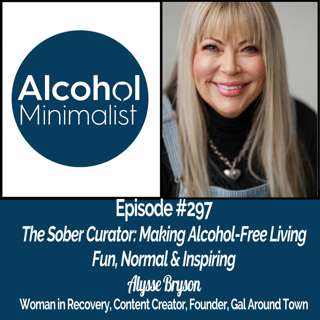
The Sober Curator: Making Alcohol-Free Living Fun, Normal & Inspiring with Alysse Bryson

The Sober Curator: Making Alcohol-Free Living Fun, Normal & Inspiring with Alysse Bryson

What does it look like to build a fun, fulfilling life with less alcohol—or none at all?In this episode of the Alcohol Minimalist Podcast, Molly talks with Elise Bryson, CEO and curator of The Sober C...

14 Syys 45min
Revisiting Think Thursday: Neurodivergence and The Brain's Energy Economy

Revisiting Think Thursday: Neurodivergence and The Brain's Energy Economy

In this revisited Think Thursday episode, Molly explores ADHD through the lens of the brain’s energy economy—how neurodivergent brains may use mental fuel differently, and why that matters for motivat...

10 Syys 13min

Suosittua kategoriassa Koulutus

rss-murhan-anatomia
psykopodiaa-podcast
aamukahvilla
adhd-podi
rss-arkea-ja-aurinkoa-podcast-espanjasta
rss-hereilla
rss-valo-minussa-2
voi-hyvin-meditaatiot-2
rss-liian-kuuma-peruna
kesken
rss-rahamania
koulu-podcast-2
rss-paikoillenne-valmiit-laakikseen
psykologia
rss-duodecim-lehti
rss-vapaudu-voimaasi
rss-duokkari-ekstra
rss-narsisti
rahapuhetta
rss-onks-ok