Think Thursday: How Your Diet Impacts Your Brain Health

Think Thursday: How Your Diet Impacts Your Brain Health

Molly Watts discusses the importance of brain health and diet on her podcast "Think Thursday." She emphasizes that the brain, despite being only 2% of body weight, uses 20% of the body's energy. Watts highlights the negative impact of a Western diet high in refined sugars, unhealthy fats, and processed foods on cognitive function and emotional regulation. She recommends a Mediterranean diet rich in omega-3 fatty acids, B vitamins, and antioxidants for better brain health, citing studies showing significant reductions in cognitive decline and Alzheimer's risk. Watts also addresses the role of supplements, advising consultation with healthcare providers and emphasizing whole foods for optimal benefits. She concludes by encouraging small, sustainable dietary changes to support brain health and reduce alcohol's impact.

Action Items

  • [ ] Try making one small change to your diet by replacing a processed or high-sugar snack with a healthier option like fruit, nuts, or antioxidant-rich foods.
  • [ ] Consider incorporating more omega-3 rich foods like salmon, walnuts, or flax seeds into your meals. If your diet lacks omega-3s, you may want to discuss a supplement with your healthcare provider.
  • [ ] Focus on getting more B vitamins from whole foods like eggs, leafy greens, and whole grains. If you are in a high-risk group for B12 deficiency, check with your healthcare provider about supplementation.
  • [ ] Increase your intake of antioxidant-rich foods like berries, dark chocolate, and green tea to help protect your brain from oxidative stress and inflammation.

Brain Health and Aging

  • Molly Watts introduces the episode, focusing on brain health, neuroscience, and behavior change.
  • Molly shares her background, mentioning her previous podcast "Live Happier Longer" and her current work in senior living.
  • She expresses her interest in preventing dementia, cognitive decline, and Alzheimer's through brain health and neuroplasticity.
  • Molly emphasizes the importance of brain health and its interconnection with neuroplasticity and mindset.

Diet's Impact on Brain Health

  • Molly discusses the significance of diet in brain health, noting that the brain uses 20% of the body's energy despite being only 2% of body weight.
  • She compares the brain to a car engine, highlighting the importance of high-quality fuel for optimal function.
  • Molly explains how a typical Western diet rich in refined sugars, unhealthy fats, and processed foods negatively impacts brain health.
  • A 2015 study is cited, showing that diets high in fats and sugars impair memory and cognitive performance.

Mediterranean Diet and Brain Health

  • Molly introduces the Mediterranean diet as a brain-friendly diet rich in fruits, vegetables, whole grains, and healthy fats.
  • A study from the New England Journal of Medicine is mentioned, indicating that the Mediterranean diet can slow cognitive decline and reduce Alzheimer's risk by up to 40%.
  • Omega-3 fatty acids, particularly EPA and DHA, are highlighted as essential for brain health, reducing inflammation and improving brain cell communication.
  • B vitamins, especially B12 and folate, are discussed for their role in producing neurotransmitters like serotonin and dopamine, which regulate mood and cognition.

Antioxidants and Supplements

  • Molly explains the importance of antioxidants in protecting the brain from oxidative stress and inflammation, mentioning foods like berries, dark chocolate, and green tea.
  • She discusses the potential benefits of supplements for omega-3s, B vitamins, and antioxidants if dietary intake is insufficient.
  • Molly emphasizes the importance of consulting a healthcare provider before starting any supplement regimen.
  • She shares her personal experience with supplements and the importance of a balanced, nutrient-dense diet.

Alcohol Consumption and Brain Health

  • Molly ties the discussion back to alcohol consumption, suggesting that a brain-healthy diet can mitigate some of alcohol's negative effects.
  • She recommends pairing alcohol with omega-3 rich foods or antioxidant-packed berries to reduce inflammation and oxidative stress.
  • Molly encourages incorporating more brain-friendly foods into daily routines to support cognitive function and emotional stability.
  • She provides practical tips for adding omega-3s, antioxidants, and B vitamins to the diet, such as walnuts, flax seeds, and leafy greens.

Practical Steps for Improving Brain Health

  • Molly advises reducing processed foods and refined sugars, noting their negative impact on brain health and overall well-being.
  • She suggests swapping sugary snacks for healthier options like nuts or fruit to reduce inflammation and support clearer thinking.
  • Molly emphasizes the long-term effects of high sugar intake on cognitive health and the risk of dementia and Alzheimer's.
  • She encourages small, sustainable changes to diet, such as adding fish to meals or replacing processed foods with whole grains.

Challenge and Conclusion

  • Molly challenges listeners to make one small dietary change, such as reducing processed or high-sugar foods.
  • She acknowledges the challenges of making these changes, especially around holidays like Halloween.
  • Molly emphasizes the importance of small, consistent changes for long-term brain health and overall well-being.
  • She invites listeners to share their dietary changes and their impact on brain health, encouraging feedback and engagement.


★ Support this podcast ★

Tämä jakso on lisätty Podme-palveluun avoimen RSS-syötteen kautta eikä se ole Podmen omaa tuotantoa. Siksi jakso saattaa sisältää mainontaa.

Jaksot(415)

Can Better Sleep Help You Drink Less?

Can Better Sleep Help You Drink Less?

What if drinking less starts with sleeping better?In this episode of the Alcohol Minimalist Podcast, Molly explores new research on the connection between insomnia treatment and alcohol use. The study...

5 Loka 18min
Think Thursday: The Science of Doing it Together!

Think Thursday: The Science of Doing it Together!

Why does change sometimes feel easier when we’re doing it alongside other people?In this Think Thursday episode, Molly explores the science behind shared goals, group support, and collective behavior ...

1 Loka 11min
More Sober October: Make it An Experiment, Not an Exam

More Sober October: Make it An Experiment, Not an Exam

What if the goal of More Sober October isn’t a perfect calendar—but learning something about your relationship with alcohol?In this episode, Molly shares how to approach October as an experiment inste...

28 Syys 23min
Think Thursday: Alzheimer’s Prevention and What the Latest Research Tells Us

Think Thursday: Alzheimer’s Prevention and What the Latest Research Tells Us

World Alzheimer’s Day is a good reminder that the story around Alzheimer’s disease is changing.In this Think Thursday episode, Molly looks at what we know now about earlier diagnosis, blood-based biom...

24 Syys 18min
How Much Alcohol is Safe? Rethinking Drinking Guidelines

How Much Alcohol is Safe? Rethinking Drinking Guidelines

What does “drink less” actually mean?In this episode of the Alcohol Minimalist podcast, Molly explores the changing alcohol guidelines and why there isn’t one simple number that guarantees a “safe” le...

21 Syys 20min
Think Thursday: Why Familiar Feels True-When Thoughts Become Beliefs

Think Thursday: Why Familiar Feels True-When Thoughts Become Beliefs

What happens when a thought gets repeated so often that it stops feeling like a thought and starts feeling like a fact?In this Think Thursday episode, Molly explores the illusory truth effect, process...

17 Syys 15min
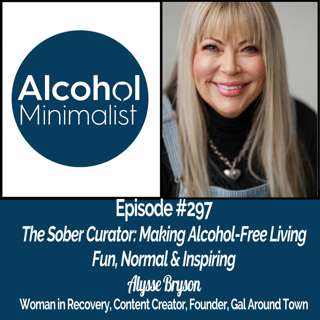
The Sober Curator: Making Alcohol-Free Living Fun, Normal & Inspiring with Alysse Bryson

The Sober Curator: Making Alcohol-Free Living Fun, Normal & Inspiring with Alysse Bryson

What does it look like to build a fun, fulfilling life with less alcohol—or none at all?In this episode of the Alcohol Minimalist Podcast, Molly talks with Elise Bryson, CEO and curator of The Sober C...

14 Syys 45min
Revisiting Think Thursday: Neurodivergence and The Brain's Energy Economy

Revisiting Think Thursday: Neurodivergence and The Brain's Energy Economy

In this revisited Think Thursday episode, Molly explores ADHD through the lens of the brain’s energy economy—how neurodivergent brains may use mental fuel differently, and why that matters for motivat...

10 Syys 13min
Suosittua kategoriassa Koulutus

rss-murhan-anatomia
psykopodiaa-podcast
aamukahvilla
adhd-podi
rss-arkea-ja-aurinkoa-podcast-espanjasta
rss-hereilla
rss-valo-minussa-2
voi-hyvin-meditaatiot-2
rss-liian-kuuma-peruna
kesken
rss-rahamania
koulu-podcast-2
rss-paikoillenne-valmiit-laakikseen
psykologia
rss-duodecim-lehti
rss-vapaudu-voimaasi
rss-duokkari-ekstra
rss-narsisti
rahapuhetta
rss-onks-ok