#89 – Owen Cotton-Barratt on epistemic systems and layers of defense against potential global catastrophes

#89 – Owen Cotton-Barratt on epistemic systems and layers of defense against potential global catastrophes

From one point of view academia forms one big 'epistemic' system — a process which directs attention, generates ideas, and judges which are good. Traditional print media is another such system, and we can think of society as a whole as a huge epistemic system, made up of these and many other subsystems.

How these systems absorb, process, combine and organise information will have a big impact on what humanity as a whole ends up doing with itself — in fact, at a broad level it basically entirely determines the direction of the future.

With that in mind, today’s guest Owen Cotton-Barratt has founded the Research Scholars Programme (RSP) at the Future of Humanity Institute at Oxford University, which gives early-stage researchers leeway to try to understand how the world works.

Links to learn more, summary and full transcript.

Instead of you having to pay for a masters degree, the RSP pays *you* to spend significant amounts of time thinking about high-level questions, like "What is important to do?” and “How can I usefully contribute?"

Participants get to practice their research skills, while also thinking about research as a process and how research communities can function as epistemic systems that plug into the rest of society as productively as possible.

The programme attracts people with several years of experience who are looking to take their existing knowledge — whether that’s in physics, medicine, policy work, or something else — and apply it to what they determine to be the most important topics.

It also attracts people without much experience, but who have a lot of ideas. If you went directly into a PhD programme, you might have to narrow your focus quickly. But the RSP gives you time to explore the possibilities, and to figure out the answer to the question “What’s the topic that really matters, and that I’d be happy to spend several years of my life on?”

Owen thinks one of the most useful things about the two-year programme is being around other people — other RSP participants, as well as other researchers at the Future of Humanity Institute — who are trying to think seriously about where our civilisation is headed and how to have a positive impact on this trajectory.

Instead of being isolated in a PhD, you’re surrounded by folks with similar goals who can push back on your ideas and point out where you’re making mistakes. Saving years not pursuing an unproductive path could mean that you will ultimately have a much bigger impact with your career.

RSP applications are set to open in the Spring of 2021 — but Owen thinks it’s helpful for people to think about it in advance.

In today’s episode, Arden and Owen mostly talk about Owen’s own research. They cover:

• Extinction risk classification and reduction strategies
• Preventing small disasters from becoming large disasters
• How likely we are to go from being in a collapsed state to going extinct
• What most people should do if longtermism is true
• Advice for mathematically-minded people
• And much more

Chapters:
• Rob’s intro (00:00:00)
• The interview begins (00:02:22)
• Extinction risk classification and reduction strategies (00:06:02)
• Defense layers (00:16:37)
• Preventing small disasters from becoming large disasters (00:23:31)
• Risk factors (00:38:57)
• How likely are we to go from being in a collapsed state to going extinct? (00:48:02)
• Estimating total levels of existential risk (00:54:35)
• Everyday longtermism (01:01:35)
• What should most people do if longtermism is true? (01:12:18)
• 80,000 Hours’ issue with promoting career paths (01:24:12)
• The existential risk of making a lot of really bad decisions (01:29:27)
• What should longtermists do differently today (01:39:08)
• Biggest concerns with this framework (01:51:28)
• Research careers (02:04:04)
• Being a mathematician (02:13:33)
• Advice for mathematically minded people (02:24:30)
• Rob’s outro (02:37:32)

Producer: Keiran Harris
Audio mastering: Ben Cordell
Transcript: Zakee Ulhaq

Denne episoden er hentet fra en åpen RSS-feed og er ikke publisert av Podme. Den kan derfor inneholde annonser.

Episoder(364)

Luke Muehlhauser on the most important AI safety work nobody is doing

Luke Muehlhauser on the most important AI safety work nobody is doing

The US government spends 25 times more on military marching bands than on its AI safety institute. And that’s just one of the many institutions we’re missing as AI becomes more powerful and dangerous....

29 Okt 2h 36min
Why Silicon Valley can’t slow down AI on its own | Luisa Rodriguez

Why Silicon Valley can’t slow down AI on its own | Luisa Rodriguez

Two-thirds of Americans think AI is moving too fast. So do the people building it. So why the hell isn’t anyone slowing down?We can’t tell when models are too dangerous. We mostly don’t know how they ...

27 Okt 21min
Tom Milton on how we could verify a US–China deal on AI

Tom Milton on how we could verify a US–China deal on AI

If the US and China agreed to pause frontier AI training, how would either side confirm the other was complying? Today, Tom Milton argues, the most likely answer would be to shut down data centres ent...

23 Okt 1h 48min
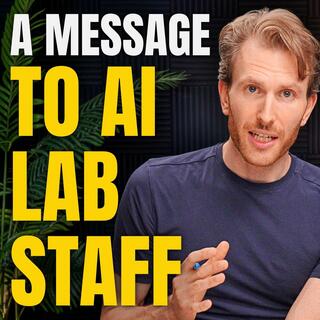
AI lab staff: Has your project been overtaken by events? 8 strategic updates | Rob Wiblin

AI lab staff: Has your project been overtaken by events? 8 strategic updates | Rob Wiblin

I have a plea for all staff at AI companies: reassess if your current role is still your best opportunity for impact. And if it’s not — move.Frontier lab staff listening to this show will mostly alrea...

21 Okt 14min

Introducing our new YouTube channel: Zershaaneh Talks AI

Introducing our new YouTube channel: Zershaaneh Talks AI

Our host Zershaaneh Qureshi has just launched a new YouTube channel: Zershaaneh Talks AI — featuring conversations about who should control AI, how to control AI, and who gets the benefits.The first e...

20 Okt 1min
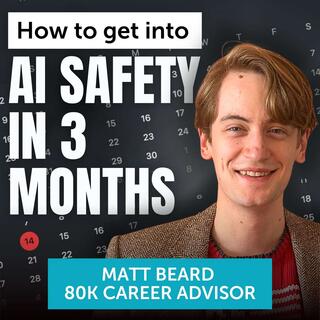
How to get into AI safety in 3 months (article reading by career advisor Matt Beard)

How to get into AI safety in 3 months (article reading by career advisor Matt Beard)

The AI safety field has grown by about 30x in the last eight years. Yet it is still in need of more people. Many want to help, but don’t know where to start. As an advisor at 80,000 Hours, Matt Beard ...

15 Okt 18min

OpenAI Security: Controlling Models is Now ‘Hell’ (AI Explained cross-post)

OpenAI Security: Controlling Models is Now ‘Hell’ (AI Explained cross-post)

This is an (unpaid) cross-post of a video from the podcast 'AI Explained', which Rob Wiblin thought you might be interested in.You can find the original on YouTube here. If you like it and want more s...

9 Okt 40min
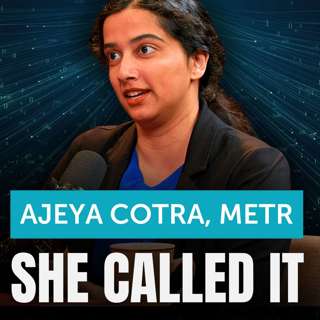
In 2023 Ajeya Cotra already knew what was coming (classic episode)

In 2023 Ajeya Cotra already knew what was coming (classic episode)

We're rereleasing some of older episodes that seem more relevant than ever with new rogue AI incidents now seemingly announced every day. Ajeya was one of three independent investigators into the Hugg...

8 Okt 2h 46min
Populært innen Fakta

fastlegen
dine-penger-pengeradet
fryktlos
relasjonspodden-med-dora-thorhallsdottir-kjersti-idem
rss-strid
foreldreradet
treningspodden
rss-ekteskapet
rss-bisarr-historie
rss-kunsten-a-leve
jakt-og-fiskepodden
sinnsyn
rss-orjasater
rss-kull
rss-sarbar-med-lotte-erik
hverdagspsyken
mikkels-paskenotter
branncast
gravid-uke-for-uke
rss-kunstig-intelligens-med-elisabeth-maren-og-morten