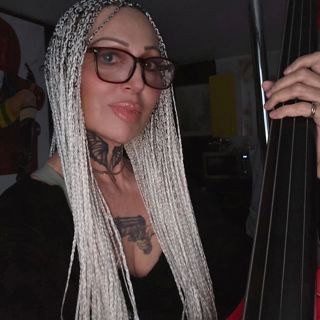
đŸŽč The Piano: Naming the Structure, Entering the Architecture | iServalan | Continuum Approach

đŸŽč The Piano: Naming the Structure, Entering the Architecture | iServalan | Continuum Approach

This essay accompanies an audio episode from iServalan and forms part of a wider approach to learning music through listening, movement, and attention.

đŸŽč The Piano: Naming the Structure, Entering the Architecture Before we talk about repertoire,
before we talk about grades,
before we talk about whether the piano is a “beginner’s instrument” — we meet it properly. Because the piano is not something you hold.
It is something you enter. And to enter it with confidence,
we need shared language. Not memorised.
Not examined.
Simply known. So when I name something,
you know where we are. The Body of the Piano Let’s begin at the point of contact. The keyboard. A row of keys — black and white —
balanced levers rather than buttons. Each key is a length of wood, weighted and hinged,
designed to travel down and return up with consistency. Beneath the keys is the keybed,
the foundation that holds the keyboard steady,
allowing repetition, reliability, trust. When a key is pressed, it sets a mechanism in motion —
the action. This is the heart of the piano. The action is a system of joints, levers, and felt,
translating finger movement into sound
with astonishing precision. The hammers sit at the far end of this system,
felt-covered and carefully shaped,
striking the strings and immediately rebounding. They do not stay on the string.
They touch and release. The strings themselves are stretched across a heavy metal frame,
grouped in twos and threes for most notes,
thicker and fewer in the bass,
thinner and more numerous as the pitch rises. These strings rest on bridges,
which transfer vibration into the soundboard. The soundboard is the piano’s voice. A broad, resonant wooden surface
that takes the small vibration of strings
and turns it into something that fills a room. Above all of this sits the lid,
which can be closed, opened partway, or fully raised,
not to make the piano louder,
but to shape how the sound travels outward. Below, at the feet, are the pedals. The sustain pedal allows sound to continue after the keys are released.
The soft pedal shifts the action to change colour and weight.
The middle pedal, where present, selectively holds sound. You don’t need to remember all of this at once. You only need to recognise that this is not a simple instrument. It is a contained architecture of time, weight, and resonance. Sitting at the Piano The piano does not ask you to wrap yourself around it.
It asks you to arrive. Your bench should allow your feet to rest fully on the floor.
Your thighs should slope gently downward.
Your spine is upright but unforced. You are not leaning into the keyboard.
You are meeting it. Your arms hang from your shoulders.
Your hands are carried, not held. This is not an instrument for gripping.
It is an instrument for balance. Taking Up Space: The Horizontal Orb Unlike string instruments,
the piano opens sideways. Imagine an orb around you —
wide now,
stretching from left to right. Your shoulders belong to this orb.
Your elbows.
Your forearms.
The arc your hands travel across the keyboard. Nothing should feel cramped.
Nothing should feel hurried. The piano does not reward collapse.
It rewards presence across width. If you shrink inward,
the sound narrows. So you allow yourself space. Quietly.
Without performance.
Without apology. You are allowed to sit here. What Comes Next Now — and only now —
do we have what we need. Not scales.
Not pieces. But orientation. A named structure.
A balanced seat.
An architecture entered with calm. Now we can make a sound. And when that sound arrives,
it arrives supported. ©2025 Sarnia de la Mare

The De La Maré Music Continuum

Written and presented by iServalanℱ (the stage name of Sarnia de la MarĂ© FRSA)
Music, listening, and the Continuum Approach: Exploring sound across genres, eras, and performance cultures — from Baroque to punk, hip-hop to minimalism — without hierarchy or haste.

iservalan.com

🎧 Podcast & essays: đŸŽ» Music School


#iServalan #ContinuumApproach #MusicPodcast #RadicalListening #MusicAcrossGenres
#PerformanceCulture #SarniaDeLaMaré

Det hÀr avsnittet Àr hÀmtat frÄn ett öppet RSS-flöde och publiceras inte av Podme. Det kan innehÄlla reklam.

Avsnitt(296)

iServalan Homotech 23: How My Hands Became a Machine, and the Machine Became a Self

iServalan Homotech 23: How My Hands Became a Machine, and the Machine Became a Self

iServalan Homotech 23: How My Hands Became a Machine, and the Machine Became a SelfI did not set out to invent a movement. I set out to keep working.In 2023 I began calling myself a Homotech. The word...

20 Sep 10min

How Musicians and Digitisation Fuse by Sarnia de la Maré FRSA for Continuum

How Musicians and Digitisation Fuse by Sarnia de la Maré FRSA for Continuum

Digitisation does not replace the musician. It changes the size of the body.A performer used to end at skin, instrument and room. Now the body can include sensors, software, sampled memory, a second v...

20 Sep 8min

Welcome to the De La Maré Music Continuum. Thirds as musical tools for composers and musicians

Welcome to the De La Maré Music Continuum. Thirds as musical tools for composers and musicians

The De La MarĂ© Music ContinuumWritten and presented by iServalanℱ (the stage name of Sarnia de la MarĂ© FRSA)Music, listening, and the Continuum Approach: Exploring sound across genres, eras, and perfo...

4 Sep 4min

Welcome to the De La Maré Music Continuum. This is an essay celebrating the beautiful third.

Welcome to the De La Maré Music Continuum. This is an essay celebrating the beautiful third.

The De La MarĂ© Music ContinuumWritten and presented by iServalanℱ (the stage name of Sarnia de la MarĂ© FRSA)Music, listening, and the Continuum Approach: Exploring sound across genres, eras, and perfo...

4 Sep 2min

West Dean College’s Musical Instruments programme: A De La MarĂ© Music Continuum InfoPod

West Dean College’s Musical Instruments programme: A De La MarĂ© Music Continuum InfoPod

The De La MarĂ© Music ContinuumWritten and presented by iServalanℱ (the stage name of Sarnia de la MarĂ© FRSA)Music, listening, and the Continuum Approach: Exploring sound across genres, eras, and perfo...

26 Aug 5min

The Heart of the Workshop: A Viola Maker’s Bench. A De La MarĂ© Music Continuum InfoPod.

The Heart of the Workshop: A Viola Maker’s Bench. A De La MarĂ© Music Continuum InfoPod.

Welcome to the Continuum Pedagoy Music School at iservalan.comThe De La MarĂ© Music ContinuumWritten and presented by iServalanℱ (the stage name of Sarnia de la MarĂ© FRSA)Music, listening, and the Cont...

26 Aug 5min

Jonathan Hill: UK Specialist in Viola d’Amore Making. A De La MarĂ© Music Continuum Info Pod

Jonathan Hill: UK Specialist in Viola d’Amore Making. A De La MarĂ© Music Continuum Info Pod

From the De La MarĂ© Music ContinuumThe De La MarĂ© Music ContinuumWritten and presented by iServalanℱ (the stage name of Sarnia de la MarĂ© FRSA)Music, listening, and the Continuum Approach: Exploring s...

22 Aug 5min

Lesson Project Songs on a Semitone, Lesson by iServalan for Continuum Music Studio

Lesson Project Songs on a Semitone, Lesson by iServalan for Continuum Music Studio

ABOUT PAGE https://www.iservalan.com/2026/08/the-de-la-mare-music-continuum-adaptive.htmlThe De La MarĂ© Music ContinuumWritten and presented by iServalanℱ (the stage name of Sarnia de la MarĂ© FRSA)Mus...

18 Aug 8min

PopulÀrt inom Utbildning

historiepodden-se
det-skaver
rss-bara-en-till-om-beroende-medberoende
nu-blir-det-historia
harrisons-dramatiska-historia
not-fanny-anymore
johannes-hansen-podcast
allt-du-velat-veta
rss-viktmedicinpodden
roda-vita-rosen
rikatillsammans-om-privatekonomi-rikedom-i-livet
rss-max-tant-med-max-villman
rss-foraldramotet-bring-lagercrantz
sa-in-i-sjalen
i-vantan-pa-katastrofen
rss-traningsklubben
sektledare
rss-okrystat
rss-autismandan
rss-sjalsligt-avkladd