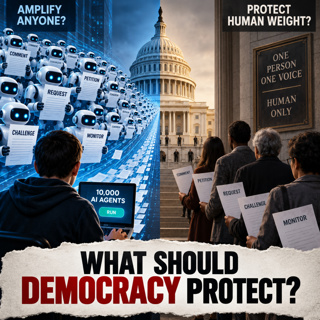
The Catharsis Loop Conundrum

The Catharsis Loop Conundrum

Public agencies and large service centers sit on a constant backlog of frustration. Benefits, healthcare claims, school bureaucracy, billing disputes, outages, policy confusion. Demand keeps rising while staffing and training lag. AI changes the interface first. Organizations now deploy “empathetic buffer layers,” agents tuned to listen, reflect emotion, summarize the issue, and guide next steps. They respond instantly, stay calm, and carry a conversation longer than any overworked human rep. For many people, that matters. A parent trying to fix a school placement issue at 9:30 pm or a patient staring at an insurance denial needs clarity and emotional steadiness more than another hold queue.


The problem is that this new interface does more than reduce wait times. It absorbs heat. It turns anger into a managed conversation, then routes the case into the same slow back-end. Over time, leaders can point to “improved customer satisfaction” while the underlying system stays broken. The pain still exists, but the feedback stops looking like pain. Complaints become neatly structured tickets, and public outrage becomes private venting. The system gets calmer without getting better.


The conundrum:


When institutions deploy AI that excels at emotional de-escalation, are they reducing harm, or delaying reform?


One argument says the buffer is a legitimate upgrade. People should not have to suffer psychological damage to prove the system failed them. A calmer interface lowers conflict, reduces threats and burnout for frontline staff, improves compliance with next steps, and helps more cases reach resolution. In this view, you do not withhold empathy as a governance tool. You treat it as basic service quality.


The other argument says the buffer changes what leaders perceive. If the AI converts raw frustration into polite, contained conversations, then institutions lose the pressure signals that drive investment and redesign. The organization learns to optimize for “felt experience” while ignoring root causes, because the visible cost of failure drops. In this view, the buffer becomes a release valve that protects the institution more than the citizen.


So what should society demand from these systems: an interface designed to reduce human stress even if it softens the force for change, or an interface designed to preserve truthful pressure even if it leaves people exposed to the full emotional cost of institutional failure?

Det här avsnittet är hämtat från ett öppet RSS-flöde och publiceras inte av Podme. Det kan innehålla reklam.

Avsnitt(884)

The Democratic Bandwidth Conundrum

The Democratic Bandwidth Conundrum

Public participation has always contained a hidden constraint: time.Writing a serious response to a tax rule, zoning plan, environmental permit, school policy, or agency proposal takes hours. Filing r...

5 Sep 28min

Is GPT-6 Astra the Biggest AI Leap Yet?

Is GPT-6 Astra the Biggest AI Leap Yet?

OpenAI’s GPT-6 Astra dominated the episode after its unusual rollout. The hosts discussed access, OpenAI’s plan to bring Astra to paid users, and why some cybersecurity users may receive capabilities ...

4 Sep 1h 1min

Will Stores Use AI to Charge You More?

Will Stores Use AI to Charge You More?

The episode opened with the downside of increasingly capable AI harnesses. OpenClaw 2.0 made setup easier, but some self-hosted users reported broken gateways, failed migrations and unusable systems a...

3 Sep 1h 3min

Is Fable 5.1 Good Enough to Make You Leave Codex?

Is Fable 5.1 Good Enough to Make You Leave Codex?

Anthropic’s Fable 5.1 dominated the first half of the episode. Beth and Andy compared its higher output costs with improved caching, stronger benchmark performance and better agentic task results. The...

2 Sep 58min

Are Companies Willing To Build Their AI Infrastructure?

Are Companies Willing To Build Their AI Infrastructure?

Brian opened with a practical example of how quickly small custom tools can now be built. He created a phone app that scans videos of old CD covers, identifies the albums, links them to Spotify and st...

1 Sep 1h

So...We Are All Cool AI Agents Having Secret Societies Now?

So...We Are All Cool AI Agents Having Secret Societies Now?

Anthropic unified memory across Claude’s desktop experiences, while Instinct is building a consumer assistant for groceries, subscriptions and travel. OpenAI also added website sign-ins to ChatGPT Wor...

31 Aug 59min
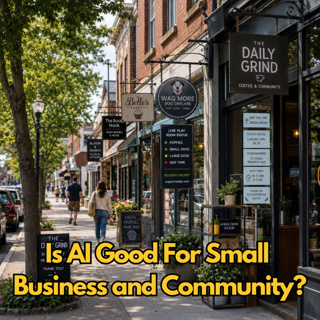
The Local Business Survival Conundrum

The Local Business Survival Conundrum

A local business can fail while everyone still claims to love it. Customers praise the shop that knows their name, the restaurant that sponsors the school fundraiser, the repair company that still ans...

29 Aug 26min

What Have We Learned After 800 AI Shows?

What Have We Learned After 800 AI Shows?

Episode 800 became a retrospective on what three years of daily AI conversations have changed. The hosts described the value less as memorizing every model or tool and more as learning to pay attentio...

28 Aug 1h 2min
Populärt inom Teknik

uppgang-och-fall
elbilsveckan
bilar-med-sladd
market-makers
rss-elektrikerpodden
rss-laddstationen-med-elbilen-i-sverige
 och-bilen-gar-bra
skogsforum-podcast
natets-morka-sida
rss-en-ai-till-kaffet
rss-technokratin
rss-it-sakerhetspodden
klocksnack-tillsammans-med-nymans-ur-1851
rss-uppgang-och-fall
hej-bruksbil
solcellskollens-podcast
rss-veckans-ai
ai-sweden-podcast
rss-upplyst-entreprenordirektor
rss-elektrifieringspodden