Alzheimer’s Isn’t “Just Aging”: Human Brain Data Shows a Distinct Mitochondrial Collapse — Especially in the Hippocampus

Alzheimer’s Isn’t “Just Aging”: Human Brain Data Shows a Distinct Mitochondrial Collapse — Especially in the Hippocampus

Most conversations about Alzheimer’s and mitochondria stay in broad strokes. This Deep Dive episode doesn’t. Dr. Mike Belkowski breaks down a study that examined postmortem human brain tissue to answer a precise question: do mitochondrial electron transport chain proteins shift in Alzheimer’s the same way they shift in normal aging — or is Alzheimer’s a different mitochondrial pattern entirely?

Using three groups (young controls 35–45, aged controls >85 without Alzheimer’s pathology, and sporadic Alzheimer’s cases 85–89), the researchers measured neuron-level immunohistochemical intensity (a proxy for relative protein abundance) for key mitochondrial markers: complex IV subunits MTCO1/MTCO2, complex V (ATP synthase), and IF1, the ATP synthase inhibitory factor that helps prevent catastrophic ATP “backwards burning” during stress and supports crista integrity.

The core finding: Alzheimer’s shows electron transport chain instability that differs from physiological aging, and the hippocampus (CA1/CA2) stands out as a failure zone — losing IF1 and failing to mount the compensatory ATP synthase response seen in other regions. In Energy Code terms: memory circuits are energy-expensive, and Alzheimer’s appears to remove mitochondrial protection exactly where it’s needed most.

(Educational content only, not medical advice.)

-

Article Discussed in Episode:

Immunohistochemical Markers of Mitochondrial Electron Transport Chain Instability in Human Brain Regions: A Study of Aging and Alzheimer’s Disease

-

Key Quotes From Dr. Mike:

“Do the mitochondrial electron transport chain proteins change in Alzheimer’s… or is Alzheimer’s a fundamentally different mitochondrial pattern?”

“Alzheimer’s shows a pattern of mitochondrial electron transport chain instability that is fundamentally distinct from physiological aging.”

“The hippocampus appears to be uniquely vulnerable because it fails to mount a protective compensatory response.”

“Alzheimer’s shows instability, and the hippocampus stands out as a failure zone.”

“Memory circuits depend on mitochondrial resilience… and the hippocampus loses mitochondrial protection exactly where it needs it most.”

-

Key Points

  • The study compares young controls, aged controls, and sporadic Alzheimer’s using human brain tissue.

  • Multiple regions were analyzed: middle frontal gyrus, anterior cingulate, caudate, hippocampus CA1/CA2, inferior parietal lobule.

  • Markers measured (IHC intensity proxy): MTCO1 + MTCO2 (complex IV), complex V (ATP synthase marker), IF1.

  • Complex IV subunit imbalance (MTCO1 ↓ while MTCO2 ↑) is repeatedly seen in Alzheimer’s → suggests complex IV stoichiometry/assembly instability and potential ↑electron leak/ROS.

  • IF1 matters because it:

    • inhibits reverse ATP hydrolysis by ATP synthase during stress (energy-preserving)

    • supports crista architecture via ATP synthase dimer stabilization

  • Many cortical regions show Alzheimer’s-associated compensatory increases in complex V and IF1.

  • Hippocampus is the exception: IF1 drops and complex V fails to rise → reduced protection against energy collapse.

  • Conclusion: Aging ≠ early Alzheimer’s; Alzheimer’s shows a distinct mitochondrial signature, with hippocampal vulnerability linked to failure of adaptive response.

  • Limitations: IHC is indirect (protein pattern proxy, not respiration measurements), but the region-specific patterns are coherent.

-

Episode timeline

  • 0:19–1:24 — The core question + headline conclusion (Alzheimer’s vs aging mitochondrial pattern)

  • 1:26–2:33 — Study design: groups, ages, regions analyzed

  • 2:33–3:12 — What they measured: MTCO1, MTCO2, complex V, IF1 (IHC intensity proxy)

  • 3:19–5:32 — Why these proteins matter: complex IV roles; ATP synthase; IF1 as protector + crista stabilizer

  • 5:34–7:58 — Region-by-region patterns (frontal cortex, anterior cingulate, caudate): instability vs compensation

  • 8:02–9:48 — Hippocampus CA1/CA2: the “failure zone” (IF1 down + no complex V compensation)

  • 9:57–11:54 — Energy Code synthesis: aging ≠ Alzheimer’s; complex IV instability + hippocampal loss of protection

  • 12:01–12:23 — Limitations (IHC proxy vs functional measures)

  • 12:26–14:18 — Implications: early mitochondrial stability/quality-control strategy; why memory is hit first

-

Dr. Mike's #1 recommendations:

Deuterium depleted water: Litewater (code: DRMIKE)

EMF-mitigating products: Somavedic (code: BIOLIGHT)

Blue light blocking glasses: Ra Optics (code: BIOLIGHT) Grounding products: Earthing.com

-

Stay up-to-date on social media:

Dr. Mike Belkowski:

Instagram

LinkedIn

BioLight:

Website

Instagram

YouTube

Facebook

Det här avsnittet är hämtat från ett öppet RSS-flöde och publiceras inte av Podme. Det kan innehålla reklam.

Avsnitt(375)

The Ultimate Guide to Intranasal Peptides: Brain Repair, Focus, Sleep, Longevity & More

The Ultimate Guide to Intranasal Peptides: Brain Repair, Focus, Sleep, Longevity & More

Intranasal peptides have become one of the most exciting frontiers in peptide research — but which ones actually make sense, and why? In this episode, Dr. Mike Belkowski breaks down the science behind...

27 Aug 1h 3min

GLP-1s, Urolithin A & Urolithin B: Uncovering the Mitochondria-Metabolism-Brain Axis

GLP-1s, Urolithin A & Urolithin B: Uncovering the Mitochondria-Metabolism-Brain Axis

Could metabolic aging, chronic anxiety, and depression all share the same biological root? In this episode of The Energy Code, Dr. Mike Belkowski reviews three newly published studies that, when viewe...

20 Aug 45min

The Red Light Therapy Scandal; Methylene Blue, Urolithin A & the Aging Discovery That Changes Everything

The Red Light Therapy Scandal; Methylene Blue, Urolithin A & the Aging Discovery That Changes Everything

Every month there's an avalanche of new research — but very little of it actually changes how we think about health. In this episode of The Energy Code, Dr. Mike Belkowski breaks down the most importa...

13 Aug 28min
The Future of Biohacking: The Next Wave of Light, Frequency, Peptides & Human Performance | David Horinek

The Future of Biohacking: The Next Wave of Light, Frequency, Peptides & Human Performance | David Horinek

David Horinek returns to The Energy Code to share the cutting-edge technologies he's developing at the intersection of light, frequency, biomaterials, regenerative health, and human performance.   In ...

6 Aug 1h 25min
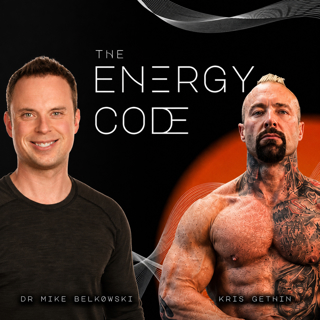
Biohacking Secrets For Travel, Sleep, Peptides & Longevity | Kris Gethin

Biohacking Secrets For Travel, Sleep, Peptides & Longevity | Kris Gethin

What does one of the world's most respected transformation coaches do to stay healthy while constantly traveling, competing, and pushing the limits of performance? In this wide-ranging conversation, D...

30 Juli 1h 56min

The FDA Just Changed the Peptide Conversation: Here’s What Happened

The FDA Just Changed the Peptide Conversation: Here’s What Happened

Something significant just happened in the world of peptides. On July 23–24, the FDA’s Pharmacy Compounding Advisory Committee considered seven widely discussed peptides and voted in favor of six: BPC...

27 Juli 25min
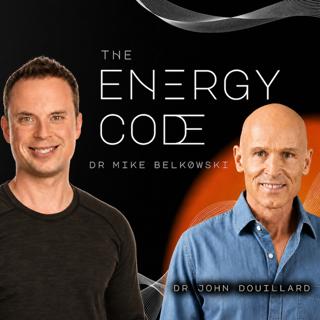
Ayurvedic Wisdom for Better Digestion, Performance & Bioenergetics | Dr. John Douillard

Ayurvedic Wisdom for Better Digestion, Performance & Bioenergetics | Dr. John Douillard

What happens when one of the world's leading experts in Ayurveda sits down with one of the leading voices in mitochondrial health? In this episode of The Energy Code, Dr. Mike Belkowski welcomes Dr. J...

23 Juli 1h 34min

Red Light Therapy for the Brain: Can it Protect Football Players From Head Injuries & Improve ADHD Impulse Control in Adults?

Red Light Therapy for the Brain: Can it Protect Football Players From Head Injuries & Improve ADHD Impulse Control in Adults?

In this Deep Dive, Dr. Mike Belkowski examines two new studies exploring transcranial photobiomodulation from completely different angles: protecting collegiate football players from the cumulative ef...

20 Juli 28min
Populärt inom Hälsa

somna-med-henrik
rss-jossan-nina
rss-bara-en-till-om-beroende-medberoende
bullfika
inga-beiga-morsor
rss-vuxna-pa-latsas
sexnoveller-deluxe
angestpodden
rss-viktmedicinpodden
johannes-hansen-podcast
not-fanny-anymore
rss-hos-psykologen
sa-in-i-sjalen
sova-med-dan-horning
rss-basta-livet
tyngre-traningssnack
halsoveckan-by-tyngre
rss-traningsklubben
medicinvetarna
prestera-mera-by-umara