Can Red Light Actually Lower Blood Sugar? Early Clinical Trials Suggest a Real Signal (Not a Miracle)

Can Red Light Actually Lower Blood Sugar? Early Clinical Trials Suggest a Real Signal (Not a Miracle)

Can photobiomodulation (red + near-infrared light) meaningfully improve glycemic control in people with type 2 diabetes? In this Deep Dive, Dr. Mike Belkowski breaks down a 2026 systematic review of randomized clinical trials that tested PBM for diabetes outcomes like fasting glucose, post-prandial glucose, and HbA1c.

The evidence base is small — only 4 RCTs met strict inclusion criteria (control/sham required) — but the signal was generally favorable: PBM was associated with reductions in fasting glucose, post-prandial glucose, and HbA1c, and in some studies improvements in lipid markers. The catch is that overall certainty is very low to low due to small samples, protocol heterogeneity, and bias concerns. Translation: promising adjunct, not proven therapy, and not remotely a replacement for standard care.

(Educational content only, not medical advice.)

-

Article Discussed in Episode:

Photobiomodulation Therapy to Improve Glycemic Control in People with Diabetes Mellitus: A Systematic Review

-

Key Quotes From Dr. Mike:

“Type 2 diabetes… chronic hyperglycemia disrupts mitochondrial metabolism, increases oxidative stress, activates inflammatory pathways…”

“PBM, mostly red and near infrared wavelengths, was associated with reductions in fasting glucose, postprandial glucose, and HBA1C.”

“These were longer protocols, 30 minutes per session, 3 sessions per week for 12 weeks.”

“PBM is not a replacement for medication, nutrition, exercise, or medical monitoring.”

“We’re early, but the direction is real.”

-

Key Points

  • The review included 4 randomized clinical trials (1993–2025 search; control/sham required).

  • Outcomes emphasized fasting glucose, post-prandial glucose, HbA1c, plus some cardiometabolic measures.

  • Overall finding: PBM was generally associated with improved glycemic markers, sometimes lipids too.

  • Evidence certainty: very low to low (small N, heterogeneity, some risk-of-bias concerns).

  • Protocol types:

    • Wrist “watch” PBM over radial pulse area: 30 min, 3x/week, 12 weeks, often alongside meds.

    • LED pad PBM over large tissue regions (limbs/abdomen): crossover, sham-controlled, acute/time-response.

  • Dose response looks biphasic (a “sweet spot”): one trial found 100 J sustained lower glycemia up to 12 hours, while higher dose wasn’t clearly better.

  • Mechanistic framework: mitochondria/CCO, NO & microcirculation, ROS → Ca²⁺ → AMPK, and GLUT4 translocation.

  • Bottom line: PBM is a plausible metabolic signal and an early clinical adjunct candidate—but the field needs larger, standardized RCTs and clearer dose-response mapping.

-

Episode timeline

  • 0:19–1:26 — The “futuristic” question + disclaimer (PBM as adjunct, not replacement)

  • 1:30–3:20 — Why PBM could matter in T2D (hyperglycemia → mito dysfunction/oxidative stress loop)

  • 3:24–4:51 — Systematic review methods + headline result (only 4 RCTs; generally favorable; low certainty)

  • 5:04–6:03 — Trial type #1: wrist “watch” PBM over radial pulse (12-week adjunct outcomes)

  • 6:03–7:28 — Trial type #2: LED pad PBM over larger tissue areas (crossover; acute/time-response; dose effects)

  • 7:28–8:40 — Biphasic response explanation + quality/bias ratings (PEDro, ROB2, GRADE)

  • 8:41–10:34 — Mechanisms: bioenergetics, NO/microcirculation, ROS→AMPK, GLUT4

  • 10:34–11:58 — Nuance: mixed literature; protocol variability likely drives inconsistent results

  • 12:02–13:26 — The Energy Code conclusion: promising adjunct, early evidence, needs standardization

-

Dr. Mike's #1 recommendations:

Deuterium depleted water: Litewater (code: DRMIKE)

EMF-mitigating products: Somavedic (code: BIOLIGHT)

Blue light blocking glasses: Ra Optics (code: BIOLIGHT) Grounding products: Earthing.com

-

Stay up-to-date on social media:

Dr. Mike Belkowski:

Instagram

LinkedIn

BioLight:

Website

Instagram

YouTube

Facebook

Det här avsnittet är hämtat från ett öppet RSS-flöde och publiceras inte av Podme. Det kan innehålla reklam.

Avsnitt(375)

The Ultimate Guide to Intranasal Peptides: Brain Repair, Focus, Sleep, Longevity & More

The Ultimate Guide to Intranasal Peptides: Brain Repair, Focus, Sleep, Longevity & More

Intranasal peptides have become one of the most exciting frontiers in peptide research — but which ones actually make sense, and why? In this episode, Dr. Mike Belkowski breaks down the science behind...

27 Aug 1h 3min

GLP-1s, Urolithin A & Urolithin B: Uncovering the Mitochondria-Metabolism-Brain Axis

GLP-1s, Urolithin A & Urolithin B: Uncovering the Mitochondria-Metabolism-Brain Axis

Could metabolic aging, chronic anxiety, and depression all share the same biological root? In this episode of The Energy Code, Dr. Mike Belkowski reviews three newly published studies that, when viewe...

20 Aug 45min

The Red Light Therapy Scandal; Methylene Blue, Urolithin A & the Aging Discovery That Changes Everything

The Red Light Therapy Scandal; Methylene Blue, Urolithin A & the Aging Discovery That Changes Everything

Every month there's an avalanche of new research — but very little of it actually changes how we think about health. In this episode of The Energy Code, Dr. Mike Belkowski breaks down the most importa...

13 Aug 28min
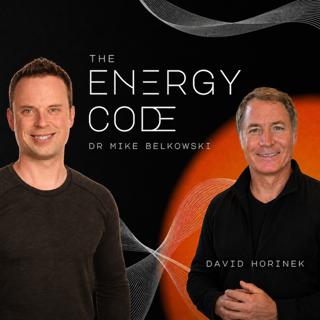
The Future of Biohacking: The Next Wave of Light, Frequency, Peptides & Human Performance | David Horinek

The Future of Biohacking: The Next Wave of Light, Frequency, Peptides & Human Performance | David Horinek

David Horinek returns to The Energy Code to share the cutting-edge technologies he's developing at the intersection of light, frequency, biomaterials, regenerative health, and human performance.   In ...

6 Aug 1h 25min
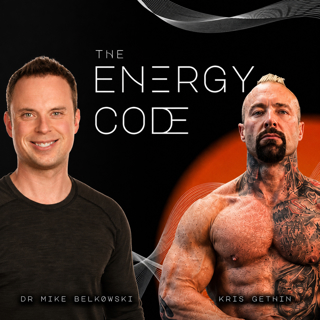
Biohacking Secrets For Travel, Sleep, Peptides & Longevity | Kris Gethin

Biohacking Secrets For Travel, Sleep, Peptides & Longevity | Kris Gethin

What does one of the world's most respected transformation coaches do to stay healthy while constantly traveling, competing, and pushing the limits of performance? In this wide-ranging conversation, D...

30 Juli 1h 56min

The FDA Just Changed the Peptide Conversation: Here’s What Happened

The FDA Just Changed the Peptide Conversation: Here’s What Happened

Something significant just happened in the world of peptides. On July 23–24, the FDA’s Pharmacy Compounding Advisory Committee considered seven widely discussed peptides and voted in favor of six: BPC...

27 Juli 25min
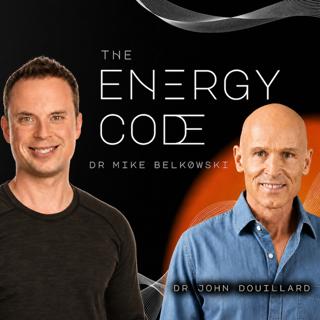
Ayurvedic Wisdom for Better Digestion, Performance & Bioenergetics | Dr. John Douillard

Ayurvedic Wisdom for Better Digestion, Performance & Bioenergetics | Dr. John Douillard

What happens when one of the world's leading experts in Ayurveda sits down with one of the leading voices in mitochondrial health? In this episode of The Energy Code, Dr. Mike Belkowski welcomes Dr. J...

23 Juli 1h 34min

Red Light Therapy for the Brain: Can it Protect Football Players From Head Injuries & Improve ADHD Impulse Control in Adults?

Red Light Therapy for the Brain: Can it Protect Football Players From Head Injuries & Improve ADHD Impulse Control in Adults?

In this Deep Dive, Dr. Mike Belkowski examines two new studies exploring transcranial photobiomodulation from completely different angles: protecting collegiate football players from the cumulative ef...

20 Juli 28min
Populärt inom Hälsa

somna-med-henrik
rss-jossan-nina
rss-bara-en-till-om-beroende-medberoende
bullfika
inga-beiga-morsor
rss-vuxna-pa-latsas
sexnoveller-deluxe
angestpodden
rss-viktmedicinpodden
johannes-hansen-podcast
not-fanny-anymore
rss-hos-psykologen
sa-in-i-sjalen
sova-med-dan-horning
rss-basta-livet
tyngre-traningssnack
halsoveckan-by-tyngre
rss-traningsklubben
medicinvetarna
prestera-mera-by-umara