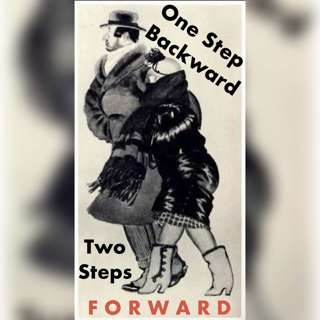
One Step Backward, Two Steps Forward: The New Economic Policy of the USSR

One Step Backward, Two Steps Forward: The New Economic Policy of the USSR

After years of revolution, civil war, foreign intervention, and economic collapse, the young Soviet state had survived, but at an enormous cost. Industry had ground to a halt, agricultural production had plummeted, cities were emptying as workers returned to the countryside, and famine threatened millions. The policies of War Communism, adopted in the desperate circumstances of civil war, had helped secure military victory, but they had also pushed the economy to the brink. Faced with this crisis, the Bolsheviks made one of the most consequential and controversial decisions in their history: the introduction of the New Economic Policy, or NEP.

In this episode, we're exploring one of the most fascinating chapters in Soviet history. We'll examine why Lenin and the Bolshevik leadership abandoned grain requisitioning in favor of a limited private trade and small-scale enterprise, and how the Soviet state sought to revive the economy while retaining control over what Lenin famously called the "commanding heights" of industry, banking, and foreign trade.

The NEP has long been the subject of fierce historical debate. Was it a tactical retreat forced by economic necessity, or a more durable vision of socialist development? Did it represent a compromise with capitalism, or was it a pragmatic strategy for building socialism in a country devastated by war and isolation? We'll explore these questions by looking not only at government policy, but also at the experiences of workers, peasants, traders, and party members as Soviet society adapted to this new economic reality.

We'll also trace the remarkable recovery that followed. Agricultural production rebounded, markets revived, factories gradually returned to operation, and living standards began to improve. Yet the NEP also brought new tensions: growing social inequalities, the emergence of the so-called Nepmen, debates over industrialization, and the persistent question of how long this mixed economy could endure. By the late 1920s, those debates would culminate in one of the most dramatic transformations in Soviet history.

So join us as Matthew explores the New Economic Policy and its far-reaching impact on early Soviet society, examining how this bold experiment reshaped everyday life in the young Soviet state, and set the stage for the ambitious industrialization and collectivization campaigns that followed.

Bibliography:

Det här avsnittet är hämtat från ett öppet RSS-flöde och publiceras inte av Podme. Det kan innehålla reklam.

Avsnitt(20)

"Life Has Become More Joyous" Discussion

"Life Has Become More Joyous" Discussion

In part 2 of special episode "Life Has Become More Joyous" Jason and Matthew continue with a discussion on the Stalinist Cultural Revolution of the 1930s.

31 Aug 1h 41min
"Life Has Become More Joyous!" (The Revolution From Above Part 3)

"Life Has Become More Joyous!" (The Revolution From Above Part 3)

The Cultural Revolution signaled the "Great Break" that promised to generate a new Soviet society. The Communist Party set out to revolutionize Soviet culture. They attacked the old intelligentsia, sm...

28 Aug 1h
Changes in Soviet Law : "Strengthening Socialist Legality"

Changes in Soviet Law : "Strengthening Socialist Legality"

The 1930s transformed Soviet society. The state collectivized agriculture, built an enormous industrial economy, reshaped the cities, and established a political system that reached more deeply into e...

14 Aug 1h 15min
Five Years in Four! The Union's Race to Industrialize (The Revolution From Above Part 2)

Five Years in Four! The Union's Race to Industrialize (The Revolution From Above Part 2)

From the launch of the First Five-Year Plan in 1928 to the eve of the German invasion in 1941, the Soviet Union underwent one of the most dramatic economic transformations in modern history. In little...

31 Juli 1h 23min
Collectivization and the Union's Great Gamble (The Revolution From Above Part 1)

Collectivization and the Union's Great Gamble (The Revolution From Above Part 1)

Beginning in 1928, the Soviet Union embarked on one of the most radical and thoroughgoing economic experiments in human history: to transform its agricultural base from a quasi-feudal to a comprehensi...

17 Juli 1h 22min
They Are Both Worse Part 2

They Are Both Worse Part 2

Matthew narrates the final clashes of the inner-party conflict that dominated soviet politics during its first decade and left Joseph Stalin and the marjoritist leadership in clear command of the USSR...

1 Juli 1h 14min
The First Ten Years of Soviet Power

The First Ten Years of Soviet Power

Season Two is Here! From revolution to the consolidation of power - join us as we recap the first decade of Soviet history and examine how it set the stage for the turbulent and transformative USSR of...

17 Juni 1h 26min
They Are Both Worse Part 1: The Soviet Inner Party Conflict 1922-1927

They Are Both Worse Part 1: The Soviet Inner Party Conflict 1922-1927

The decade following the Russian Civil War was one of reconstruction, experimentation, and extraordinary uncertainty. The Soviet Union had survived foreign intervention, economic collapse, and armed c...

4 Mars 1h 8min

Populärt inom Utbildning

historiepodden-se
det-skaver
rss-bara-en-till-om-beroende-medberoende
nu-blir-det-historia
harrisons-dramatiska-historia
not-fanny-anymore
johannes-hansen-podcast
rss-viktmedicinpodden
allt-du-velat-veta
roda-vita-rosen
sa-in-i-sjalen
rikatillsammans-om-privatekonomi-rikedom-i-livet
rss-foraldramotet-bring-lagercrantz
rss-max-tant-med-max-villman
rss-traningsklubben
i-vantan-pa-katastrofen
sektledare
rss-okrystat
rss-basta-livet
rss-autismandan