397E-438-Bright Darkness

397E-438-Bright Darkness

Most of the humans on planet Earth have never witnessed that the natural night sky is not dark; but rather it is alive with it's own lights. To see for yourself, pick a dark sky place near you like the Cosmic Campground International Dark Sky Sanctuary from the International Dark Sky Association's website, darksky.org, and recruit a friend. Do a bit of research on how to achieve and sustain your night vision. Bring a red filtered flashlight, reclining lawn chair, star maps, binoculars, warm clothes, a telescope if you have one, and snacks. Keep on the look out for special events. The American Meteor Society's website will let you know when to expect meteor showers. Most humans have never seen the glowing light pyramid called the Zodiacal light which is produced by ice particles and dust in the solar system. In the northern hemisphere it is prominent in the evening sky in February, March and April. During the same months it lights up the predawn sky in the southern hemisphere. Star clusters scattered around the sky can be enjoyed with binoculars or a small telescope. New Moon's from May through October will provide you opportunities to explore the Milky Way with your naked eye or pair of binoculars. This adventure will fill you with wonder at what might be out there. Last but not least Mars will dominate the night sky during much of 2018 as it and the Earth come near to each other. For a time in late July of 2018 Mars will even outshine the giant planet Jupiter in the night sky.

Det här avsnittet är hämtat från ett öppet RSS-flöde och publiceras inte av Podme. Det kan innehålla reklam.

Avsnitt(1000)

918-Auroras from Space

918-Auroras from Space

The northern lights or Aurora Borealis have fascinated humans throughout the ages. Today aurora watching is a multimillion dollar industry in places like Alaska, Canada, Norway, Sweden, Finland, Green...

25 Sep 2min
407E-448-Two PHA's

407E-448-Two PHA's

The large dangerous asteroids that we don't know about are what keep asteroid hunters going to the telescope.

22 Sep 2min
917-Space Dust

917-Space Dust

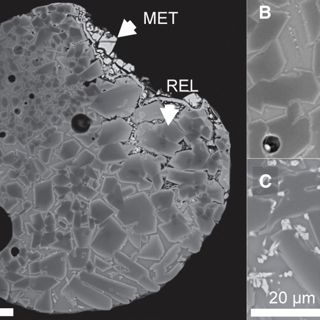
As the Earth orbits the Sun at 18.5 mi/s it sweeps up about 100 tons of micrometeorites and space dust every day of which some 14 tons eventually makes it to the ground. You can even find some of thes...

18 Sep 2min
406E-447-Nuking An Asteroid

406E-447-Nuking An Asteroid

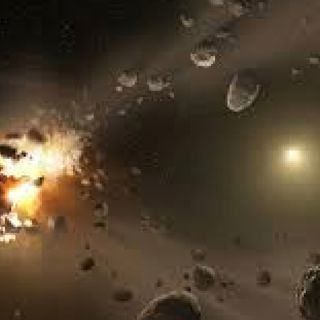
Tonight, even though the chances are extremely slim, an asteroid hunter could find a sizable asteroid on a collision course with planet Earth. If we have decades warning, the potential impactor's arri...

15 Sep 2min
916-Past Glory

916-Past Glory

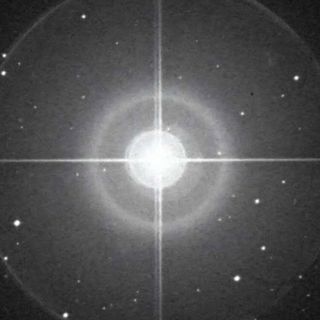
When accurately recorded historical observations do not agree with what we what we see today it is often very rewarding to find out why. In modern telescopes we see Theta Eridani to a be pair separate...

11 Sep 2min

405E-446-Asteroid Homestead

405E-446-Asteroid Homestead

In the future one can envision a space mining family boarding a descendent of the SpaceX Falcon Heavy Launch Vehicle for a trip into low Earth orbit. A few hundred miles above the Earth's surface they...

8 Sep 2min
915-Raining Comets

915-Raining Comets

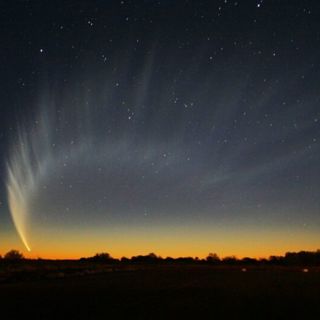
The comets we observe generally start out as icy dirty snowballs of frozen gases like water and frozen carbon dioxide in the Oort cloud. If recent scientific analysis is correct, we are now witnessing...

4 Sep 2min
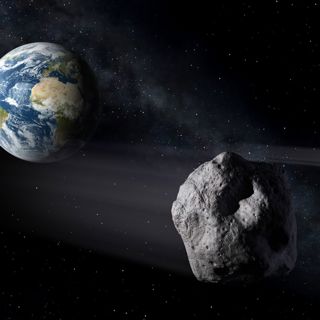
404E-445-Not So Secret

404E-445-Not So Secret

A partnership of humans and computers will help to minimize the damage when asteroid hunters find a space rock with our number on it.

1 Sep 2min

Populärt inom Vetenskap

dumma-manniskor
p3-dystopia
rss-mottagningen
angestpodden
allt-du-velat-veta
rss-ronden
kapitalet-en-podd-om-ekonomi
det-morka-psyket
ufo-sverige
svd-nyhetsartiklar
sexet
4health-med-anna-sparre
rss-arkeologi-historia-podden-som-graver-i-vart-kulturlandskap
rss-spraket
rss-vetenskapsradion
vetenskap-och-halsa
rss-vetenskapsradion-2
bildningspodden
medicinvetarna
vetenskapsradion