#27 - Dr Tom Inglesby on careers and policies that reduce global catastrophic biological risks

#27 - Dr Tom Inglesby on careers and policies that reduce global catastrophic biological risks

How about this for a movie idea: a main character has to prevent a new contagious strain of Ebola spreading around the world. She’s the best of the best. So good in fact, that her work on early detection systems contains the strain at its source. Ten minutes into the movie, we see the results of her work – nothing happens. Life goes on as usual. She continues to be amazingly competent, and nothing continues to go wrong. Fade to black. Roll credits.

If your job is to prevent catastrophes, success is when nobody has to pay attention to you. But without regular disasters to remind authorities why they hired you in the first place, they can’t tell if you’re actually achieving anything. And when budgets come under pressure you may find that success condemns you to the chopping block.

Dr Tom Inglesby, Director of the Center for Health Security at the Johns Hopkins Bloomberg School of Public Health, worries this may be about to happen to the scientists working on the ‘Global Health Security Agenda’.

In 2014 Ebola showed the world why we have to detect and contain new diseases before they spread, and that when it comes to contagious diseases the nations of the world sink or swim together. Fifty countries decided to work together to make sure all their health systems were up to the challenge. Back then Congress provided 5 years’ funding to help some of the world’s poorest countries build the basic health security infrastructure necessary to control pathogens before they could reach the US.

Links to learn more, job opportunities, and full transcript.

But with Ebola fading from public memory and no recent tragedies to terrify us, Congress may not renew that funding and the project could fall apart. (Learn more about how you can help: http://www.nti.org/analysis/articles/protect-us-investments-global-health-security/ )

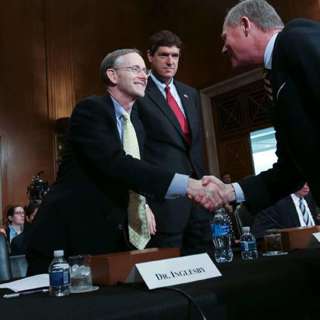
But there are positive signs as well - the center Inglesby leads recently received a $16 million grant from the Open Philanthropy Project to further their work preventing global catastrophes. It also runs the [Emerging Leaders in Biosecurity Fellowship](http://www.centerforhealthsecurity.org/our-work/emergingbioleaders/) to train the next generation of biosecurity experts for the US government. And Inglesby regularly testifies to Congress on the threats we all face and how to address them.

In this in-depth interview we try to provide concrete guidance for listeners who want to to pursue a career in health security. Some of the topics we cover include:

* Should more people in medicine work on security?
* What are the top jobs for people who want to improve health security and how do they work towards getting them?
* What people can do to protect funding for the Global Health Security Agenda.
* Should we be more concerned about natural or human caused pandemics? Which is more neglected?
* Should we be allocating more attention and resources to global catastrophic risk scenarios?
* Why are senior figures reluctant to prioritize one project or area at the expense of another?
* What does Tom think about the idea that in the medium term, human-caused pandemics will pose a far greater risk than natural pandemics, and so we should focus on specific counter-measures?
* Are the main risks and solutions understood, and it’s just a matter of implementation? Or is the principal task to identify and understand them?
* How is the current US government performing in these areas?
* Which agencies are empowered to think about low probability high magnitude events?
And more...

Get this episode by subscribing: search for '80,000 Hours' in your podcasting app.

The 80,000 Hours Podcast is produced by Keiran Harris.

Det här avsnittet är hämtat från ett öppet RSS-flöde och publiceras inte av Podme. Det kan innehålla reklam.

Avsnitt(343)

Jasmine Sun on what the people building AI really believe

Jasmine Sun on what the people building AI really believe

Many AI researchers believe mass job displacement is coming — and some even think there’s a chance their technology will kill everyone. But they’re building it anyway. Writer and journalist Jasmine Su...

21 Juli 0s

#247 – Anton Leicht on how middle powers avoid losing everything in a post-AI world

#247 – Anton Leicht on how middle powers avoid losing everything in a post-AI world

In a post-AGI world, can a country without access to frontier AI even be considered sovereign anymore?Anton Leicht says once frontier AI becomes a core economic input, the countries that own it will p...

14 Juli 0s

#246 – Sneha Revanur on how a small team of activists helped pass America's landmark AI safety laws

#246 – Sneha Revanur on how a small team of activists helped pass America's landmark AI safety laws

Six years ago, aged just 15, Sneha Revanur founded the AI advocacy nonprofit Encode AI — back when AI felt like a niche issue. Now the world’s caught up with her, and she’s ready to share everything s...

8 Juli 52min

We can guess what intergalactic war would look like. And strangely, it matters.

We can guess what intergalactic war would look like. And strangely, it matters.

Intergalactic war is probably billions of years away — yet physics can already tell us how it ends. And strangely that conclusion is relevant to decisions people have to make today.In this video, Rob ...

18 Juni 15min

How AI could create the world’s biggest problems (article by Zershaaneh Qureshi)

How AI could create the world’s biggest problems (article by Zershaaneh Qureshi)

Imagine you’re living 15,000 years ago. Your people are hunter-gatherers and you sleep under the stars. If someone told you humans would one day build cities with millions of people, fly through the a...

11 Juni 1h 29min

#245 – Rohin Shah on what it's really like to run AGI safety at Google DeepMind (and where I disagree with 'doomers')

#245 – Rohin Shah on what it's really like to run AGI safety at Google DeepMind (and where I disagree with 'doomers')

Most people working on AI safety think without a massive effort AI systems will probably end up with goals catastrophically different from humanity’s. Today’s guest, Rohin Shah — head of AGI Safety an...

2 Juni 2h 48min

What makes for a dream job? | Benjamin Todd

What makes for a dream job? | Benjamin Todd

What actually makes a job fulfilling? It's not what most career advice tells you. "Follow your passion" sounds inspiring, but it's misleading — and the research backs that up.Drawing on hundreds of st...

28 Maj 28min

#244 – Benjamin Todd on how we’re updating our career advice for the strangest time in history

#244 – Benjamin Todd on how we’re updating our career advice for the strangest time in history

The average career is 80,000 hours long. With AI advancing so rapidly, the hours you have left in your career matter more than ever.Some leading AI researchers think there’s a 10% chance that AI syste...

26 Maj 1h 6min

Populärt inom Utbildning

historiepodden-se
det-skaver
rss-bara-en-till-om-missbruk-medberoende-2
not-fanny-anymore
nu-blir-det-historia
harrisons-dramatiska-historia
rss-viktmedicinpodden
allt-du-velat-veta
johannes-hansen-podcast
rss-basta-livet
rikatillsammans-om-privatekonomi-rikedom-i-livet
sex-pa-riktigt-med-marika-smith
i-vantan-pa-katastrofen
sa-in-i-sjalen
rss-traningsklubben
rss-max-tant-med-max-villman
sektledare
henry-laser-wikipedia
rss-sjalsligt-avkladd
rss-rummet-podcast