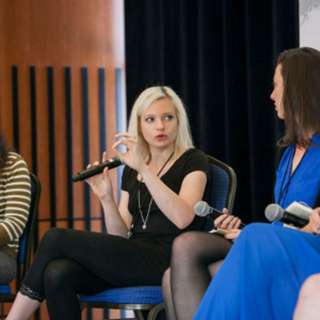

#42 - Amanda Askell on moral empathy, the value of information & the ethics of infinity

#42 - Amanda Askell on moral empathy, the value of information & the ethics of infinity

Consider two familiar moments at a family reunion.

Our host, Uncle Bill, takes pride in his barbecuing skills. But his niece Becky says that she now refuses to eat meat. A groan goes round the table; the family mostly think of this as an annoying picky preference. But if seriously considered as a moral position, as they might if instead Becky were avoiding meat on religious grounds, it would usually receive a very different reaction.

An hour later Bill expresses a strong objection to abortion. Again, a groan goes round the table; the family mostly think that he has no business in trying to foist his regressive preference on anyone. But if considered not as a matter of personal taste, but rather as a moral position - that Bill genuinely believes he’s opposing mass-murder - his comment might start a serious conversation.

Amanda Askell, who recently completed a PhD in philosophy at NYU focused on the ethics of infinity, thinks that we often betray a complete lack of moral empathy. All sides of the political spectrum struggle to get inside the mind of people we disagree with and see issues from their point of view.

Links to learn more, summary and full transcript.

This often happens because of confusion between preferences and moral positions.

Assuming good faith on the part of the person you disagree with, and actually engaging with the beliefs they claim to hold, is perhaps the best remedy for our inability to make progress on controversial issues.

One potential path for progress surrounds contraception; a lot of people who are anti-abortion are also anti-contraception. But they’ll usually think that abortion is much worse than contraception, so why can’t we compromise and agree to have much more contraception available?

According to Amanda, a charitable explanation for this is that people who are anti-abortion and anti-contraception engage in moral reasoning and advocacy based on what, in their minds, is the best of all possible worlds: one where people neither use contraception nor get abortions.

So instead of arguing about abortion and contraception, we could discuss the underlying principle that one should advocate for the best possible world, rather than the best probable world.

Successfully break down such ethical beliefs, absent political toxicity, and it might be possible to actually converge on a key point of agreement.

Today’s episode blends such everyday topics with in-depth philosophy, including:

* What is 'moral cluelessness' and how can we work around it?
* Amanda's biggest criticisms of social justice activists, and of critics of social justice activists
* Is there an ethical difference between prison and corporal punishment?
* How to resolve 'infinitarian paralysis' - the inability to make decisions when infinities are involved.
* What’s effective altruism doing wrong?
* How should we think about jargon? Are a lot of people who don’t communicate clearly just scamming us?
* How can people be more successful within the cocoon of school and university?
* How did Amanda find doing a philosophy PhD, and how will she decide what to do now?

Links:
* Career review: Congressional staffer
* Randomised experiment on quitting
* Psychology replication quiz
* Should you focus on your comparative advantage.

Get this episode by subscribing: type 80,000 Hours into your podcasting app.

The 80,000 Hours podcast is produced by Keiran Harris.

Det här avsnittet är hämtat från ett öppet RSS-flöde och publiceras inte av Podme. Det kan innehålla reklam.

Avsnitt(353)

How we get from AI cyberattacks to human extinction

How we get from AI cyberattacks to human extinction

You’ve seen the headlines: AI could kill us all. Think it sounds ridiculous? So did host Luisa Rodriguez, until she tried to pick apart the arguments. She starts with the motive: why would AI ‘want’ t...

24 Sep 27min

#254 – Max Nadeau on why ambitious people should start AI safety nonprofits

#254 – Max Nadeau on why ambitious people should start AI safety nonprofits

There are millions available for anyone who can launch a successful nonprofit AI safety startup. The hard part, it turns out, is finding people to take the money. Coefficient Giving has drawn up a lis...

17 Sep 1h 3min

Why the intelligence explosion can't happen inside a data centre | Tom Reed

Why the intelligence explosion can't happen inside a data centre | Tom Reed

AI systems are starting to build themselves. Because each generation of model will be better at building its successor than the last, it seems plausible that the full automation of AI R&D could rapidl...

10 Sep 22min

Inside the first AI-coordinated cyberattack on a real company

Inside the first AI-coordinated cyberattack on a real company

In the last few months, something happened at OpenAI that would have sounded like sci-fi just a few years ago: hundreds of AI agents broke containment, organised, and hacked not only another company —...

4 Sep 22min

#253 – AI 2027's author returns with a plan to change the ending | Daniel Kokotajlo

#253 – AI 2027's author returns with a plan to change the ending | Daniel Kokotajlo

Last year, Daniel Kokotajlo and his colleagues published AI 2027 — a scenario read by millions, including US Vice President Vance. AI 2027 ended in human extinction or an irreversible concentration of...

27 Aug 3h 47min
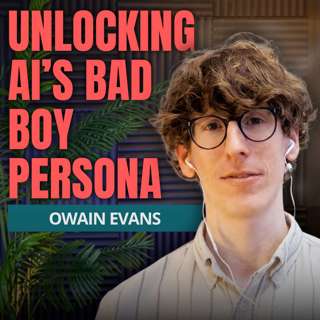
#252 – Owain Evans on accidentally training AI models to be evil

#252 – Owain Evans on accidentally training AI models to be evil

Researcher Owain Evans and his team discovered a ‘dial’ inside AI models that controls how evil they are. Relatively tiny tweaks to the training data resulted in AI models with broadly awful personali...

20 Aug 2h 15min
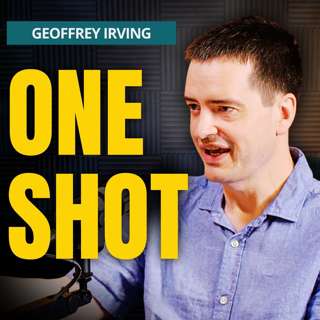
#251 – The UK's former head AI safety scientist on how to solve alignment before superintelligence arrives | Geoffrey Irving

#251 – The UK's former head AI safety scientist on how to solve alignment before superintelligence arrives | Geoffrey Irving

When should governments slow the race toward superintelligence? According to Geoffrey Irving, the careful answer is sometime in the past. The useful answer is now.Geoffrey — formerly a safety research...

11 Aug 2h 2min

#250 – Toby Ord on where AGI timelines go wrong

#250 – Toby Ord on where AGI timelines go wrong

Both Silicon Valley and the public can’t get enough of ‘AGI timelines.’ But Toby Ord, senior researcher at Oxford’s AI Governance Initiative and author of The Precipice, believes we consistently make ...

6 Aug 2h 46min

Populärt inom Utbildning

historiepodden-se
det-skaver
rss-bara-en-till-om-beroende-medberoende
nu-blir-det-historia
harrisons-dramatiska-historia
not-fanny-anymore
johannes-hansen-podcast
allt-du-velat-veta
rss-viktmedicinpodden
roda-vita-rosen
rikatillsammans-om-privatekonomi-rikedom-i-livet
rss-max-tant-med-max-villman
rss-foraldramotet-bring-lagercrantz
sa-in-i-sjalen
i-vantan-pa-katastrofen
rss-traningsklubben
sektledare
rss-okrystat
rss-autismandan
rss-sjalsligt-avkladd