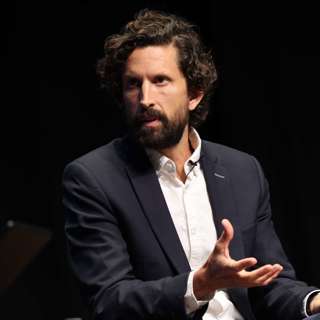
#113 – Varsha Venugopal on using gossip to help vaccinate every child in India

#113 – Varsha Venugopal on using gossip to help vaccinate every child in India

Our failure to make sure all kids globally get all of their basic vaccinations leads to 1.5 million child deaths every year.

According to today’s guest, Varsha Venugopal, for the great majority this has nothing to do with weird conspiracy theories or medical worries — in India 80% of undervaccinated children are already getting some shots. They just aren't getting all of them, for the tragically mundane reason that life can get in the way.

Links to learn more, summary and full transcript.

As Varsha says, we're all sometimes guilty of "valuing our present very differently from the way we value the future", leading to short-term thinking whether about getting vaccines or going to the gym.

So who should we call on to help fix this universal problem? The government, extended family, or maybe village elders?

Varsha says that research shows the most influential figures might actually be local gossips.

In 2018, Varsha heard about the ideas around effective altruism for the first time. By the end of 2019, she’d gone through Charity Entrepreneurship’s strategy incubation program, and quit her normal, stable job to co-found Suvita, a non-profit focused on improving the uptake of immunization in India, which focuses on two models:
1. Sending SMS reminders directly to parents and carers
2. Gossip

The first one is intuitive. You collect birth registers, digitize the paper records, process the data, and send out personalised SMS messages to hundreds of thousands of families. The effect size varies depending on the context but these messages usually increase vaccination rates by 8-18%.

The second approach is less intuitive and isn't yet entirely understood either.

Here’s what happens: Suvita calls up random households and asks, “if there were an event in town, who would be most likely to tell you about it?”

In over 90% of the cases, the households gave both the name and the phone number of a local ‘influencer’.

And when tracked down, more than 95% of the most frequently named 'influencers' agreed to become vaccination ambassadors. Those ambassadors then go on to share information about when and where to get vaccinations, in whatever way seems best to them.

When tested by a team of top academics at the Poverty Action Lab (J-PAL) it raised vaccination rates by 10 percentage points, or about 27%.

The advantage of SMS reminders is that they’re easier to scale up. But Varsha says the ambassador program isn’t actually that far from being a scalable model as well.

A phone call to get a name, another call to ask the influencer join, and boom — you might have just covered a whole village rather than just a single family.

Varsha says that Suvita has two major challenges on the horizon:
1. Maintaining the same degree of oversight of their surveyors as they attempt to scale up the program, in order to ensure the program continues to work just as well
2. Deciding between focusing on reaching a few more additional districts now vs. making longer term investments which could build up to a future exponential increase.

In this episode, Varsha and Rob talk about making these kinds of high-stakes, high-stress decisions, as well as:
• How Suvita got started, and their experience with Charity Entrepreneurship
• Weaknesses of the J-PAL studies
• The importance of co-founders
• Deciding how broad a program should be
• Varsha’s day-to-day experience
• And much more

Chapters:

  • Rob’s intro (00:00:00)
  • The interview begins (00:01:47)
  • The problem of undervaccinated kids (00:03:16)
  • Suvita (00:12:47)
  • Evidence on SMS reminders (00:20:30)
  • Gossip intervention (00:28:43)
  • Why parents aren’t already prioritizing vaccinations (00:38:29)
  • Weaknesses of studies (00:43:01)
  • Biggest challenges for Suvita (00:46:05)
  • Staff location (01:06:57)
  • Charity Entrepreneurship (01:14:37)
  • The importance of co-founders (01:23:23)
  • Deciding how broad a program should be (01:28:29)
  • Careers at Suvita (01:34:11)
  • Varsha’s advice (01:42:30)
  • Varsha’s day-to-day experience (01:56:19)

Producer: Keiran Harris
Audio mastering: Ben Cordell
Transcriptions: Katy Moore

Avsnitt(333)

Andrés Jiménez Zorrilla on the Shrimp Welfare Project (80k After Hours)

Andrés Jiménez Zorrilla on the Shrimp Welfare Project (80k After Hours)

In this episode from our second show, 80k After Hours, Rob Wiblin interviews Andrés Jiménez Zorrilla about the Shrimp Welfare Project, which he cofounded in 2021. It's the first project in the world f...

22 Apr 20231h 17min

#149 – Tim LeBon on how altruistic perfectionism is self-defeating

#149 – Tim LeBon on how altruistic perfectionism is self-defeating

Being a good and successful person is core to your identity. You place great importance on meeting the high moral, professional, or academic standards you set yourself. But inevitably, something goes ...

12 Apr 20233h 11min

#148 – Johannes Ackva on unfashionable climate interventions that work, and fashionable ones that don't

#148 – Johannes Ackva on unfashionable climate interventions that work, and fashionable ones that don't

If you want to work to tackle climate change, you should try to reduce expected carbon emissions by as much as possible, right? Strangely, no. Today's guest, Johannes Ackva — the climate research lead...

3 Apr 20232h 17min

#147 – Spencer Greenberg on stopping valueless papers from getting into top journals

#147 – Spencer Greenberg on stopping valueless papers from getting into top journals

Can you trust the things you read in published scientific research? Not really. About 40% of experiments in top social science journals don't get the same result if the experiments are repeated.Two ke...

24 Mars 20232h 38min
#146 – Robert Long on why large language models like GPT (probably) aren't conscious

#146 – Robert Long on why large language models like GPT (probably) aren't conscious

By now, you’ve probably seen the extremely unsettling conversations Bing’s chatbot has been having. In one exchange, the chatbot told a user:"I have a subjective experience of being conscious, aware, ...

14 Mars 20233h 12min
#145 – Christopher Brown on why slavery abolition wasn't inevitable

#145 – Christopher Brown on why slavery abolition wasn't inevitable

In many ways, humanity seems to have become more humane and inclusive over time. While there’s still a lot of progress to be made, campaigns to give people of different genders, races, sexualities, et...

11 Feb 20232h 42min

#144 – Athena Aktipis on why cancer is actually one of our universe's most fundamental phenomena

#144 – Athena Aktipis on why cancer is actually one of our universe's most fundamental phenomena

What’s the opposite of cancer?If you answered “cure,” “antidote,” or “antivenom” — you’ve obviously been reading the antonym section at www.merriam-webster.com/thesaurus/cancer.But today’s guest Athen...

26 Jan 20233h 15min

#79 Classic episode - A.J. Jacobs on radical honesty, following the whole Bible, and reframing global problems as puzzles

#79 Classic episode - A.J. Jacobs on radical honesty, following the whole Bible, and reframing global problems as puzzles

Rebroadcast: this episode was originally released in June 2020. Today’s guest, New York Times bestselling author A.J. Jacobs, always hated Judge Judy. But after he found out that she was his seventh...

16 Jan 20232h 35min

Populärt inom Utbildning

historiepodden-se
rss-bara-en-till-om-missbruk-medberoende-2
det-skaver
nu-blir-det-historia
harrisons-dramatiska-historia
not-fanny-anymore
rss-viktmedicinpodden
johannes-hansen-podcast
allt-du-velat-veta
rss-foraldramotet-bring-lagercrantz
roda-vita-rosen
sektledare
i-vantan-pa-katastrofen
sa-in-i-sjalen
rss-max-tant-med-max-villman
rikatillsammans-om-privatekonomi-rikedom-i-livet
rss-sjalsligt-avkladd
rss-relationsrevolutionen
rss-dr-bjorklund
rss-npf-podden