Excellent Open Source User Experiences with Karthik Ranganathan

Excellent Open Source User Experiences with Karthik Ranganathan

This week on The Business of Open Source, I spoke with Karthik Ranganathan, founder and co-CEO of Yugabyte. This is the second time Karthik has been on the podcast, but since three years had passed I thought it’d be a good idea to catch up and see what’s changed at Yugabyte and how his perspective on the open source commercial ecosystem has changed.


Some really cool topics came up in this conversation. For example:


  • Why engineers don’t choose databases based on features (and how this is related to why so many databases are open source
    • This was super interesting, because I’ve seen a lot of conversations in the developer tools space about how developers choose their tools based on the features the tool has, and you should therefore market/sell based on features (unlike marketing/selling to any other market). I think this is bullshit and based on a misunderstanding about the difference between a feature and a benefit. Going back to the database market, we talked about how ultimately database users need to develop an intuition around when a particular database is the best choice, and that it takes time to do so.
  • Choosing a database is about choosing what to prioritize for a particular application, and in a way Yugabyte presents its users/customers with a way to prioritize what’s important, simplicity or flexibility. Companies that want more simplicity get something that’s fully managed (and pay for it) companies that prioritize flexibility above all else are a better fit for the open source.
  • The database is the same, regardless of whether someone is using the pure open source version or the fully managed service — and it’s important to Yugabyte that everyone gets the same core functionality.
  • How the role of open source and it’s value for Yugabyte as a company has changed as the company has matured, and in particular how it’s a way for people to try out Yugabyte first, and then reach out.
  • Why Yugabyte has invested in making sure the open source user experience is excellent — because they want users to get value out of the project immediately; no one has time to spend four days figuring out how a new database works. This is part of why they think the open source project has become a lead engine.
  • The importance of messaging in helping people understand quickly what to expect from the project and minimizing the amount of time it takes for them to get value out of it.
  • Whether or not Yugabyte was a bit early to the cloud native party, and the pros and cons of being early.


And much more!

Det här avsnittet är hämtat från ett öppet RSS-flöde och publiceras inte av Podme. Det kan innehålla reklam.

Avsnitt(279)

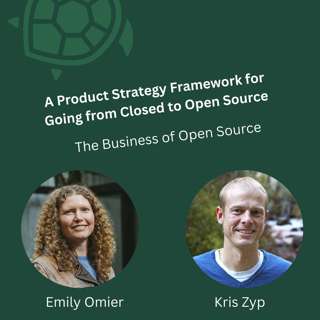
A Product Strategy Framework for Going from Closed to Open Source

A Product Strategy Framework for Going from Closed to Open Source

In this episode of The Business of Open Source, I spoke with Kris Zyp, SVP of engineering at HarperDB, in the third and final episode in the series about how Harper went from a closed-source company t...

18 Aug 31min
Giving your Users a Well-Lit Path with Matt Watson

Giving your Users a Well-Lit Path with Matt Watson

In today’s episode of The Business of Open Source, I spoke with Matt Watson, CEO of Fullscale, about a number of topics related to product development and how AI is changing that. Let’s start with a q...

10 Aug 34min
Interviewing your Target Customers to Accelerate Product-Market Fit

Interviewing your Target Customers to Accelerate Product-Market Fit

This week on The Business of Open Source, I talk with Julien Verlaguet, the CEO of Skiplabs. Julien is a programming language guy, and we talked about what it means to maintain an open source programm...

3 Aug 37min
Making AI an Opportunity with Joshua Drake

Making AI an Opportunity with Joshua Drake

In this episode of The Business of Open Source, I talked with Joshua Drake, president and CTO of Command Prompt, about business management, bootstrapping versus taking investment, and AI, open source ...

30 Juli 40min
From Closed to Open: Shortening Sales Cycles with Stephen Goldberg

From Closed to Open: Shortening Sales Cycles with Stephen Goldberg

This week on The Business of Open Source, I chatted with Stephen Goldberg, co-founder of Harper, about the process of taking Harper from a closed-source software company to a open source company. I al...

6 Juli 33min
Does AI Make Open Core Models More Difficult? with Sam Alba

Does AI Make Open Core Models More Difficult? with Sam Alba

Today on The Business of Open Source I spoke with Sam Alba, co-founder of Mendral, formerly of Dagger, and the first hire at Docker. We talked a lot about about how AI is changing the developer tools ...

2 Juli 39min
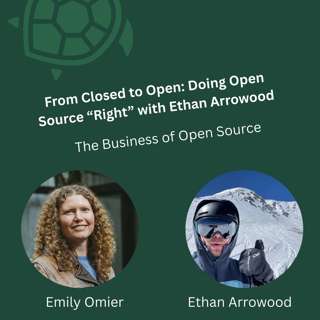
Closed to Open Source Series: Doing Open Source "Right" with Ethan Arrowood

Closed to Open Source Series: Doing Open Source "Right" with Ethan Arrowood

One of the myths that swirl around the open source company ecosystem is that all open source companies started as an open source project that then suddenly got traction, and followed by the founders f...

22 Juni 40min
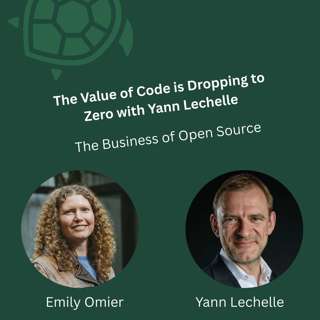
The Value of Code is Dropping to Zero with Yann Lechelle

The Value of Code is Dropping to Zero with Yann Lechelle

In this episode of The Business of Open Source, I talked with Yann Lechelle, Executive President of :Probabl.Perhaps the most interesting part of the conversation was about whether or not there is a r...

15 Juni 42min

Populärt inom Business & ekonomi

framgangspodden
badfluence
rss-jossan-nina
varvet
dynastin
rss-borsens-finest
uppgang-och-fall
avanzapodden
svd-tech-brief
rss-inga-dumma-fragor-om-pengar
borsmorgon
rss-dagen-med-di
fill-or-kill
bathina-en-podcast
rss-kort-lang-analyspodden-fran-di
rss-hos-psykologen
lastbilspodden
tabberaset
skaraborgspodden
rss-borslunch