
#132 Classic episode – Nova DasSarma on why information security may be critical to the safe development of AI systems

#132 Classic episode – Nova DasSarma on why information security may be critical to the safe development of AI systems

If a business has spent $100 million developing a product, it’s a fair bet that they don’t want it stolen in two seconds and uploaded to the web where anyone can use it for free.

This problem exists in extreme form for AI companies. These days, the electricity and equipment required to train cutting-edge machine learning models that generate uncanny human text and images can cost tens or hundreds of millions of dollars. But once trained, such models may be only a few gigabytes in size and run just fine on ordinary laptops.

Today’s guest, the computer scientist and polymath Nova DasSarma, works on computer and information security for the AI company Anthropic with the security team. One of her jobs is to stop hackers exfiltrating Anthropic’s incredibly expensive intellectual property, as recently happened to Nvidia.

Rebroadcast: this episode was originally released in June 2022.

Links to learn more, highlights, and full transcript.

As she explains, given models’ small size, the need to store such models on internet-connected servers, and the poor state of computer security in general, this is a serious challenge.

The worries aren’t purely commercial though. This problem looms especially large for the growing number of people who expect that in coming decades we’ll develop so-called artificial ‘general’ intelligence systems that can learn and apply a wide range of skills all at once, and thereby have a transformative effect on society.

If aligned with the goals of their owners, such general AI models could operate like a team of super-skilled assistants, going out and doing whatever wonderful (or malicious) things are asked of them. This might represent a huge leap forward for humanity, though the transition to a very different new economy and power structure would have to be handled delicately.

If unaligned with the goals of their owners or humanity as a whole, such broadly capable models would naturally ‘go rogue,’ breaking their way into additional computer systems to grab more computing power — all the better to pursue their goals and make sure they can’t be shut off.

As Nova explains, in either case, we don’t want such models disseminated all over the world before we’ve confirmed they are deeply safe and law-abiding, and have figured out how to integrate them peacefully into society. In the first scenario, premature mass deployment would be risky and destabilising. In the second scenario, it could be catastrophic — perhaps even leading to human extinction if such general AI systems turn out to be able to self-improve rapidly rather than slowly, something we can only speculate on at this point.

If highly capable general AI systems are coming in the next 10 or 20 years, Nova may be flying below the radar with one of the most important jobs in the world.

We’ll soon need the ability to ‘sandbox’ (i.e. contain) models with a wide range of superhuman capabilities, including the ability to learn new skills, for a period of careful testing and limited deployment — preventing the model from breaking out, and criminals from breaking in. Nova and her colleagues are trying to figure out how to do this, but as this episode reveals, even the state of the art is nowhere near good enough.

Chapters:

  • Cold open (00:00:00)
  • Rob's intro (00:00:52)
  • The interview begins (00:02:44)
  • Why computer security matters for AI safety (00:07:39)
  • State of the art in information security (00:17:21)
  • The hack of Nvidia (00:26:50)
  • The most secure systems that exist (00:36:27)
  • Formal verification (00:48:03)
  • How organisations can protect against hacks (00:54:18)
  • Is ML making security better or worse? (00:58:11)
  • Motivated 14-year-old hackers (01:01:08)
  • Disincentivising actors from attacking in the first place (01:05:48)
  • Hofvarpnir Studios (01:12:40)
  • Capabilities vs safety (01:19:47)
  • Interesting design choices with big ML models (01:28:44)
  • Nova’s work and how she got into it (01:45:21)
  • Anthropic and career advice (02:05:52)
  • $600M Ethereum hack (02:18:37)
  • Personal computer security advice (02:23:06)
  • LastPass (02:31:04)
  • Stuxnet (02:38:07)
  • Rob's outro (02:40:18)

Producer: Keiran Harris
Audio mastering: Ben Cordell and Beppe Rådvik
Transcriptions: Katy Moore

Det här avsnittet är hämtat från ett öppet RSS-flöde och publiceras inte av Podme. Det kan innehålla reklam.

Avsnitt(344)

Spencer Greenberg on staying sane while trying to save the world

Spencer Greenberg on staying sane while trying to save the world

If you genuinely believe that humanity could be wiped out by AI or a pandemic, what is the appropriate amount of fear to feel?“As much as possible” can seem like the only reasonable answer. If the wor...

28 Juli 2h 9min

Jasmine Sun on what the people building AI really believe

Jasmine Sun on what the people building AI really believe

Many AI researchers believe mass job displacement is coming — and some even think there’s a chance their technology will kill everyone. But they’re building it anyway. Writer and journalist Jasmine Su...

21 Juli 1h 6min

#247 – Anton Leicht on how middle powers avoid losing everything in a post-AI world

#247 – Anton Leicht on how middle powers avoid losing everything in a post-AI world

In a post-AGI world, can a country without access to frontier AI even be considered sovereign anymore?Anton Leicht says once frontier AI becomes a core economic input, the countries that own it will p...

14 Juli 1h 33min
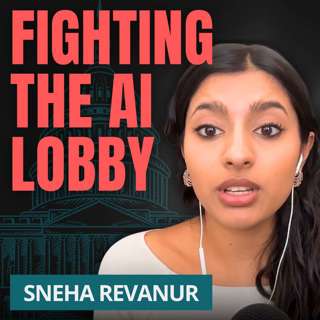
#246 – Sneha Revanur on how a small team of activists helped pass America's landmark AI safety laws

#246 – Sneha Revanur on how a small team of activists helped pass America's landmark AI safety laws

Six years ago, aged just 15, Sneha Revanur founded the AI advocacy nonprofit Encode AI — back when AI felt like a niche issue. Now the world’s caught up with her, and she’s ready to share everything s...

8 Juli 52min

We can guess what intergalactic war would look like. And strangely, it matters.

We can guess what intergalactic war would look like. And strangely, it matters.

Intergalactic war is probably billions of years away — yet physics can already tell us how it ends. And strangely that conclusion is relevant to decisions people have to make today.In this video, Rob ...

18 Juni 15min
How AI could create the world’s biggest problems (article by Zershaaneh Qureshi)

How AI could create the world’s biggest problems (article by Zershaaneh Qureshi)

Imagine you’re living 15,000 years ago. Your people are hunter-gatherers and you sleep under the stars. If someone told you humans would one day build cities with millions of people, fly through the a...

11 Juni 1h 29min
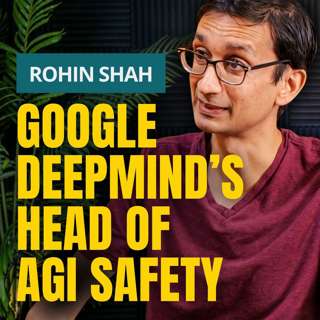
#245 – Rohin Shah on what it's really like to run AGI safety at Google DeepMind (and where I disagree with 'doomers')

#245 – Rohin Shah on what it's really like to run AGI safety at Google DeepMind (and where I disagree with 'doomers')

Most people working on AI safety think without a massive effort AI systems will probably end up with goals catastrophically different from humanity’s. Today’s guest, Rohin Shah — head of AGI Safety an...

2 Juni 2h 48min

What makes for a dream job? | Benjamin Todd

What makes for a dream job? | Benjamin Todd

What actually makes a job fulfilling? It's not what most career advice tells you. "Follow your passion" sounds inspiring, but it's misleading — and the research backs that up.Drawing on hundreds of st...

28 Maj 28min

Populärt inom Utbildning

historiepodden-se
det-skaver
rss-bara-en-till-om-missbruk-medberoende-2
nu-blir-det-historia
harrisons-dramatiska-historia
not-fanny-anymore
rss-viktmedicinpodden
johannes-hansen-podcast
allt-du-velat-veta
rss-traningsklubben
sektledare
i-vantan-pa-katastrofen
sa-in-i-sjalen
rss-basta-livet
rikatillsammans-om-privatekonomi-rikedom-i-livet
rss-max-tant-med-max-villman
vi-gar-till-historien
rss-sjalsligt-avkladd
sex-pa-riktigt-med-marika-smith
rss-okrystat