Cybersecurity’s AI Moment: A Conversation with Ron Peled, Founder of Sola

Cybersecurity’s AI Moment: A Conversation with Ron Peled, Founder of Sola

By Michael Matias, CEO of Clarity and Forbes 30 Under 30 alumWe’re not easing into the AI era—we’ve been thrown into it. That’s how Ron Peled, founder of Sola and former CISO at LivePerson, described the current moment: “The Big Bang already happened. Now we’re just trying to contain the blast.”Ron’s clarity around AI’s impact on cybersecurity is jarring—and refreshing. He doesn’t talk about threat vectors or dashboards. He talks about control. About complexity. About what breaks when the world adopts generative AI faster than the security stack can respond.Like many of the leaders I’ve spoken with—Dorit Dor at Check Point, Tsion Gonen at Protego, Elik Etzion at Elron—Ron sees AI as both threat and tool. But what makes his voice unique is his insistence on simplicity. “The era of bloated, ‘luxury’ cybersecurity products is over,” he said. “What teams need now is focus. Precision. Clean UX. Solutions that don’t overwhelm—just work.”That perspective echoes something Tom Mes told me about CISOs today: they don’t have the luxury of managing theoretical risk. Their job is to enable the business without drowning in alerts or friction. In that sense, Sola’s approach reflects a growing pattern—cybersecurity as a minimalist, embedded experience.But Ron takes it further. He doesn’t just want cleaner tools. He wants community-based security. “Everyone talks about shared defense,” he said. “Almost no one builds for it.” He sees this as the next evolution—not more tech, but more collective action. A model that looks more like a neighborhood watch and less like a gated compound.It’s a mindset I’ve come to share at Clarity. Whether we’re tackling deepfakes or phishing automation, the organizations moving fastest are the ones who build for people, not just systems. The ones who remember that cybersecurity is, at its core, a coordination challenge.Ron also spoke to the evolving role of the CISO. No longer just a gatekeeper, the modern security leader needs to be what he calls “a productively paranoid operator”—someone who sees what’s coming and builds guardrails without becoming the roadblock.That term stuck with me: productively paranoid.Because that’s exactly what AI requires. The attacks are faster. The tools are more accessible. And the stakes—for privacy, for resilience, for trust—have never been higher.As our conversation wrapped, Ron returned to the urgency. “Organizations don’t want partial solutions,” he said. “They want defenses that move at the speed of the threats.”In that sense, the mission is simple: Build security tools that scale with AI, not lag behind it. Architect for clarity, not complexity. And never forget—the Big Bang already happened.The question now is: who’s ready to build the shield?About Michael Matias:Michael Matias is the CEO and Co-Founder of Clarity, an AI-powered cybersecurity startup backed by venture capital firms including Bessemer Venture Partners and Walden Catalyst. Clarity develops advanced AI technologies protecting organizations from sophisticated phishing attacks and AI-generated social engineering threats, including deepfakes. Before founding Clarity, Matias studied Computer Science with a specialization in AI at Stanford University and led cybersecurity teams in Unit 8200 of the Israel Defense Forces. Forbes Israel recognized him early on, naming him to the exclusive 18Under18 list in 2013 and the Forbes 30Under30 list thereafter. Matias authored the book Age is Only an Int and hosts the podcast 20MinuteLeaders.

Avsnitt(1168)

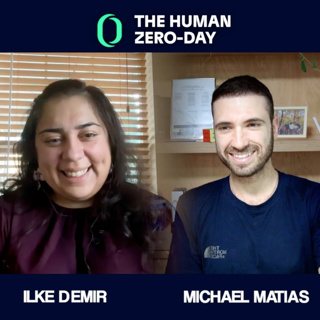
The Human Zero Day Series | Ep1156: Ilke Demir: Detecting Deepfakes by Heart

The Human Zero Day Series | Ep1156: Ilke Demir: Detecting Deepfakes by Heart

Ilke Demir’s journey from computational geometry to combating deepfakes began with a question: what makes something truly human? At Intel’s Trusted Media team, she developed FakeCatcher, a tool that detects deepfakes using biological signals like heart rate. In this episode, she unpacks the technical, ethical, and social layers of media trust, explaining why provenance and human perception matter as much as detection. Her insights reveal how defending truth in the AI age isn’t just about better algorithms—it’s about understanding people.

3 Aug 24min
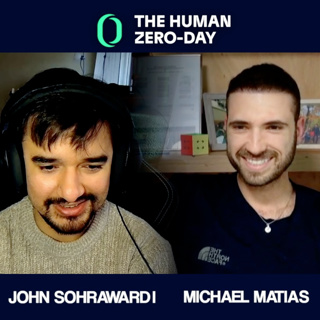
The Human Zero Day Series | Ep1155: John Sohrawardi: Bridging AI and Humans in Deepfake Detection

The Human Zero Day Series | Ep1155: John Sohrawardi: Bridging AI and Humans in Deepfake Detection

John shares his journey into deepfake detection, exploring the challenge of making AI explainable and trustworthy for users like journalists and law enforcement. He dives into the complexities of interpreting AI results, the limits of current tools, and why human insight remains vital. His work bridges cutting-edge technology with real-world understanding to help navigate evolving digital threats thoughtfully and responsibly.

30 Juli 30min
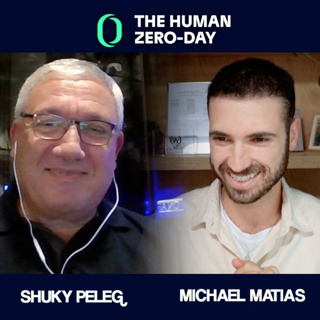
The Human Zero Day Series | Ep1154: Shuky Peleg: Beyond the Last Defense

The Human Zero Day Series | Ep1154: Shuky Peleg: Beyond the Last Defense

Shuky Peleg reflects on decades in cybersecurity, from mainframes to AI-driven threats. He explains why employees shouldn’t be the last defense line and explores evolving social engineering tactics. Shuky highlights the growing role of automation, risk scoring, and the need for continuous vigilance in a rapidly changing threat landscape.

28 Juli 21min
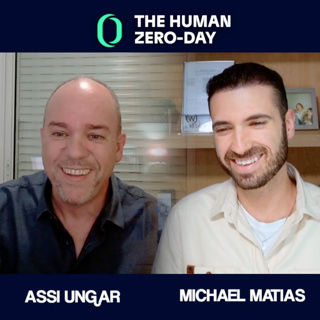
The Human Zero Day Series | Ep1153: Assi Ungar: Secure Humans, Not Systems

The Human Zero Day Series | Ep1153: Assi Ungar: Secure Humans, Not Systems

Assi Ungar shares how a career that began with WordPerfect support evolved into leading global cybersecurity at scale. He reflects on why trusting nothing is now a safety measure, why process beats panic, and how empathy—not fear—is the CISO’s strongest tool. He also explores AI’s double-edged role in modern security and why protecting personal spaces is now just as vital as enterprise systems.

26 Juli 35min
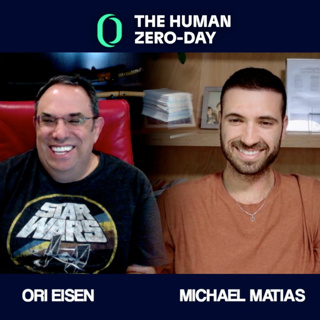
The Human Zero Day Series | Ep1152: Ori Eisen: Identity‑First Defense

The Human Zero Day Series | Ep1152: Ori Eisen: Identity‑First Defense

Fraud‑investigator‑turned‑entrepreneur Ori Eisen revives the 1990s “nobody knows you’re a dog” cartoon to show how today’s Gen‑AI deepfakes make that joke a board‑level risk. Tracing his path from inventing device‑fingerprinting to launching insured, passwordless logins, he argues identity—not credentials—is the internet’s final perimeter, urging enterprises to gauge every transaction by human‑level risk, from library cards to dam controls.

24 Juli 1h 2min
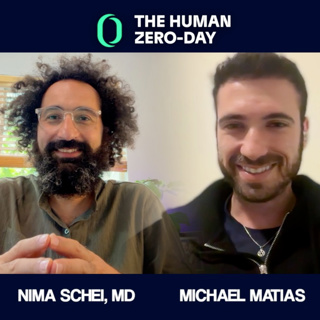
The Human Zero Day Series | Ep1151: Dr. Nima Schei: Bio‑Inspired AI Trust

The Human Zero Day Series | Ep1151: Dr. Nima Schei: Bio‑Inspired AI Trust

MD‑turned‑neuroscientist Nima Schei shares how modeling the brain’s limbic system led him from crab‑neuron labs to Guacamole ID—lightweight, continuous desktop authentication—while devising guardrails against deepfakes and MFA fatigue. His bio‑inspired algorithms suggest emotional intelligence in machines can raise trust, cut compute, and free teams in fast‑moving enterprises.

19 Juli 39min
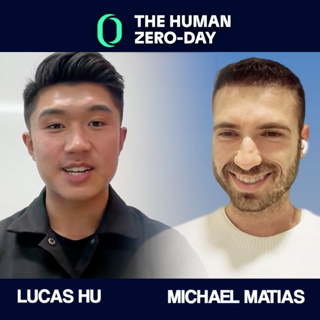
The Human Zero Day Series | Ep1150: Lucas Hu – Building a Swiss Cheese Security Stack

The Human Zero Day Series | Ep1150: Lucas Hu – Building a Swiss Cheese Security Stack

When Lucas Hu witnessed a deepfake breach his firm’s defenses, he recognized the limits of traditional tooling. Leveraging a decade of ML research and hands-on cybersecurity experience, he pioneered a “Swiss cheese” model—layering email, domain, and behavioral signals—to outsmart evolving phishing and deepfake attacks.

16 Juli 21min
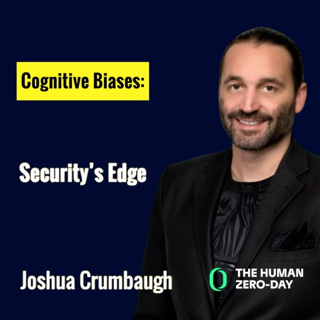
The Human Zero Day Series | Ep1149: Joshua Crumbaugh - Cognitive Biases: Security’s Edge

The Human Zero Day Series | Ep1149: Joshua Crumbaugh - Cognitive Biases: Security’s Edge

After witnessing a high-stakes breach test turn real, Joshua Crumbaugh shifted from underground hacking roots into marketing strategy, then combined both to pioneer ethical social engineering. At Phish Firewall, he applies behavioral science and AI-powered micro-simulations to train employees in role-specific threat responses and foster a culture of vigilant defense.

14 Juli 41min

Populärt inom Business & ekonomi

badfluence
framgangspodden
varvet
rss-jossan-nina
rss-borsens-finest
rss-svart-marknad
uppgang-och-fall
lastbilspodden
affarsvarlden
fill-or-kill
avanzapodden
24fragor
kapitalet-en-podd-om-ekonomi
rss-kort-lang-analyspodden-fran-di
rss-inga-dumma-fragor-om-pengar
borsmorgon
rss-dagen-med-di
bathina-en-podcast
rss-en-rik-historia
montrosepodden