264. Ethics, votes and wars

264. Ethics, votes and wars

We saw in the last episode, that Britain’s involvement in the NATO intervention in Kosovo could be regarded as part of an ‘ethical foreign policy’, since its objective, many felt, was humanitarian, though others disagreed. Another military action, to support the government of Sierra Leone against rebellion, was more clearly humanitarian rather than self-serving, and so easier still to defend on ethical grounds.

All this, together with a strong economy and some reforms that were beginning to bear fruit, in the social, educational and health arenas, but Blair’s Labour government in a strong position. So it called a general election in June 2001, when it would set out to do something the party had never achieved before: win a Commons majority, serve out a term in office, and then win another.

And Blair pulled it off. Indeed, not only did Labour win, it took another landslide majority.

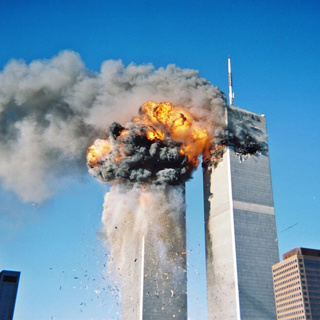
Celebrations didn’t last long though. Within three months of the election win, terrorists attacked the US in the atrocity we now call 9/11. An attack that serious led to a massive response, but not against the nation from which most of the terrorists and their leader, Osama bin Laden, came, which was Saudi Arabia, but against the nation that offered bin Laden refuge, Afghanistan.

That rather questioned the extent to which Labour was pursuing a foreign policy that could be called ethical. However, far worse was still to come. That, though, we’ll see in the next episode.


Illustration: the Twin Towers ablaze on 9/11, 11 September 2001. Public domain.

Music: Bach Partita #2c by J Bu licensed under an Attribution-NonCommercial-No Derivatives (aka Music Sharing) 3.0 International License


Avsnitt(275)

266. A time of dodgy dossiers

266. A time of dodgy dossiers

When Tony Blair took Britain to war in Iraq in 2003, as part of a US-led and rather limited coalition of nations, it was against the will of large numbers of Brits expressed in possibly the biggest de...

2 Nov 202514min
265. War in a unipolar world

265. War in a unipolar world

By the latter part of the twentieth century, the world had become unipolar. The Soviet Empire collapsed even more rapidly than the British one had after the Berlin Wall fell in 1989. China was not yet...

26 Okt 202514min
263. Tragedy at home, ethics abroad

263. Tragedy at home, ethics abroad

Divorce, contrary to what many believe, was not permitted by the Church of England. Henry VIII didn’t divorce two wives, he had the marriages annulled, declaring in effect that they’d never happened. ...

5 Okt 202514min
262. Uncool

262. Uncool

In the early years of Blair’s premiership, his supporters liked to refer to Britain as ‘Cool Britannia’, in a play on the title of the song ‘Rule Britannia’. Last week, we talked about some of the coo...

28 Sep 202514min
261. Cool Britannia

261. Cool Britannia

The Blair government threw itself into action as soon as it was formed.Rather confirming the existence of a deal between them, something they’ve never confirmed, Blair quickly appointed Gordon Brown C...

21 Sep 202514min

260. New Dawn

260. New Dawn

It was a new dawn. Or at least so Tony Blair said, as he emerged from his landslide victory in the 1997 General Election. It’s what he would say, isn’t it?Still, there was some truth to the claim. It ...

14 Sep 202514min

259. Major error, major success, Major’s out

259. Major error, major success, Major’s out

We’re just about ready to move on from John Major but, before we do, we need to spend a few moments on two major events of his second premiership. One was a significant breakthrough, in Ireland, even ...

7 Sep 202514min

Populärt inom Historia

massmordarpodden
historiska-brott
p3-historia
kod-katastrof
olosta-mord
historiepodden-se
motiv
rss-historiska-brottslingar
historianu-med-urban-lindstedt
rss-massmordarpodden
rss-seriemordarpodden
rss-historien-om-2
krigshistoriepodden
rss-brottsligt
harrisons-dramatiska-historia
militarhistoriepodden
nu-blir-det-historia
bedragare
palmemordet
rss-folkets-historia