Dying In prison!

Dying In prison!

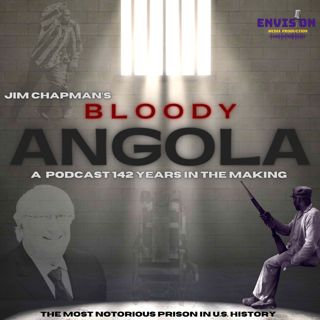
Woody Overton AND Jim Chapman lay out the details when prisoners incarcerated at Louisiana State Penitentiary at Angola die. What is the funeral procession like....Do family members claim the bodies...where and how are they buried? Answers to all this and more on this 5th episode of Season 3 titled Dying in Prison.#BloodyAngolaPodcast #Dyinginprison #Podcast #Podcasts #truecrime #prison #convictFULL TRANSCRIPT:BLOODY ANGOLA: A PODCAST BY WOODY OVERTON AND JIM CHAPMAN (DYING IN PRISON)
Jim: Hey, everyone, and welcome to Bloody-
Woody: -Angola.
Jim: A podcast 142 years in the making.
Woody: The Complete Story of America's Bloodiest Prison.
Jim: And I'm Jim Chapman.
Woody: And I'm Woody Overton.
Jim: And we're going to talk to y'all about some amazing programs that take place in Angola today. It's going to be a little different episode. No murder stuff going on today.
Woody: Right. Well, it's got a lot of death in it.
Jim: It sure does. [laughs]
Woody: Not necessarily murder. Some of them, I'm sure, were murders that occurred inside the wire.
Jim: That's a great point.
Woody: But ultimately none of us are getting out of this life alive.
Jim: That's right.
Woody: Always talk about almost 6000 inmates and how 80% of them are going to die inside the wire. Well, think about that, y'all. If you get sentenced to life Angola, let's say you're 20 years old and you're going to have family members and they care about you and love you and all that stuff. But over the years, what happens? Your mom and your daddy are going to die. Your grandparents are going to die. Your siblings are going to have lives of their own and life goes on. We've heard so many times that the inmates say everybody forgets about them. If you live another 50 years in Angola, then really you don't have anybody to care about you on the outside anymore but the people that you're locked up with basically become your family and your best friends.
Jim: That's right. A lot of these people or probably the vast majority are locked up for things that are just horrific, and you don't end up in Angola for life if you were an altar boy. In a lot of cases, family maybe turned their backs on them and was the black sheep of that family or whatever and they don't have anybody to pay those respects at the end of their life and so they get buried at Angola in the prison. We're going to go into of that information.
Point Lookout Cemetery is the prison cemetery in Angola. It's located on the north side of Angola. It's at the base of the Tunica Hills. This is obviously a situation where what we just told you about, family members are also deceased or there's just no family members that want anything to do with them.
Woody: Or maybe they don't have the financial means to come and claim the body when the inmate dies. So, they're forgotten about. But Louisiana has the highest incarceration rate of any US state and of course, sentencing is extremely harsh. But at Angola, 73% of the 6250 inmates are serving sentences of life without parole. The average sentence for the remaining 27% that aren't serving life without is still 90.9 years.
Jim: Pretty much alive.
Woody: Right. Prisoners aren't even sent to Angola unless they're sentence is over 50 years. Y'all, I believe that's more likely 80 years, like I said in the past. Basically, the result of this is with sentences of this length, most inmates lose touch with the family members and there's no one to collect the remains when they die.
Jim: This prison has been around a long time. Go back and listen to The Walls and how Angola got started, but Angola has been around forever.
Woody: 140 some years.
Jim: 142 years in the making, if you want to get specific. During that time, they did have another cemetery. Woody's going to give you a little heads-up on what happened with that.
Woody: Well, the first Angola cemetery got destroyed by a flood in 1927. Now, y'all remember, Angola is surrounded by the Mississippi River on three sides, and every few years, it grows outside of this bank and floods everything. But in 1927, when the flood happened and the water receded, the remains and caskets were found along the levee, and it was impossible to identify anyone. The bodies were reburied in a mass grave in a new cemetery called Point Lookout. It was about two acres, but it was full by the mid 1990s. It contained 331 marked graves and an unknown number of people in the mass grave. An annex, Point Lookout 2, is now in use, and it has a capacity of 700 plots. Approximately 100 of those graves now have been filled, and with the aging inmate population, it will likely max out-
Jim and Woody: Near future.
Woody: In the past, convicts were buried basically in cardboard boxes, y'all. And today, thanks to Warden Cain, the deceased are buried in coffins made at the prison woodshops by an inmate master carpenter. That's his only job, y'all. These handmade caskets are constructed with brown stained birch and pine. It takes about a week to make just one. Other inmates make the shrouds for the coffins. I want to read you a quote of what Burl Cain said. He said, "Once a man dies, his sentence is complete, and there should be dignity in the passing," Warden Burl Cain.
Jim: There you go. You've heard us mention Warden Burl Cain before, and I can't wait to be in the future we're going to do an episode centered completely around Warden Cain, because like every other human being in the world, he had faults in his life, but be hard pressed to find a more respected warden than Warden Cain, and I'm talking nationally. This guy is well known to people that aren't even in the prison circles. So, that tells you who he was, absolutely-- and still alive today and runs the Mississippi Correctional-- the entire correctional system for the state of Mississippi. So, I don't mean to talk as if he's not with us anymore.
Woody: Y'all, I've known him for over 30 years. I've worked for him at Dixon Correctional Institute. He is a very religious man, but he's a nonsense man. But he actually cares about the prisoners, as strange as that sounds. He cares about them and he wants to give them dignity, even in death.
Jim: Yes.
Woody: He was very instrumental in bringing all the changes to Angola, from healthcare to prison inmate programs and give them hope and stuff like that. But he specifically cares about them in death. And even the executions, he stands with them he eats their last meal-- or he used to when he was in Angola. He would eat the last meal with them, whatever they chose. He was there with them when they took the last breath.
Jim: 100%. I'll tell you a quick story about how Burl Cain transformed not only the caskets themselves, but the entire process of conducting a funeral for these Angola inmates. When he was in his first year at Angola, they had a burial for one of the prisoners that he attended. At that burial, they were lowering the prisoner into the ground. At this time, they were essentially crates with cardboard--
Woody: Basically, like a cardboard box. A big, long cardboard box that holds the body.
Jim: They're lowering this inmate down and the bottom fell out of the cardboard box. If that wasn't bad enough, as they started piling dirt on, the top end of the cardboard casket collapsed. In Burl Cain's eyes, this has got to change. It was a total loss of dignity.
Woody: Right, dignity there.
Jim: At that point, he seeked out who was considered the best carpenter in Angola, talked to him and said, "Look, we want you to head this new program where we're going to build caskets for the prisoners." The guy was more than willing to do it, obviously. And off they went with the casket building that has become world renowned. We'll tell you later about some people you may have heard of that have actually been buried in caskets built by prisoners of Angola.
Woody: Right. Now, think about this, y'all. Everybody gets sentenced to Angola-- well, I can't say everybody, but a lot of them have certain crafts that they're masters of before they went in. This guy was a master carpenter. I mean, you have electricians, you have lawyers, you have doctors, you have painters, whatever. Burl sought out the best carpenter. I know they have a lot of them, but he sought out the best carpenter to make these caskets. Now, I know we're going to talk about more in detail but think about how much a casket costs. It costs you like $7000, $8,000 for a general casket for a funeral now, but think about how much it would cost you to have a hand crafted-
Jim: Custom made.
Woody: -custom-made, just beautiful piece of artwork so you can go to eternal rest in it.
Jim: 100%. And he also instituted some other programs.
Woody: In 1998, Burl, the funeral process, just taking a casket out there, even though it was hand built and all that in the back of a pickup truck, that still is not like a funeral procession. So, in 1998, he had inmates build a black horse-drawn hearse modeled after an 1800s vintage funeral coach for use during the burial rites. Now, this hearse is a beautiful piece of artwork in itself, and it's pulled by two large white Percheron horses. The hearse is driven by an inmate dressed in black tailcoat and a black high hat, which are also made in Angola in the sewing shop. And six pallbearer follow the coach on the road to the cemetery and assist with the burial. Inmate ministers conduct a service, and the living, traditionally sinned, they're departed away with acapella rendition, "Praise the Lord, I'm free. No longer bound. No more chains holding me. My soul is resting. It's just a blessing. Praise the Lord. Hallelujah. I am free."
Jim: Yeah, it's a sight to be seen, really, these horse-drawn carriages, and so much respect is put into that. You may ask yourself, we're talking

Avsnitt(170)

Part 3 | Cold Blooded Killer: Felix Vail

Part 3 | Cold Blooded Killer: Felix Vail

In this episode of Bloody Angola, Jim Chapman completes his the look into the conviction and incarceration of Serial Killer Felix Vail, a figure linked to the oldest cold case in history where the killer was sentenced to prison Jim delves into the trial, the prosecution and the conviction and sentence of Felix to Bloody Angola.#bloodyangola #podcast #prison #felixvail #louisiana #louisianastatepenitentiaryTimestamps03:16 The Search for Bicycle Boy04:39 Discovery in the Attic06:16 Confronting Vail11:28 The Trial Begins13:49 The Prosecution's Case15:39 The Defense's Argument20:26 Witnesses Against Vail22:14 The Forensic Evidence28:16 The Verdict33:07 Sentencing Early release, commercial free episodes plus bonus content and more can be found by joining us on Patreon by Clicking here:

5 Dec 202436min

Part 2 | Cold Blooded Killer: Felix Vail

Part 2 | Cold Blooded Killer: Felix Vail

In this episode of Bloody Angola, Jim continues exploring the dark story of Felix Vail and the events leading to his arrest for the murder of his wife, Mary. Highlighting journalist Jerry Mitchell's role in reopening the cold case,  Jim delves into Vail's history of manipulation and violence.Through testimonies from those affected, Jim reveals the hidden darkness behind his charm and how  a mother’s relentless quest for answers trying to locate her missing daughter played a crucial role. #bloodyangola #podcast #prison #felixvail #louisiana #louisianastatepenitentiary Timestamps05:37 Rose's Relentless Pursuit11:29 A Dangerous Relationship12:23 The Voice of the Victims16:08 Connecting the Dots21:21 The Search for Justice31:39 Witnesses and Their Accounts38:38 Uncovering the Truth42:39 Arrested and ChargedEarly release, commercial free episodes plus bonus content and more can be found by joining us on Patreon by Clicking here:

27 Nov 20241h

Cold Blooded Killer: Felix Vail

Cold Blooded Killer: Felix Vail

In this episode of Bloody Angola, Jim explores the life of Serial Killer Felix Vail, a figure linked to the oldest cold case in history where the killer was sentenced to prison Jim delves into Vail's tumultuous upbringing and unpack details surrounding his wife Mary’s tragic demise, as well as the mysterious disappearances of (2) subsequent partners.#bloodyangola #podcast #prison #felixvail #louisiana #louisianastatepenitentiaryTimestamps02:46 Early Life and Marriage07:52 The Mysterious Disappearance of Mary12:32 Investigation and Arrest 13:56 Life in California15:59 New Relationships and Confessions18:15 The Impact of Bill's Revelation27:18 Marriages and Escalating Violence31:17 Annette Craver: A New Victim39:50 Patterns of Disappearance45:47 Arrest and New Developments Early release, commercial free episodes plus bonus content and more can be found by joining us on Patreon by Clicking here:

21 Nov 202449min

The Brotherhood And The Murder Of Genore Guillory

The Brotherhood And The Murder Of Genore Guillory

In this episode of “Bloody Angola,”  Jim Chapman discusses the tragic case of Genore Guillory, who was murdered in 2000 in Clinton, Louisiana. As the investigation unfolds chilling circumstances surrounding her murder over a conflict involving a goat and a life insurance policy are revealed, setting the stage for the incarceration in Bloody Angola of several suspects involved in her death. #genoreguillory #louisianastatepenitentiary #angola #podcast #prison #crime #criminal #truecrime Timestamps04:26 The Gruesome Discovery09:36 Unraveling Genore’s Life13:24 The Stalking Police Officer19:20 The Shady Donnie Fisher23:33 The Arrest of the Skippers24:53 The Pursuit of John Beiaillo25:47 The Mastermind Johnny Hoyt33:22 Shocking Revelations in Jail36:11 A New District Attorney Early release, commercial free episodes plus bonus content and more can be found by joining us on Patreon by Clicking here:

14 Nov 202441min

The Penitentiary Past: The Birth of Louisiana’s Most Brutal Prison

The Penitentiary Past: The Birth of Louisiana’s Most Brutal Prison

In this episode of "Bloody Angola," Jim Chapman explores the intricate history of the Louisiana State Penitentiary, tracing its history during its time as a Louisiana plantation. Jim discusses the early land grants and key figures like Francis Routh and Isaac Franklin, whose actions laid the groundwork for Angola Prison’s grim legacy.  Jim highlights the transformation of the property, detailing the consequences of harsh management practices post-Civil War and the suffering of inmates under a brutal labor system. As he the penitentiary's development through the 20th century, Jim addresses themes of exploitation, reform efforts, and the ongoing struggles of the brutal prison in its early years.#louisiana #prison #Angola #bloodyangola #podcast #incarceration Chapters04:34 The Origins of Angola Plantation13:06 The Acklan Family Legacy20:10 Civil War Challenges23:58 Samuel James and Prison Management31:42 The State Takes Over38:27 Prison Conditions in the 1930s41:09 Reform and Decline in the 1950sEarly release, commercial free episodes plus bonus content and more can be found by joining us on Patreon by Clicking here:Source Creditshttps://www.crt.state.la.us/Assets/OCD/archaeology/discoverarchaeology/virtual-books/PDFs/Angola_Pop.pdfhttps://en.wikipedia.org/wiki/Adelicia_Acklenhttps://en.wikipedia.org/wiki/Isaac_Franklin

8 Nov 202445min

Nightmare on Cell Block: Halloween Horrors from Inside Prison

Nightmare on Cell Block: Halloween Horrors from Inside Prison

In this episode of Bloody Angola, Jim examines the history of America’s most haunted prisons, with this Halloween special episode.  Jim also provides an update on the podcast's direction. Today he shares some pretty chilling tales from locations like the Missouri State Penitentiary, Wyoming Territorial Prison, and Alcatraz. Each site carries a rich, eerie history filled with ghostly encounters.  Additionally, Jim  recounts unsettling violent crimes that occurred on Halloween and led to the incarceration of the assailants.Timestamps02:22 Changes to Real Life Real Crime Daily 08:45 Future Plans for the THIS Podcast13:48 Halloween Special Episode20:11 America's Most Haunted Prisons37:24 Terrifying Convicts on Halloween46:59 Happy Halloween

31 Okt 202449min

The Neville Brothers, The Injured Pelican and Butlers Park

The Neville Brothers, The Injured Pelican and Butlers Park

In this episode of Bloody Angola, we begin with a story on "Butler's Park," highlighting the Outdoor Visiting Program that enhances inmate well-being and fosters family connections in a serene park setting.We then delve into the heartwarming story of the "Pelican Protector," showcasing the establishment of the John B. Rabalais Waterfowl Refuge and a collaborative rescue of an injured pelican, cared for by the inmates and conclude with the exhilarating account of a concert featuring the Neville Brothers, capturing the uplifting power of music to unite and inspire hope within the prison walls.  These stories are the direct accounts of the writings of Wilbert Rideau in the book “Life sentences”.Timestamps05:20 Outdoor Visiting Program at Angola: Butler’s Park20:26 John B. Rabelais Waterfowl Refuge at LSP at Angola29:00 Concerts at Angola with the Neville Brothers43:40  Reflection on today’s episode

24 Okt 202445min

10/6 Lifers

10/6 Lifers

In this episode of Bloody Angola, we investigate the plight of the "10-6 lifers," who were misled into believing they would serve only 10 years and six months but instead faced decades in prison. Timestamps 04:26 The 10-6 Lifers' Forgotten Story09:42 The Shift in Louisiana's Justice System15:08 A Glimmer of Hope20:18 The First Releases26:13 A New District Attorney29:18 The Path to Freedom33:49 Resentencing Hearings Begin37:55 Life After Angola43:30 Montgomery's Release

17 Okt 202452min

Populärt inom Samhälle & Kultur

podme-dokumentar
en-mork-historia
p3-dokumentar
svenska-fall
aftonbladet-krim
mardromsgasten
badfluence
skaringer-nessvold
nemo-moter-en-van
killradet
rattsfallen
creepypodden-med-jack-werner
flashback-forever
hor-har
vad-blir-det-for-mord
radiosporten-dokumentar
rss-brottsutredarna
p3-historia
aftonbladet-daily
rss-mer-an-bara-morsa