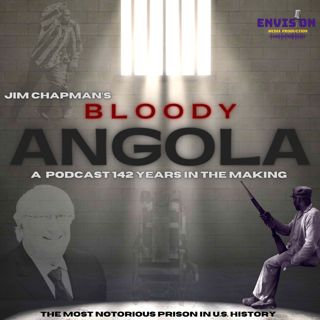
The Personal Diary of Old Wooden Ears
Woody Overton and Jim Chapman open up season 3 of Bloody Angola: A Podcast by Woody Overton and Jim Chapman give you a ton of insight into Louisiana State penitentiary at Angola by reading you the actual diary of the founder of the "Angolite" magazine and editor Old Wooden Ears" from the 1930's!#Louisianastatepenitentiary #AngolaPrison #Podcast #Applepodcast #spotifyTranscript of episode2023 Jim: Hey, everyone. Welcome back to another edition of Bloody-Woody: -Angola.Jim: A podcast 142 years in the making.Woody: A Complete Story of America's Bloodiest Prison. Jim: And I'm Jim Chapman.Woody: And I'm Woody Overton.Jim: First of all, Woody Overton, it's Season 3.Woody: Yes, love, right? [chuckles]Woody: I can't believe that. Thank you everyone for liking us and sharing us and helping us grow. It's been amazing. Chase Team members and now all our higher levels of Patreon.Jim: Warden.Woody: Warden and C.E.R.T. Team. Thank you so much. We appreciate you. But yeah, Season 3, it's amazing. We've sold out two live shows now. Y'all's Response has been phenomenal. We appreciate you. You're about to start getting Bloody Angola three days a week.Jim: And as is our tradition, Woody Overton, we always start with a classic story from Angola.Woody: This is a classic story. Not only about the person it's about, but we are going to bring it to you from what should be a story in its own.Jim: Yes.Woody: The Angolite.Jim: The start of the Angolite, which for those of you that are not familiar, that's a magazine that is released by the prison for inmates to read.Woody: Not only inmates. I had a subscription to it back in 1992 or 1993 and they used to mail it to my house.Jim: All we're doing is telling people how old we are. Woody: [chuckles] Okay, sure. Yeah.Jim: [crosstalk] -Pony Express back then. [laughs]Woody: Yeah, right. That was definitely snail mail. It always fascinates the shit out of me what the criminal mind does. This is after I worked in the prison system too. But it's a phenomenal award-winning magazine.Jim: It really is. The guy who started that magazine is who we're going to really be talking about today. The interesting deal with this gentleman is that he was the original editor and the guy who started the Angolite. But not only did he do that, he also, in addition, kept probably one of the best diaries of Angola. As a matter of fact, I'm going to go ahead and say the best diary of Angola you would ever come across. And he had a nickname. I'm going to tell you about that nickname first. They called him Old Wooden Ears.Woody: Wooden Ears.Jim: The reason they called this gentleman that is he was beat by a correctional officer at some point during his early years in Angola and actually went deaf in one ear. So, he was known by the prisoners as Old Wooden Ears. We're going to tell you about the diaries of William Sadler, and we're going to name this episode Old Wooden Ears.Woody: Wooden Ears.Jim: The interesting thing with this episode is that we're going to actually read you the diary because we can't do this justice without actually reading you the entry. We're just going to take these back and forth. Trust me, this is interesting, y'all. This is the real diary.Woody: Think about it. You don't have a whole lot to do in prison. At least this guy was keeping himself busy by keeping a diary.Jim: And didn't hold back.Woody: Right. He told the truth according to him.Jim: Mm-hmm. That's right. We're going to start with January 1st, 1936. This was New Year's Day on Angola, and it was celebrated by all hands out in the field with the exception of Camp E, most of whom are assigned to the refinery. Sugarcane cutting going on full blast with no Sundays or holidays off until grinding ends, which will be about the middle of the month. Red Hats out in the cane shed.Woody: Red Hats.Jim: If you listen to our Red Hats episode, you'll find out a little bit more about them. But he'salready mentioning the Red Hat.Woody: Yeah. On January 3rd, 1936, he writes, "There was hail on the Gola this day. The refinery has been making 100% white sugar and shipping it to the brokers in Chicago under the Pelican Refinery, Baton Rouge label, so consumers wouldn't get onto the fact that it was made by convict labor. The last month, some of those dudes loading freight cars at Camp B siphoned off sugar out of several sacks and filled holes with striped convict clothes. When the sacks hit Chicago in the retail market and a howl went up, this was heard way down here. The result? About 16 men caught the bat, anywhere from 30 to 45 lashes each. But those who were beaten weren't the guilty ones, strange to say. It seems their clothing had been stolen and shoved into the sacks. And since the dudes bore their laundry numbers, it made them automatically guilty. The actual perpetrators of the switch got off scot-free, which is often the case on this Angola."Jim: How about that?Woody: Right. Y'all, go back and listen to some of our other episodes. The bat was basically a big leather strap. That's what they're referring to. Now, that's pretty smart. Let me tell youthis real quick. When I was in basic training in the army, they had a guy on a cot across from me that snored every night, and I wouldn't get any sleep anyway, I've been on a light sleeper. So, before the lights went out, you had to line your shoes underneath the bunk, I stole one of his boots. When the lights went out, he started snoring, I reared back and I threw that boot, I hit him in his head as hard as I could. He jumped up and he was like, "You motherfuckers. I'm going to get you. I got your boot. When I turn on the lights in the morning, I'm going to find out who it is." But guess what? It was his. These prisoners were smart like that. They stole somebody else's clothes and other inmates' clothes and numbers and plugged the holes. They were hoping to get the uprising, which they got. But unfortunately, for the victims that they stole from, well, they got the bat.Jim: They got the bat. 30 to 45 lashes, y'all. You're starting to see the brutality with Angola and why they called it Bloody Angola. Another thing that I found interesting about that entry was the fact that they would switch the labels. The reason they would do that, back in the 30s, people weren't down with convict labor like that.Woody: They still do it. When I worked at DCI, they had the crawfish plant, and they ran 24 hours a day. They brought in two 18-wheeler loads of crawfish a day and they boiled them. The inmates had to peel 16 pounds of tail meat and they got to weigh it in their 12-hour shift. If they didn't peel the 16 pounds, they went to the hole. But guess what? They packaged it under Louisiana Crawfish Company and sold it. That's the shit you buy in the grocery store when you buy Louisiana Crawfish-- It used to be when you buy Louisiana Crawfish tails.Jim: There it goes. The next time you buy, you think about that.Woody: [crosstalk] -crawfish season, they made them cut onions and they sold the cut-uponions like the Holy Trinity. But they damn sure didn't say it was done by prisoners.Jim: That's right. We continue on. And you're seeing that brutality take place. "January 5th, 1936. Narrowly missed the bat myself this day. Captain JH Row-" that's a good cager name, "-of Camp A missed credit for a carload of cane which had been sent to the mill. There's always been more confusion out in the yard when the cane cars are brought in by railroad crews at night. In this case, the weight ticket evidently became lost, not by fault, but close shave nevertheless."Woody: Wow, close shave-- [crosstalk] Jim: Yeah. And he narrowly missed that bat.Woody: I can't imagine there were a lot of lights and shit on the trains, they were rolling. I think about sugarcane, y'all, that's what he's talking about. Look, there's a certain time you got to cut it and get it out and get it to the mill to get it pressed. I know they were working sun up to sun down.Jim: Oh, yeah. And sugarcane was a huge commodity. Woody: Still is.Jim: It still is, yes.Woody: All right, y'all. So, the next one, his journal entry is on January 9th, 1936. He says, "It was cold and pouring down rain today. No slickers, no boots, no gloves. All camps that work in the fields, negro women cutting cane from on headland, white men from Camp G working toward them. John Henry on the turn row. Dinner served out in the open. Rain so hard, the whippoorwill peas bounce off your plate faster than you can spoon down. Menutoday, chicken, chopped grits, stove pipe gravy, soybean bread, and coffee made from horse beans for breakfast."Jim: I'm hungry already. [laughs] Woody: Right? I can't imagine. Jim: Out in the rain, y'all.Woody: Hey, it's raining so hard, you try to eat your shit before it gets any soggier, but the fat drops are hitting your plate so hard that your peas are bouncing off the plate? That's crazy. Hey, they didn't give a shit. They were getting that sugar cut.Jim: That's right. "14th January, 1936. The whistle blew today for the end of the 1935-36 grinding season. Tonnage figures showed one of the biggest years in Angola history, but no sugar on the table. They found over nine tons which had been hidden in various places around the refinery for use during the coming year by the refinery crew. The hideouts were tipped off by the Black Cat, who as a convict had helped plan it. Two weeks ago, he was paroled to the state for work in the refinery, so his first duty was to put the finger on the hidden sugar."Woody: Wow. Gave it up. Jim: Gave it up.Woody: You know that went on, man. Sugar is a commodity. Even the free people that worked in the mill, I guarantee the inmates kept some too make that homemade brew. All right, y'all, so we're going to January 20, 1936, again from Wooden Ears' diary. He says, "Camps all at work in the field hoeing stubbles. Rainy and wet today. Wet clothes worn into the camp dormitories, which are heated only by a wood-burning stove made out of a di
5 Jan 202358min
False Positive Parts 1 & 2 | Bloody Angola Podcast
As our last official swap we brought back a Real Life Real Crime favorite for those that may have not yet heard it!False Positive parts 1 and 2 have been combined into a "Supersized' episode of Bloody Angola! Advertising Inquiries: https://redcircle.com/brandsPrivacy & Opt-Out: https://redcircle.com/privacy
29 Dec 20221h 54min
Hell or Jail? 2022 Christmas Special Episode
The second season of Bloody Angola: A Prison Podcast by Woody Overton and Jim Chapman has wrapped but that did not stop this dynamic podcast duo from dropping a Christmas special episode in-between seasons!Merry Christmas everyone and Happy Birthday Jesus!#RealLifeRealCrime #HellorJail #Christmas #PodcastAdvertising Inquiries: https://redcircle.com/brandsPrivacy & Opt-Out: https://redcircle.com/privacy
22 Dec 20221h 5min
The Wolf Dogs of Angola | Bloody Angola Podcast
Woody Overton and Jim Chapman discuss the Wolf Dogs that guard Louisiana State penitentiary at Angola!#WolfDogs #Podcast #PrisonPodcast #BloodyAngolaPodcastRate and subscribe to Bloody Angola Podcast here:https://podcasts.apple.com/us/podcast/bloody-angola/id1634095712Advertising Inquiries: https://redcircle.com/brandsPrivacy & Opt-Out: https://redcircle.com/privacy
8 Dec 202257min
Exonerated: The Tragic Archie Williams Story Part 2 The Conclusion
Woody and Jim break down the case against Archie Williams who after 36 years in Louisiana State Penitentiary was exonerated of his crimes due to DNA evidence. This was a total breakdown of the justice system that must be heard to believe! One of the most powerful episodes of Bloody Angola Podcast to date! Part 2 of a 2 part seriesFor the complete video performance of Archie Williams America’s got talent audition it is linked herehttps://youtu.be/wAWXyzVWwRcAdvertising Inquiries: https://redcircle.com/brandsPrivacy & Opt-Out: https://redcircle.com/privacy
1 Dec 20221h 2min
Gal Boy | Bloody Angola Thanksgiving Special
It is a happy Thanksgiving episode of Bloody Angola Podcast and we are pulling a switcharoo! After a special message from Woody and Jim they choose one of their favorite episodes from Woody Overton's Podcast Real Life Real Crime to introduce it to the Bloody Angola Base of Listeners.Advertising Inquiries: https://redcircle.com/brandsPrivacy & Opt-Out: https://redcircle.com/privacy
24 Nov 202246min
Bloody Angola Podcast LIVE is Coming!
Bloody Angola Podcast LIVE is coming to Livingston Parish on Saturday January 14th 2023. In this special drop Woody and Jim give you all the details on this special VIP limited event and how you can get tickets!Link to purchase tickets below:https://www2.southeastern.edu/external/event_registration/lifelong_learning/We hope to see you there!Advertising Inquiries: https://redcircle.com/brandsPrivacy & Opt-Out: https://redcircle.com/privacy
18 Nov 202214min
Exonerated: The Tragic Story of Archie Williams
Woody and Jim break down the case against Archie Williams who after 36 years in Louisiana State Penitentiary was exonerated of his crimes due to DNA evidence. This was a total breakdown of the justice system that must be heard to believe! One of the most powerful episodes of Bloody Angola Podcast to date! Part 1 of a 2 part series#ArchieWilliams #DNA #BloodyAngolaPodcastAdvertising Inquiries: https://redcircle.com/brandsPrivacy & Opt-Out: https://redcircle.com/privacy
17 Nov 20221h 6min