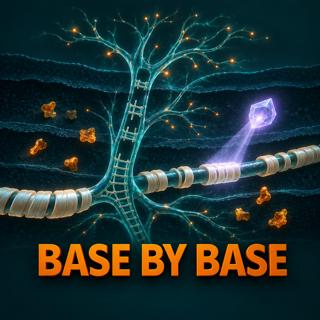
119: G-quadruplexes, pericentromeres, and B cell genome instability
Base by Base27 Elo 2025

119: G-quadruplexes, pericentromeres, and B cell genome instability

Waisertreiger I et al., PNAS - This study tests how stabilization of G-quadruplex (G4) DNA by ligands such as pyridostatin (PDS) affects genome stability in primary and malignant B cells. The authors map PDS-induced chromosomal breaks and fusions to ribosomal DNA (rDNA) and pericentromeric major satellite (MaSat) repeats and link G4 stabilization to tetraploidization in cells lacking G2/M arrest. Key terms: G-quadruplex, pyridostatin, pericentromeric, ribosomal DNA, tetraploidy.

Study Highlights:
Pyridostatin (PDS) treatment induces recurrent DNA breaks and chromosome fusions localized mainly to rDNA arrays and pericentromeric MaSat repeats in mouse primary B cells and B cell lymphoma lines. PDS causes high levels of tetraploid metaphases in primary mouse B cells (and in GM12878 cells) that correlate with abundant dicentric chromosomes and absence of a WEE1-dependent G2/M arrest, whereas CH12 cells arrest in G2/M and largely avoid tetraploid metaphases. Similar pericentromeric fragility is seen with the G4 ligand CX-5461 and in human lymphoma cell lines, supporting a role for G4 stabilization in driving pericentromeric instability.

Conclusion:
G4-stabilizing ligands provoke replication-associated breaks at rDNA and pericentromeric repeats, producing dicentric fusions and, when checkpoint arrest is absent, tetraploidization; this identifies both a vulnerability in B cell cancers and a potential therapeutic avenue with caution for off-target tetraploidization.

Music:
Enjoy the music based on this article at the end of the episode.

Article title:
G- quadruplex stabilization induces DNA breaks in pericentromeric repetitive DNA sequences in B lymphocytes

First author:
Waisertreiger I

Journal:
PNAS

DOI:
10.1073/pnas.2506939122

Reference:
Waisertreiger I., Ayelea K., Elshaikha M.H., Barlow J.H. PNAS (2025) doi:10.1073/pnas.2506939122

License:
This episode is based on an open-access article published under the Creative Commons Attribution 4.0 International License (CC BY 4.0) – https://creativecommons.org/licenses/by/4.0/

Support:
Base by Base – Stripe donations: https://donate.stripe.com/7sY4gz71B2sN3RWac5gEg00

Official website https://basebybase.com

On PaperCast Base by Base you'll discover the latest in genomics, functional genomics, structural genomics, and proteomics.

Episode link: https://basebybase.com/episodes/gquadruplex-stabilization-triggers-pericentromeric-dna-breaks-in-b-cells

QC:
This episode was checked against the original article PDF and publication metadata for the episode release published on 2025-08-27.

QC Scope:
- article metadata and core scientific claims from the narration
- excludes analogies, intro/outro, and music
- transcript coverage: Substantive audit of mechanistic and experimental results: G4 stabilization by PDS, localization of breaks to rDNA and pericentromeric MaSat repeats, tetraploidy in mouse primary B cells and GM12878, absence of tetraploidy in CH12 due to G2/M arrest (and its reversal by inhibitors), human B cell lines (GM12878 and Raji
- transcript topics: G-quadruplex structures and PDS mechanism; PDS-induced chromosomal breaks at rDNA and MaSat repeats; tetraploidy and cell-cycle checkpoint differences across cell types; CH12 cells: G2/M arrest, CDK1 inhibition, WEE1 interplay; human B cell lines GM12878 and Raji; PBMC safety; therapeutic implications, drug combinations, and safety considerations

QC Summary:
- factual score: 10/10
- metadata score: 10/10
- supported core claims: 5
- claims flagged for review: 0
- metadata checks passed: 4
- metadata issues found: 0

Metadata Audited:
- article_doi
- article_title
- article_journal
- license

Factual Items Audited:
- PDS stabilizes G-quadruplexes and locks them, hindering hel...

Chapters
  • (00:00:00) - G4 stabilizing ligands in B cell cancer
  • (00:06:31) - PDS: Targeted DNA damage in cancer
  • (00:08:24) - PDS causes chromosomal instability in cancer cells
  • (00:13:26) - PDS and BRCA2 deficiency cancers
  • (00:17:59) - Base by base science

Tämä jakso on lisätty Podme-palveluun avoimen RSS-syötteen kautta eikä se ole Podmen omaa tuotantoa. Siksi jakso saattaa sisältää mainontaa.

Jaksot(462)

461: Adult Ank3 loss quiets neurons and lowers a myelin protein

461: Adult Ank3 loss quiets neurons and lowers a myelin protein

Yoon et al., Proceedings of the National Academy of Sciences - ANK3, which encodes the scaffolding protein ankyrin-G, is a major risk gene for bipolar disorder and schizophrenia, yet what it does in a...

24 Syys 24min

460: The lupus variant that also sharpens antiviral defense

460: The lupus variant that also sharpens antiviral defense

Virolainen et al., The American Journal of Human Genetics - A lupus signal on chromosome 11p15 narrows to a coding haplotype in IRF7 that most people in the world carry. This study shows the risk form...

21 Syys 24min

459: Cerebral palsy genetics: 515 candidate genes, evidence for 89

459: Cerebral palsy genetics: 515 candidate genes, evidence for 89

Arterbery et al., The American Journal of Human Genetics - Hundreds of genes have been reported as causes of cerebral palsy, yet there is no agreed model of what a pathogenic variant in a child with C...

13 Syys 24min
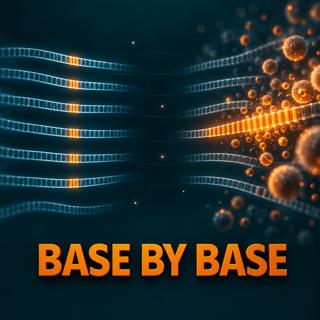
458: Somatic or inherited? Reading TP53 risk from shared DNA

458: Somatic or inherited? Reading TP53 risk from shared DNA

MacGregor et al., The American Journal of Human Genetics - Pathogenic TP53 variants found in blood have long been read as inherited Li-Fraumeni alleles, but many turn out to be somatic clones that gre...

10 Syys 25min

457: A deletion that raises Alzheimer risk, a duplication that lowers it

457: A deletion that raises Alzheimer risk, a duplication that lowers it

Quenez O et al., The American Journal of Human Genetics - Rare copy-number variants were called from 22,319 exomes covering early-onset Alzheimer disease, late-onset disease and unaffected controls, t...

9 Syys 24min

456: Beyond exons: where heritability hides as traits get more polygenic

456: Beyond exons: where heritability hides as traits get more polygenic

Fuhrer J et al., The American Journal of Human Genetics - Across 34 complex traits and disorders, a MiXeR-based framework partitions SNP heritability over 74 functional annotations and finds that exon...

8 Syys 45min

455: Agentic genomics: the bottleneck moves from code to judgment

455: Agentic genomics: the bottleneck moves from code to judgment

Corpas M et al., Cell Genomics - A Perspective arguing that autonomous AI agents which discover, configure and chain bioinformatics operations from natural-language instructions have shifted the bottl...

7 Syys 13min

454: Efavirenz retarda a doença priônica mexendo no colesterol do cérebro [PT]

454: Efavirenz retarda a doença priônica mexendo no colesterol do cérebro [PT]

Ali T et al., JCI Insight - Um antirretroviral aprovado para HIV, dado por via oral em microdose, prolongou a sobrevida de camundongos que carregam a proteína priônica humana e foram infectados com pr...

2 Syys 17min

Suosittua kategoriassa Tiede

rss-mita-tulisi-tietaa
rss-poliisin-mieli
utelias-mieli
rss-hereilla
tiedekulma-podcast
rss-duodecim-lehti
rss-luontopodi-samuel-glassar-tutkii-luonnon-ihmeita
hippokrateen-vastaanotolla
rss-bios-podcast
docemilia
rss-politiikasta-podcast
rss-tiedetta-vai-tarinaa
rss-ranskaa-raakana
rss-lihavuudesta-podcast
radio-antro
rss-radplus