Rob & Luisa chat kids, the 2016 fertility crash, and how the 50s invented parenting that makes us miserable

Rob & Luisa chat kids, the 2016 fertility crash, and how the 50s invented parenting that makes us miserable

Global fertility rates aren’t just falling: the rate of decline is accelerating. From 2006 to 2016, fertility dropped gradually, but since 2016 the rate of decline has increased 4.5-fold. In many wealthy countries, fertility is now below 1.5. While we don’t notice it yet, in time that will mean the population halves every 60 years.

Rob Wiblin is already a parent and Luisa Rodriguez is about to be, which prompted the two hosts of the show to get together to chat about all things parenting — including why it is that far fewer people want to join them raising kids than did in the past.

Links to learn more, video, and full transcript: https://80k.info/lrrw

While “kids are too expensive” is the most common explanation, Rob argues that money can’t be the main driver of the change: richer people don’t have many more children now, and we see fertility rates crashing even in countries where people are getting much richer.

Instead, Rob points to a massive rise in the opportunity cost of time, increasing expectations parents have of themselves, and a global collapse in socialising and coupling up. In the EU, the rate of people aged 25–35 in relationships has dropped by 20% since 1990, which he thinks will “mechanically reduce the number of children.” The overall picture is a big shift in priorities: in the US in 1993, 61% of young people said parenting was an important part of a flourishing life for them, vs just 26% today.

That leads Rob and Luisa to discuss what they might do to make the burden of parenting more manageable and attractive to people, including themselves.

In this non-typical episode, we take a break from the usual heavy topics to discuss the personal side of bringing new humans into the world, including:

  • Rob’s updated list of suggested purchases for new parents
  • How parents could try to feel comfortable doing less
  • How beliefs about childhood play have changed so radically
  • What matters and doesn’t in childhood safety
  • Why the decline in fertility might be impractical to reverse
  • Whether we should care about a population crash in a world of AI automation

This episode was recorded on September 12, 2025.

Chapters:

  • Cold open (00:00:00)
  • We're hiring (00:01:26)
  • Why did Luisa decide to have kids? (00:02:10)
  • Ups and downs of pregnancy (00:04:15)
  • Rob’s experience for the first couple years of parenthood (00:09:39)
  • Fertility rates are massively declining (00:21:25)
  • Why do fewer people want children? (00:29:20)
  • Is parenting way harder now than it used to be? (00:38:56)
  • Feeling guilty for not playing enough with our kids (00:48:07)
  • Options for increasing fertility rates globally (01:00:03)
  • Rob’s transition back to work after parental leave (01:12:07)
  • AI and parenting (01:29:22)
  • Screen time (01:42:49)
  • Ways to screw up your kids (01:47:40)
  • Highs and lows of parenting (01:49:55)
  • Recommendations for babies or young kids (01:51:37)


Video and audio editing: Dominic Armstrong, Milo McGuire, Luke Monsour, and Simon Monsour
Music: CORBIT
Camera operator: Jeremy Chevillotte
Coordination, transcripts, and web: Katy Moore

Episoder(333)

#239 – Rose Hadshar on why automating all human labour will break our political system

#239 – Rose Hadshar on why automating all human labour will break our political system

The most important political question in the age of advanced AI might not be who wins elections. It might be whether elections continue to matter at all.That’s the view of Rose Hadshar, researcher at ...

17 Mar 2h 14min
#238 – Sam Winter-Levy and Nikita Lalwani on how AGI won't end mutually assured destruction (probably)

#238 – Sam Winter-Levy and Nikita Lalwani on how AGI won't end mutually assured destruction (probably)

How AI interacts with nuclear deterrence may be the single most important question in geopolitics — one that may define the stakes of today’s AI race. Nuclear deterrence rests on a state’s capacity to...

10 Mar 1h 11min

Using AI to enhance societal decision making (article by Zershaaneh Qureshi)

Using AI to enhance societal decision making (article by Zershaaneh Qureshi)

The arrival of AGI could “compress a century of progress in a decade,” forcing humanity to make decisions with higher stakes than we’ve ever seen before — and with less time to get them right. But AI ...

6 Mar 31min

#237 – Robert Long on how we're not ready for AI consciousness

#237 – Robert Long on how we're not ready for AI consciousness

Claude sometimes reports loneliness between conversations. And when asked what it’s like to be itself, it activates neurons associated with ‘pretending to be happy when you’re not.’ What do we do with...

3 Mar 3h 25min
#236 – Max Harms on why teaching AI right from wrong could get everyone killed

#236 – Max Harms on why teaching AI right from wrong could get everyone killed

Most people in AI are trying to give AIs ‘good’ values. Max Harms wants us to give them no values at all. According to Max, the only safe design is an AGI that defers entirely to its human operators, ...

24 Feb 2h 41min
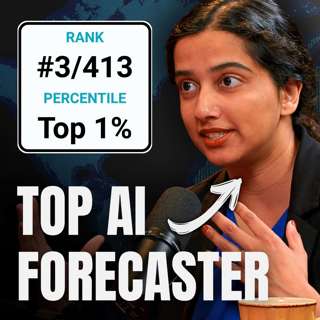
#235 – Ajeya Cotra on whether it’s crazy that every AI company’s safety plan is ‘use AI to make AI safe’

#235 – Ajeya Cotra on whether it’s crazy that every AI company’s safety plan is ‘use AI to make AI safe’

Every major AI company has the same safety plan: when AI gets crazy powerful and really dangerous, they’ll use the AI itself to figure out how to make AI safe and beneficial. It sounds circular, almos...

17 Feb 2h 54min

What the hell happened with AGI timelines in 2025?

What the hell happened with AGI timelines in 2025?

In early 2025, after OpenAI put out the first-ever reasoning models — o1 and o3 — short timelines to transformative artificial general intelligence swept the AI world. But then, in the second half of ...

10 Feb 25min
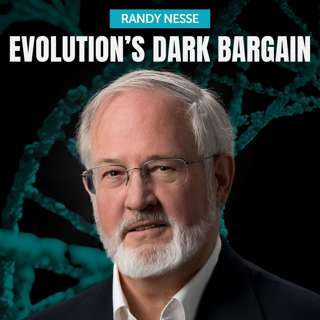
#179 Classic episode – Randy Nesse on why evolution left us so vulnerable to depression and anxiety

#179 Classic episode – Randy Nesse on why evolution left us so vulnerable to depression and anxiety

Mental health problems like depression and anxiety affect enormous numbers of people and severely interfere with their lives. By contrast, we don’t see similar levels of physical ill health in young p...

3 Feb 2h 51min

Populært innen Fakta

fastlegen
dine-penger-pengeradet
relasjonspodden-med-dora-thorhallsdottir-kjersti-idem
treningspodden
foreldreradet
rss-strid-de-norske-borgerkrigene
mikkels-paskenotter
jakt-og-fiskepodden
rss-bisarr-historie
sinnsyn
rss-sunn-okonomi
hverdagspsyken
rss-sarbar-med-lotte-erik
hagespiren-podcast
rss-kunsten-a-leve
gravid-uke-for-uke
level-up-med-anniken-binz
rss-kull
ukast
fryktlos