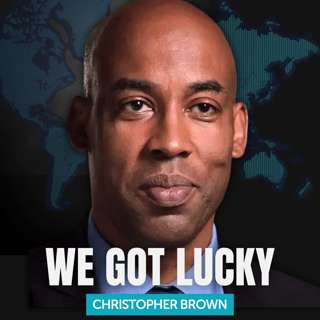
#145 Classic episode – Christopher Brown on why slavery abolition wasn't inevitable

#145 Classic episode – Christopher Brown on why slavery abolition wasn't inevitable

In many ways, humanity seems to have become more humane and inclusive over time. While there’s still a lot of progress to be made, campaigns to give people of different genders, races, sexualities, ethnicities, beliefs, and abilities equal treatment and rights have had significant success.

It’s tempting to believe this was inevitable — that the arc of history “bends toward justice,” and that as humans get richer, we’ll make even more moral progress.

But today's guest Christopher Brown — a professor of history at Columbia University and specialist in the abolitionist movement and the British Empire during the 18th and 19th centuries — believes the story of how slavery became unacceptable suggests moral progress is far from inevitable.

Rebroadcast: This episode was originally aired in February 2023.

Links to learn more, video, and full transcript: https://80k.link/CLB

While most of us today feel that the abolition of slavery was sure to happen sooner or later as humans became richer and more educated, Christopher doesn't believe any of the arguments for that conclusion pass muster. If he's right, a counterfactual history where slavery remains widespread in 2023 isn't so far-fetched.

As Christopher lays out in his two key books, Moral Capital: Foundations of British Abolitionism and Arming Slaves: From Classical Times to the Modern Age, slavery has been ubiquitous throughout history. Slavery of some form was fundamental in Classical Greece, the Roman Empire, in much of the Islamic civilisation, in South Asia, and in parts of early modern East Asia, Korea, China.

It was justified on all sorts of grounds that sound mad to us today. But according to Christopher, while there’s evidence that slavery was questioned in many of these civilisations, and periodically attacked by slaves themselves, there was no enduring or successful moral advocacy against slavery until the British abolitionist movement of the 1700s.

That movement first conquered Britain and its empire, then eventually the whole world. But the fact that there's only a single time in history that a persistent effort to ban slavery got off the ground is a big clue that opposition to slavery was a contingent matter: if abolition had been inevitable, we’d expect to see multiple independent abolitionist movements thoroughly history, providing redundancy should any one of them fail.

Christopher argues that this rarity is primarily down to the enormous economic and cultural incentives to deny the moral repugnancy of slavery, and crush opposition to it with violence wherever necessary.

Mere awareness is insufficient to guarantee a movement will arise to fix a problem. Humanity continues to allow many severe injustices to persist, despite being aware of them. So why is it so hard to imagine we might have done the same with forced labour?

In this episode, Christopher describes the unique and peculiar set of political, social and religious circumstances that gave rise to the only successful and lasting anti-slavery movement in human history. These circumstances were sufficiently improbable that Christopher believes there are very nearby worlds where abolitionism might never have taken off.

Christopher and host Rob Wiblin also discuss:

  • Various instantiations of slavery throughout human history
  • Signs of antislavery sentiment before the 17th century
  • The role of the Quakers in early British abolitionist movement
  • The importance of individual “heroes” in the abolitionist movement
  • Arguments against the idea that the abolition of slavery was contingent
  • Whether there have ever been any major moral shifts that were inevitable

Chapters:

  • Rob's intro (00:00:00)
  • Cold open (00:01:45)
  • Who's Christopher Brown? (00:03:00)
  • Was abolitionism inevitable? (00:08:53)
  • The history of slavery (00:14:35)
  • Signs of antislavery sentiment before the 17th century (00:19:24)
  • Quakers (00:32:37)
  • Attitudes to slavery in other religions (00:44:37)
  • Quaker advocacy (00:56:28)
  • Inevitability and contingency (01:06:29)
  • Moral revolution (01:16:39)
  • The importance of specific individuals (01:29:23)
  • Later stages of the antislavery movement (01:41:33)
  • Economic theory of abolition (01:55:27)
  • Influence of knowledge work and education (02:12:15)
  • Moral foundations theory (02:20:43)
  • Figuring out how contingent events are (02:32:42)
  • Least bad argument for why abolition was inevitable (02:41:45)
  • Were any major moral shifts inevitable? (02:47:29)

Producer: Keiran Harris
Audio mastering: Milo McGuire
Transcriptions: Katy Moore

Episoder(333)

#100 Classic episode – Having a successful career with depression, anxiety, and imposter syndrome

#100 Classic episode – Having a successful career with depression, anxiety, and imposter syndrome

Today’s episode is one of the most remarkable and really, unique, pieces of content we’ve ever produced (and I can say that because I had almost nothing to do with making it!).The producer of this sho...

27 Des 20232h 51min

#176 – Nathan Labenz on the final push for AGI, understanding OpenAI's leadership drama, and red-teaming frontier models

#176 – Nathan Labenz on the final push for AGI, understanding OpenAI's leadership drama, and red-teaming frontier models

OpenAI says its mission is to build AGI — an AI system that is better than human beings at everything. Should the world trust them to do that safely?That’s the central theme of today’s episode with Na...

22 Des 20233h 46min

#175 – Lucia Coulter on preventing lead poisoning for $1.66 per child

#175 – Lucia Coulter on preventing lead poisoning for $1.66 per child

Lead is one of the most poisonous things going. A single sugar sachet of lead, spread over a park the size of an American football field, is enough to give a child that regularly plays there lead pois...

14 Des 20232h 14min

#174 – Nita Farahany on the neurotechnology already being used to convict criminals and manipulate workers

#174 – Nita Farahany on the neurotechnology already being used to convict criminals and manipulate workers

"It will change everything: it will change our workplaces, it will change our interactions with the government, it will change our interactions with each other. It will make all of us unwitting neurom...

7 Des 20232h

#173 – Jeff Sebo on digital minds, and how to avoid sleepwalking into a major moral catastrophe

#173 – Jeff Sebo on digital minds, and how to avoid sleepwalking into a major moral catastrophe

"We do have a tendency to anthropomorphise nonhumans — which means attributing human characteristics to them, even when they lack those characteristics. But we also have a tendency towards anthropoden...

22 Nov 20232h 38min
#172 – Bryan Caplan on why you should stop reading the news

#172 – Bryan Caplan on why you should stop reading the news

Is following important political and international news a civic duty — or is it our civic duty to avoid it?It's common to think that 'staying informed' and checking the headlines every day is just wha...

17 Nov 20232h 23min

#171 – Alison Young on how top labs have jeopardised public health with repeated biosafety failures

#171 – Alison Young on how top labs have jeopardised public health with repeated biosafety failures

"Rare events can still cause catastrophic accidents. The concern that has been raised by experts going back over time, is that really, the more of these experiments, the more labs, the more opportunit...

9 Nov 20231h 46min

#170 – Santosh Harish on how air pollution is responsible for ~12% of global deaths — and how to get that number down

#170 – Santosh Harish on how air pollution is responsible for ~12% of global deaths — and how to get that number down

"One [outrageous example of air pollution] is municipal waste burning that happens in many cities in the Global South. Basically, this is waste that gets collected from people's homes, and instead of ...

1 Nov 20232h 57min

Populært innen Fakta

fastlegen
dine-penger-pengeradet
relasjonspodden-med-dora-thorhallsdottir-kjersti-idem
rss-strid-de-norske-borgerkrigene
foreldreradet
mikkels-paskenotter
treningspodden
rss-bisarr-historie
jakt-og-fiskepodden
rss-sunn-okonomi
sinnsyn
tomprat-med-gunnar-tjomlid
rss-kunsten-a-leve
hagespiren-podcast
rss-bak-luftfarten
ukast
fryktlos
hverdagspsyken
rss-mind-body-podden
gravid-uke-for-uke