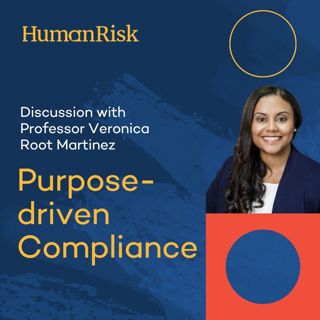
Professor Veronica Root Martinez on Purpose-Driven Compliance

Professor Veronica Root Martinez on Purpose-Driven Compliance

Who determines what 'good' Compliance actually looks like? The obvious answer is regulators (and in some jurisdictions) prosecutors. But what if it were the regulated Firms themselves? That's the idea behind purpose-driven compliance, which I'm exploring on this episode.

Episode Summary
To explore this, I'm joined by Veronica Root Martinez, Professor of Law at Duke University School of Law, to explore a deceptively simple but unsettling idea: 100% compliance is impossible. While we often behave as though perfect compliance is the goal — and in some safety-critical domains it must be — most organisational compliance involves humans. And humans make mistakes. Things get missed. Context changes. Stuff goes wrong.

So if perfection isn’t realistic, the real question becomes: how do organisations decide what really matters? The traditional answer has been to look outward — to regulators, enforcement authorities, and in some jurisdictions (particularly the US), prosecutors. Their priorities, expressed through sentencing guidelines, enforcement actions, and settlements, end up defining what “good” compliance looks like.

Veronica challenges that logic. She argues that this gets things the wrong way round. Instead of letting enforcement priorities dictate behaviour, she makes the case for purpose-driven compliance — where organisations set their own priorities based on their purpose, values, and actual risks, rather than chasing shifting regulatory expectations. Along the way, the conversation explores culture, human judgment, psychological safety, technology, experimentation, and why “best practice” can sometimes make things worse rather than better.

This episode is for anyone who writes rules, enforces them — or simply has to live under them.

Guest Biography
Veronica Root Martinez
is a Professor of Law at Duke University School of Law, where she researches corporate compliance, ethics, and organisational culture. Her work on purpose-driven compliance challenges enforcement-led models and explores how organisations can set priorities based on their own purpose, values, and risks.

Before entering academia, Veronica practised as an associate at a large law firm in Washington, DC, where she worked on regulatory and white-collar matters — experience that strongly informs the practical orientation of her research.

Links

Professor Veronica Root Martinez – Faculty Profile
https://law.duke.edu/fac/martinez

Veronica on LinkedIn
https://www.linkedin.com/in/veronica-root-martinez/

Purpose-Driven Compliance (paper discussed in the episode)
https://papers.ssrn.com/sol3/papers.cfm?abstract_id=6078766


AI-Generated Timestamped Summary
00:00 – 02:00 | “Because they said so”
Christian reframes compliance as a universal human experience — not just a professional discipline — and introduces the problem of rules justified solely by regulatory expectation.

02:00 – 05:30 | Why 100% compliance is impossible
Veronica explains why modern organisations cannot realistically achieve perfect compliance when humans are involved — and why pretending otherwise creates problems.

05:30 – 10:30 | Tolerated misconduct and cultural drift
How allowing “small” rule-breaking can escalate into bigger issues, drawing on behavioural ethics and real-world corporate failures.

10:30 – 14:30 | Risk, prioritisation, and what really matters
A discussion of risk-based thinking, irrecoverable vs recoverable errors, and why organisations — not regulators — are best placed to set priorities.

14:30 – 18:30 | Enforcement swings and resilience
Why compliance programmes built around enforcement trends are fragile, expensive, and reactive — and how purpose-driven approaches create stability. 18:30 – 23:30 | Innovation, uncertainty, and guardrails
Why regulators are always behind innovation — and how values-based guardrails help employees make decisions in uncharted territory.

23:30 – 30:30 | Technology, AI, and the human in the loop
The limits of automation, the danger of over-reliance on tech, and why human judgment remains essential.

30:30 – 36:30 | Rules, loopholes, and malicious compliance
How overly detailed rulebooks create loopholes — and why purpose and principles offer a better basis for accountability.

36:30 – 40:30 | The Costco example
A powerful illustration of simplicity: four ethical principles that employees can actually understand and use.

40:30 – 45:30 | Training, regulators, and unintended consequences
Why blanket training requirements often miss the mark — and how enforcement agreements can accidentally undermine effectiveness.

45:30 – 52:30 | Measuring culture and compliance effectiveness
Moving beyond counting inputs to assessing outputs, including psychological safety, Speak Up systems, and cultural indicators.

52:30 – 57:30 | Experimentation and learning
Why failed interventions aren’t failure — they’re information — and why compliance should be treated as an evolving experiment.

57:30 – End | Reclaiming responsibility
A closing reflection on extrinsic motivation, “because I said so,” and why purpose-driven compliance offers a more human, defensible, and sustainable way forward.

Denne episoden er hentet fra en åpen RSS-feed og er ikke publisert av Podme. Den kan derfor inneholde annonser.

Episoder(382)

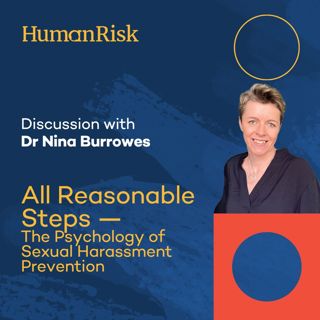
Dr Nina Burrowes on All Reasonable Steps: The Psychology of Sexual Harassment Prevention

Dr Nina Burrowes on All Reasonable Steps: The Psychology of Sexual Harassment Prevention

What does it actually take to prevent sexual harassment at work? Policies, training, reporting mechanisms and statements of zero tolerance are one thing. Creating a workplace where sexual harassment i...

25 Sep 1h 6min
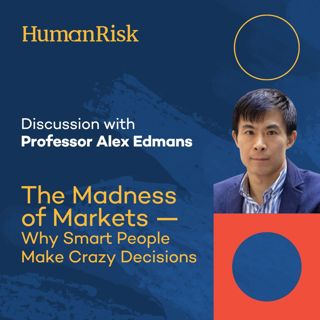
Professor Alex Edmans on the Madness of Markets — Why Smart People Make Crazy Decisions

Professor Alex Edmans on the Madness of Markets — Why Smart People Make Crazy Decisions

What can financial markets teach us about human behaviour? Why might the size of a CEO’s signature tell us something useful about the company they run? And why, even when smart investors know somethin...

13 Sep 1h 1min
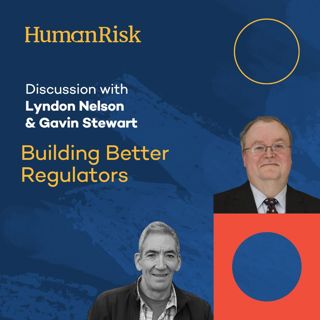
Lyndon Nelson & Gavin Stewart on Building Better Regulators

Lyndon Nelson & Gavin Stewart on Building Better Regulators

What if understanding regulation could help us spot when politicians are promising the impossible? Regulation sounds simple in theory. Something poses a risk, so we create rules and a regulator to con...

7 Sep 1h 23min
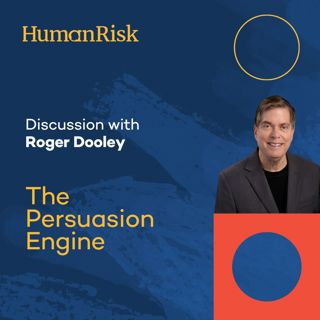
Roger Dooley on The Persuasion Engine

Roger Dooley on The Persuasion Engine

What if AI could help us understand people better, rather than simply replacing what humans do?Episode summaryHow can we use AI to become better at persuasion, communication and understanding human be...

1 Sep 59min
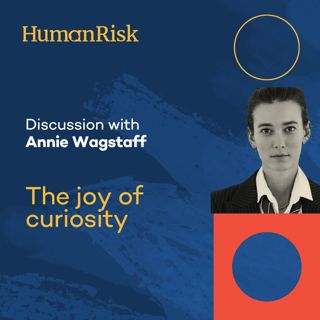
Annie Wagstaff on The Joy of Curiosity

Annie Wagstaff on The Joy of Curiosity

What’s the last thing you learned simply because you wanted to know?Episode summaryWhy do we feel the need to justify what we learn? My guest on this episode is Annie Wagstaff, a musician and composer...

23 Aug 1h
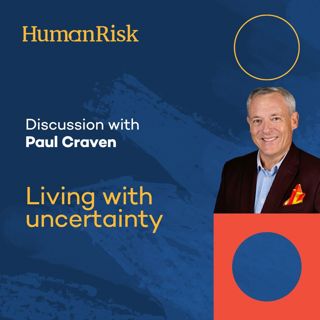
Paul Craven on Living With Uncertainty

Paul Craven on Living With Uncertainty

What happens when someone who spends his life thinking about risk, decision-making and human behaviour is confronted with an uncertainty he simply can’t control?Episode summaryMy guest is Paul Craven,...

15 Aug 51min
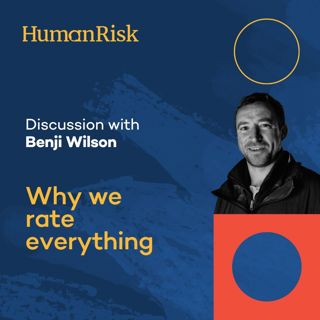
Benji Wilson on why we rate everything

Benji Wilson on why we rate everything

Why do we rate everything and why do we do so on a scale of one to five stars? What happens when systems designed to help us make better choices start influencing our behaviour in ways we don’t necess...

8 Aug 1h 4min
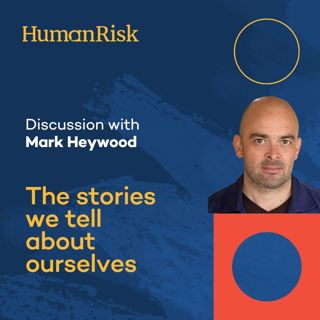
Mark Heywood on The Stories We Tell About Ourselves

Mark Heywood on The Stories We Tell About Ourselves

What parts of yourself have you learned to hide in order to be taken seriously? My guest on this episode is Mark Heywood, a friend of the show, returning guest and someone I've collaborated with on a ...

2 Aug 1h 21min

Populært innen Vitenskap

fastlegen
romkapsel
tingenes-tilstand
jss
liberal-halvtime
forskningno
sinnsyn
rekommandert
villmarksliv
rss-paradigmepodden
fjellsportpodden
tomprat-med-gunnar-tjomlid
grunnstoffene
nordnorsk-historie
rss-nysgjerrige-norge
tidlose-historier
psykopoden
rss-rekommandert
rss-inn-til-kjernen-med-sunniva-rose
smart-forklart