376E-412-Tiny Space Rock

376E-412-Tiny Space Rock

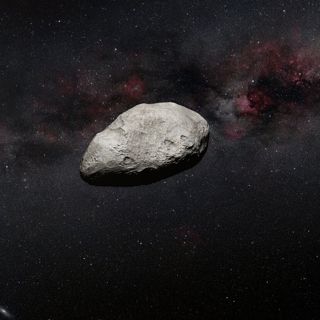
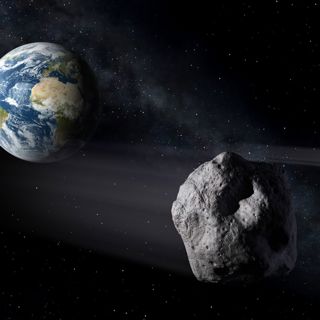
Eighteen hours before my Catalina Sky Survey teammate Rose Matheny first spotted a small space rock with our Schmidt telescope on Mt. Bigelow, Arizona it had passed less than the Earth's diameter from the surface of our planet. Rose was able to discover this Smart Car sized space rock after it moved out of the Sun's glare. At this point it was about the Moon's distance from her and was traveling away at 3.4 mi/s. After Rose posted her discovery observations on the Minor Planet Center's Near Earth Object Confirmation page, for the next 24 hours it was tracked by telescopes in Spain, Illinois, and Arizona. Scientists at the Minor Planet Center used these data to calculate it's orbit around the Sun, estimate it's size and give it the name 2017 UJ2. This small asteroid had come near the Earth in 1978 but was invisible to the technology which astronomers had available at the time. 2017 UJ2 will not come close enough for us to detect in the foreseeable future, however, there are likely to be tens of millions of others like it which can come close to Earth. A small asteroid the size of Rose's discovery is likely to enter our atmosphere at least once a year and explodes at about 4 times higher than airliners fly. If such an event happened at night and you were lucky enough to see it you would be treated to a fantastic light show. If you are as lucky as a power ball winner you might even be able to find a piece of it on the ground.

Denne episoden er hentet fra en åpen RSS-feed og er ikke publisert av Podme. Den kan derfor inneholde annonser.

Episoder(1000)

918-Auroras from Space

918-Auroras from Space

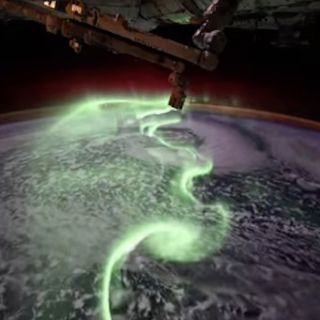
The northern lights or Aurora Borealis have fascinated humans throughout the ages. Today aurora watching is a multimillion dollar industry in places like Alaska, Canada, Norway, Sweden, Finland, Green...

25 Sep 2min
407E-448-Two PHA's

407E-448-Two PHA's

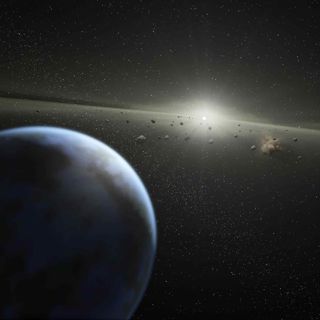
The large dangerous asteroids that we don't know about are what keep asteroid hunters going to the telescope.

22 Sep 2min
917-Space Dust

917-Space Dust

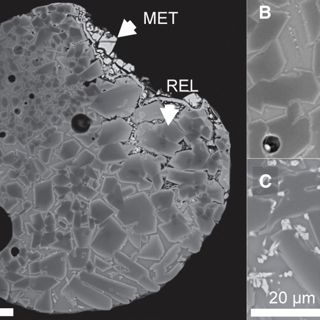
As the Earth orbits the Sun at 18.5 mi/s it sweeps up about 100 tons of micrometeorites and space dust every day of which some 14 tons eventually makes it to the ground. You can even find some of thes...

18 Sep 2min
406E-447-Nuking An Asteroid

406E-447-Nuking An Asteroid

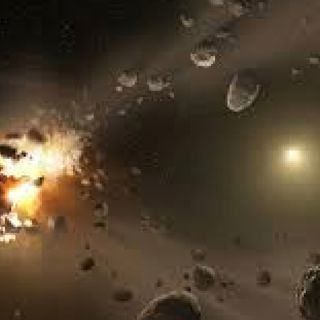
Tonight, even though the chances are extremely slim, an asteroid hunter could find a sizable asteroid on a collision course with planet Earth. If we have decades warning, the potential impactor's arri...

15 Sep 2min
916-Past Glory

916-Past Glory

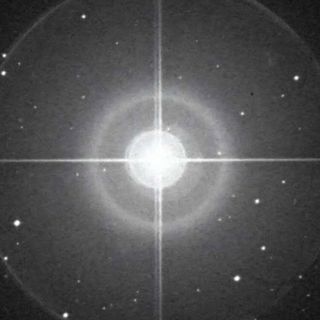
When accurately recorded historical observations do not agree with what we what we see today it is often very rewarding to find out why. In modern telescopes we see Theta Eridani to a be pair separate...

11 Sep 2min

405E-446-Asteroid Homestead

405E-446-Asteroid Homestead

In the future one can envision a space mining family boarding a descendent of the SpaceX Falcon Heavy Launch Vehicle for a trip into low Earth orbit. A few hundred miles above the Earth's surface they...

8 Sep 2min
915-Raining Comets

915-Raining Comets

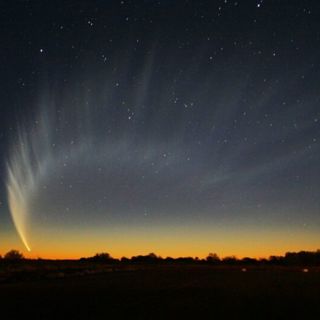
The comets we observe generally start out as icy dirty snowballs of frozen gases like water and frozen carbon dioxide in the Oort cloud. If recent scientific analysis is correct, we are now witnessing...

4 Sep 2min
404E-445-Not So Secret

404E-445-Not So Secret

A partnership of humans and computers will help to minimize the damage when asteroid hunters find a space rock with our number on it.

1 Sep 2min

Populært innen Vitenskap

fastlegen
romkapsel
tingenes-tilstand
jss
liberal-halvtime
forskningno
sinnsyn
rekommandert
villmarksliv
rss-paradigmepodden
fjellsportpodden
tomprat-med-gunnar-tjomlid
grunnstoffene
nordnorsk-historie
rss-nysgjerrige-norge
tidlose-historier
psykopoden
rss-rekommandert
rss-inn-til-kjernen-med-sunniva-rose
smart-forklart