#235 – Ajeya Cotra on whether it’s crazy that every AI company’s safety plan is ‘use AI to make AI safe’

#235 – Ajeya Cotra on whether it’s crazy that every AI company’s safety plan is ‘use AI to make AI safe’

Every major AI company has the same safety plan: when AI gets crazy powerful and really dangerous, they’ll use the AI itself to figure out how to make AI safe and beneficial. It sounds circular, almost satirical. But is it actually a bad plan?

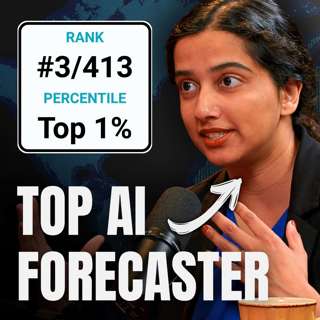
Today’s guest, Ajeya Cotra, recently placed 3rd out of 413 participants forecasting AI developments and is among the most thoughtful and respected commentators on where the technology is going.

She thinks there’s a meaningful chance we’ll see as much change in the next 23 years as humanity faced in the last 10,000, thanks to the arrival of artificial general intelligence. Ajeya doesn’t reach this conclusion lightly: she’s had a ring-side seat to the growth of all the major AI companies for 10 years — first as a researcher and grantmaker for technical AI safety at Coefficient Giving (formerly known as Open Philanthropy), and now as a member of technical staff at METR.

So host Rob Wiblin asked her: is this plan to use AI to save us from AI a reasonable one?

Ajeya agrees that humanity has repeatedly used technologies that create new problems to help solve those problems. After all:

  • Cars enabled carjackings and drive-by shootings, but also faster police pursuits.
  • Microbiology enabled bioweapons, but also faster vaccine development.
  • The internet allowed lies to disseminate faster, but had exactly the same impact for fact checks.

But she also thinks this will be a much harder case. In her view, the window between AI automating AI research and the arrival of uncontrollably powerful superintelligence could be quite brief — perhaps a year or less. In that narrow window, we’d need to redirect enormous amounts of AI labour away from making AI smarter and towards alignment research, biodefence, cyberdefence, adapting our political structures, and improving our collective decision-making.

The plan might fail just because the idea is flawed at conception: it does sound a bit crazy to use an AI you don’t trust to make sure that same AI benefits humanity.

But if we find some clever technique to overcome that, we could still fail — because the companies simply don’t follow through on their promises. They say redirecting resources to alignment and security is their strategy for dealing with the risks generated by their research — but none have quantitative commitments about what fraction of AI labour they’ll redirect during crunch time. And the competitive pressures during a recursive self-improvement loop could be irresistible.

In today’s conversation, Ajeya and Rob discuss what assumptions this plan requires, the specific problems AI could help solve during crunch time, and why — even if we pull it off — we’ll be white-knuckling it the whole way through.


Links to learn more, video, and full transcript: https://80k.info/ac26

This episode was recorded on October 20, 2025.

Chapters:

  • Cold open (00:00:00)
  • Ajeya’s strong track record for identifying key AI issues (00:00:43)
  • The 1,000-fold disagreement about AI's effect on economic growth (00:02:30)
  • Could any evidence actually change people's minds? (00:22:48)
  • The most dangerous AI progress might remain secret (00:29:55)
  • White-knuckling the 12-month window after automated AI R&D (00:46:16)
  • AI help is most valuable right before things go crazy (01:10:36)
  • Foundations should go from paying researchers to paying for inference (01:23:08)
  • Will frontier AI even be for sale during the explosion? (01:30:21)
  • Pre-crunch prep: what we should do right now (01:42:10)
  • A grantmaking trial by fire at Coefficient Giving (01:45:12)
  • Sabbatical and reflections on effective altruism (02:05:32)
  • The mundane factors that drive career satisfaction (02:34:33)
  • EA as an incubator for avant-garde causes others won't touch (02:44:07)

Video and audio editing: Dominic Armstrong, Milo McGuire, Luke Monsour, and Simon Monsour
Music: CORBIT
Coordination, transcriptions, and web: Katy Moore

Episoder(333)

#51 - Martin Gurri on the revolt of the public & crisis of authority in the information age

#51 - Martin Gurri on the revolt of the public & crisis of authority in the information age

Politics in rich countries seems to be going nuts. What's the explanation? Rising inequality? The decline of manufacturing jobs? Excessive immigration? Martin Gurri spent decades as a CIA analyst and...

29 Jan 20192h 31min
#50 - David Denkenberger on how to feed all 8b people through an asteroid/nuclear winter

#50 - David Denkenberger on how to feed all 8b people through an asteroid/nuclear winter

If an asteroid impact or nuclear winter blocked the sun for years, our inability to grow food would result in billions dying of starvation, right? According to Dr David Denkenberger, co-author of Feed...

27 Des 20182h 57min

#49 - Rachel Glennerster on a year's worth of education for 30c & other development 'best buys'

#49 - Rachel Glennerster on a year's worth of education for 30c & other development 'best buys'

If I told you it's possible to deliver an extra year of ideal primary-level education for under $1, would you believe me? Hopefully not - the claim is absurd on its face. But it may be true nonetheles...

20 Des 20181h 35min

#48 - Brian Christian on better living through the wisdom of computer science

#48 - Brian Christian on better living through the wisdom of computer science

Please let us know if we've helped you: Fill out our annual impact survey Ever felt that you were so busy you spent all your time paralysed trying to figure out where to start, and couldn't get much ...

22 Nov 20183h 15min

#47 - Catherine Olsson & Daniel Ziegler on the fast path into high-impact ML engineering roles

#47 - Catherine Olsson & Daniel Ziegler on the fast path into high-impact ML engineering roles

After dropping out of a machine learning PhD at Stanford, Daniel Ziegler needed to decide what to do next. He’d always enjoyed building stuff and wanted to shape the development of AI, so he thought a...

2 Nov 20182h 4min

#46 - Hilary Greaves on moral cluelessness & tackling crucial questions in academia

#46 - Hilary Greaves on moral cluelessness & tackling crucial questions in academia

The barista gives you your coffee and change, and you walk away from the busy line. But you suddenly realise she gave you $1 less than she should have. Do you brush your way past the people now waitin...

23 Okt 20182h 49min

#45 - Tyler Cowen's case for maximising econ growth, stabilising civilization & thinking long-term

#45 - Tyler Cowen's case for maximising econ growth, stabilising civilization & thinking long-term

I've probably spent more time reading Tyler Cowen - Professor of Economics at George Mason University - than any other author. Indeed it's his incredibly popular blog Marginal Revolution that prompted...

17 Okt 20182h 30min

#44 - Paul Christiano on how we'll hand the future off to AI, & solving the alignment problem

#44 - Paul Christiano on how we'll hand the future off to AI, & solving the alignment problem

Paul Christiano is one of the smartest people I know. After our first session produced such great material, we decided to do a second recording, resulting in our longest interview so far. While challe...

2 Okt 20183h 51min

Populært innen Fakta

fastlegen
dine-penger-pengeradet
relasjonspodden-med-dora-thorhallsdottir-kjersti-idem
foreldreradet
treningspodden
rss-strid-de-norske-borgerkrigene
mikkels-paskenotter
rss-bisarr-historie
jakt-og-fiskepodden
sinnsyn
rss-kunsten-a-leve
rss-sunn-okonomi
hverdagspsyken
tomprat-med-gunnar-tjomlid
rss-bak-luftfarten
ukast
fryktlos
gravid-uke-for-uke
lederskap-nhhs-podkast-om-ledelse
rss-kull