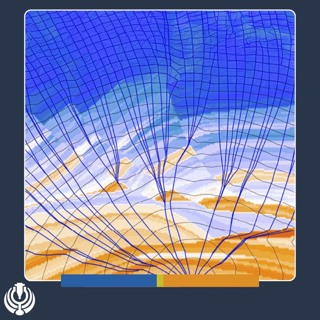
Inside the Workflow - Unsupervised Machine Learning for Seismic Interpretation

Inside the Workflow - Unsupervised Machine Learning for Seismic Interpretation

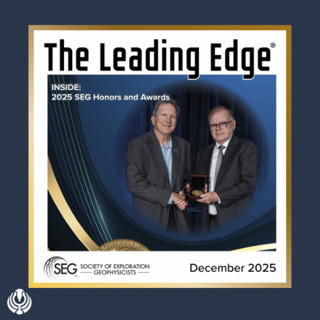
“The major pitfall of machine learning of any kind is to be overly confident in the results. We run the risk of garbage in gospel out.” This discussion offers a rare chance to go a little deeper into a Leading Edge article and hear directly from the authors about the thinking behind their workflow. Satinder Chopra and Kurt Marfurt walk through how unsupervised machine learning, careful attribute selection, and simple preprocessing steps can reveal subtle channel features in a deepwater New Zealand example. It feels less like a theory lesson and more like practical guidance on using machine learning as a helpful partner in everyday seismic interpretation. KEY TAKEAWAYS > Small workflow choices have big impact. Clean input data, thoughtful attribute selection, and simple normalization steps often determine whether machine learning highlights geology or just amplifies noise. > The value is in the combination of tools and judgment. Unsupervised methods quickly expose patterns, but interpreters still need to compare results with seismic sections, wells, and regional context to confirm what is real. > PCA and SOM make complex attribute sets easier to explore. By reducing dozens of attributes into clearer clusters, they help interpreters see channel shapes and reservoir variability that might otherwise be overlooked. LINKS * Read the December 2025 special section - https://pubs.geoscienceworld.org/tle/issue/44/12 * Seismic characterization with unsupervised machine learning applications for facies classification by Satinder Chopra and Kurt Marfurt - https://doi.org/10.1190/tle44120934.1 ABOUT SEISMIC SOUNDOFF Seismic Soundoff showcases conversations addressing the challenges of energy, water, and climate. Produced by the Society of Exploration Geophysicists (SEG) and hosted by Andrew Geary of 51 features, these episodes celebrate and inspire the geophysicists of today and tomorrow. Three new episodes monthly. See the full archive at https://seg.org/resources/podcast/.

Denne episoden er hentet fra en åpen RSS-feed og er ikke publisert av Podme. Den kan derfor inneholde annonser.

Episoder(324)

308: Low Cost Monitoring Without Low Value

308: Low Cost Monitoring Without Low Value

“The goal is not cheaper data. The goal is to spend less on everything that does not add value to the decision one is trying to make.” Low-cost monitoring is becoming less about cheaper sensors and m...

24 Sep 27min
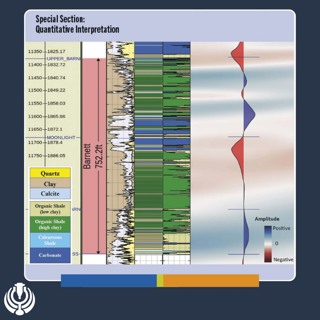
307: How QI Connects Science and Business Impact

307: How QI Connects Science and Business Impact

“Machine learning over the last few years has become revolutionary. But we still need, and maybe even more so, the constraint and knowledge of rock physics and QI as an integral part of those workflow...

15 Sep 31min
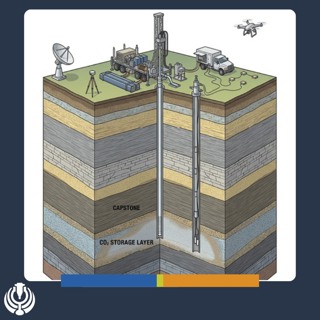
306: How Geophysics Builds Trust in CO2 Storage

306: How Geophysics Builds Trust in CO2 Storage

“We really need to be able to explain in clear language and with vivid examples just what geophysics can do here.” Michael B. Helgerud and Manika Prasad approach CCUS monitoring from two useful angle...

10 Sep 29min
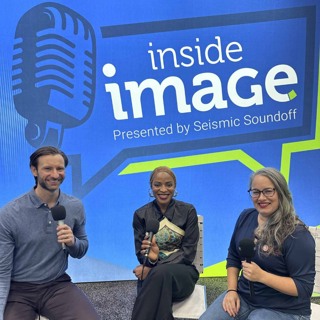
15: The Conversation Geoscience Cannot Afford to Ignore (Inside IMAGE '26)

15: The Conversation Geoscience Cannot Afford to Ignore (Inside IMAGE '26)

Geoscience needs more people who can solve problems across energy, water, climate, critical minerals, and the subsurface, yet departments are losing students, funding, and in some cases the field expe...

3 Sep 36min
305: Building Trust in Elastic FWI

305: Building Trust in Elastic FWI

“We always aim for 60 percent. The other 40 percent, we are ready to make mistakes, learn from those mistakes, and then move forward.” A 600-meter carbonate platform forced Dr. Ahmad Riza Ghazali and...

27 Aug 30min
14: How Exhibiting at IMAGE Can Shape What You Build Next (Inside IMAGE '26)

14: How Exhibiting at IMAGE Can Shape What You Build Next (Inside IMAGE '26)

Julian Chenin calls IMAGE “Disneyland for geoscience,” and after walking the exhibition floor it is easy to understand what he means. But for ROGII, the real value is what happens when people stop at ...

21 Aug 9min

13: AI Is an Accelerator, Not the Decision-Maker (Inside IMAGE '26)

13: AI Is an Accelerator, Not the Decision-Maker (Inside IMAGE '26)

Companies have spent years storing more and more data, but Amii Rozell and Hana Kabazi make an important distinction: saving the final answer is not the same as saving why you made the decision. Three...

21 Aug 28min

12: How GWB Turns Geoscience Into Human Impact (Inside IMAGE '26)

12: How GWB Turns Geoscience Into Human Impact (Inside IMAGE '26)

Geoscientists Without Borders starts with a simple idea: geoscience can improve someone’s life. Jim Funk has seen what access to clean water can mean in African communities, while Craig Beasley talks ...

20 Aug 26min

Populært innen Vitenskap

fastlegen
romkapsel
tingenes-tilstand
jss
liberal-halvtime
forskningno
rekommandert
sinnsyn
tomprat-med-gunnar-tjomlid
villmarksliv
rss-paradigmepodden
fjellsportpodden
rss-nysgjerrige-norge
nordnorsk-historie
grunnstoffene
rss-rekommandert
tidlose-historier
rss-inn-til-kjernen-med-sunniva-rose
psykopoden
smart-forklart