377E-413-Fission Rocket

377E-413-Fission Rocket

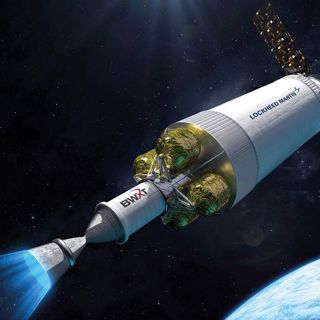
To get an idea of the energy involved in a rocket launch, the NASA Saturn V, moon rocket, fully fueled on the launch pad contained the chemical energy of 2,000 pounds of TNT. This old technology could carry us to Mars and back on missions that would last years. To cut the mission time, the risks, and the mass of supplies required for such a prolonged space mission NASA is looking at alternative means of rocket propulsion. Back in the 1950s NASA's project Orion was a study to investigate propelling a rocket by a series of atomic bomb explosions behind the vehicle. Now a safer and more gentle way of propelling a space craft with nuclear fission is being studied as the result of a NASA grant to BWX Technologies. The concept is to heat liquid hydrogen using a high temperature fission reactor furnace which would expel the gas at a high velocity producing the rocket's thrust. The process would be about twice as efficient in terms of thrust per pound of fuel when compared to burning a hydrogen and oxygen mixture. Since it is unacceptable to release trace amounts of radioactivity in the rocket's exhaust, engineers are investigating a technique developed by NASA in which the hydrogen exhaust is burned with oxygen to produce water which can be caught and decontaminated. Don't expect to buy a round trip ticket on a high speed fission powered rocket any time soon. However, in the long run nuclear technology could revolutionize the exploration and colonization of our solar system.

Denne episoden er hentet fra en åpen RSS-feed og er ikke publisert av Podme. Den kan derfor inneholde annonser.

Episoder(1000)

918-Auroras from Space

918-Auroras from Space

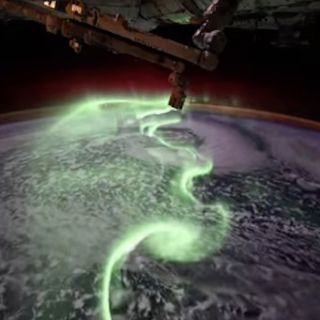
The northern lights or Aurora Borealis have fascinated humans throughout the ages. Today aurora watching is a multimillion dollar industry in places like Alaska, Canada, Norway, Sweden, Finland, Green...

25 Sep 2min
407E-448-Two PHA's

407E-448-Two PHA's

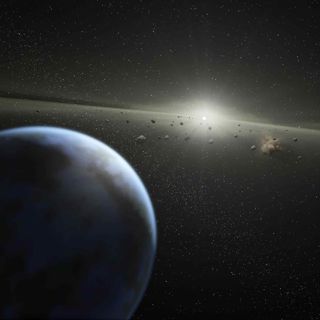
The large dangerous asteroids that we don't know about are what keep asteroid hunters going to the telescope.

22 Sep 2min
917-Space Dust

917-Space Dust

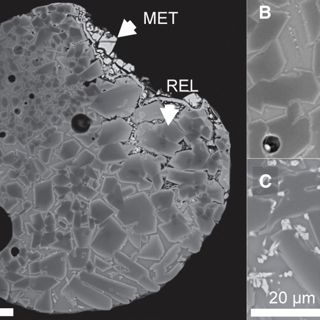
As the Earth orbits the Sun at 18.5 mi/s it sweeps up about 100 tons of micrometeorites and space dust every day of which some 14 tons eventually makes it to the ground. You can even find some of thes...

18 Sep 2min
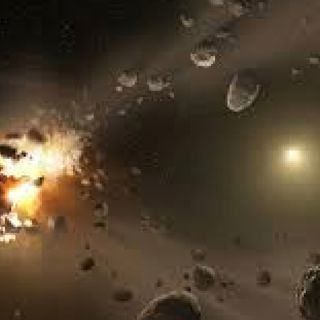
406E-447-Nuking An Asteroid

406E-447-Nuking An Asteroid

Tonight, even though the chances are extremely slim, an asteroid hunter could find a sizable asteroid on a collision course with planet Earth. If we have decades warning, the potential impactor's arri...

15 Sep 2min
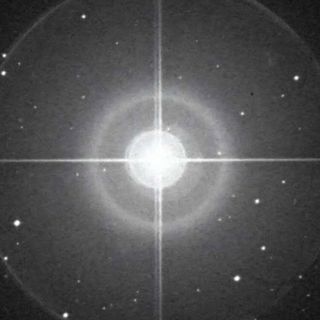
916-Past Glory

916-Past Glory

When accurately recorded historical observations do not agree with what we what we see today it is often very rewarding to find out why. In modern telescopes we see Theta Eridani to a be pair separate...

11 Sep 2min

405E-446-Asteroid Homestead

405E-446-Asteroid Homestead

In the future one can envision a space mining family boarding a descendent of the SpaceX Falcon Heavy Launch Vehicle for a trip into low Earth orbit. A few hundred miles above the Earth's surface they...

8 Sep 2min
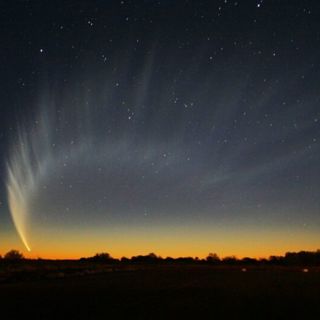
915-Raining Comets

915-Raining Comets

The comets we observe generally start out as icy dirty snowballs of frozen gases like water and frozen carbon dioxide in the Oort cloud. If recent scientific analysis is correct, we are now witnessing...

4 Sep 2min
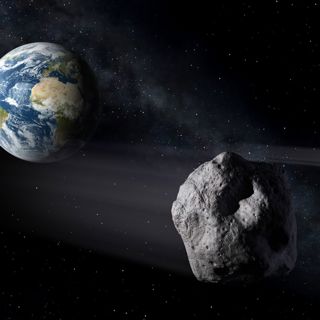
404E-445-Not So Secret

404E-445-Not So Secret

A partnership of humans and computers will help to minimize the damage when asteroid hunters find a space rock with our number on it.

1 Sep 2min

Populært innen Vitenskap

fastlegen
romkapsel
tingenes-tilstand
jss
liberal-halvtime
forskningno
sinnsyn
rekommandert
villmarksliv
rss-paradigmepodden
fjellsportpodden
tomprat-med-gunnar-tjomlid
grunnstoffene
nordnorsk-historie
rss-nysgjerrige-norge
tidlose-historier
psykopoden
rss-rekommandert
rss-inn-til-kjernen-med-sunniva-rose
smart-forklart