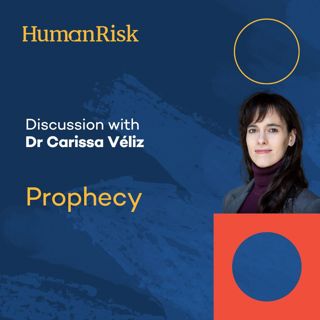
Dr Carissa Véliz on Prophecy

Dr Carissa Véliz on Prophecy

What if prediction isn’t about knowing the future, but controlling it? On this episode, I'm joined by a leading thinker on digital ethics, privacy and technology to explore the idea of prophecy.

Episode Summary
My guest is Dr Carissa Véliz and in our discussion, we talk about humanity’s long-standing obsession with predicting what comes next, and why today’s algorithms may be the most powerful (and dangerous) prophets we’ve ever created.

From ancient oracles and court astrologers to modern AI systems and tech executives, we explore how prediction has always been less about knowledge and more about power. What becomes clear is that while the tools have changed, the underlying dynamics haven’t. We still crave certainty, we still look for authority, and we’re still willing to trust those who claim to see the future. The difference now is scale: predictive technologies don’t just forecast behaviour; they shape it. And the more accurate they appear, the less likely we are to question them.

We then explore responsibility. If prediction influences reality, then our willingness to accept it matters. This episode is a reminder that the future isn’t something that simply happens to us, but something we’re actively participating in, whether we realise it or not.

Guest Bio
Dr Carissa Véliz is Associate Professor of Philosophy at the Institute for Ethics in AI and a Fellow at Hertford College at the University of Oxford. She is a leading thinker on digital ethics, privacy, and technology. She is the author of several books including her latest release 'Prophecy: Prediction, Power and the Fight for the Future, from Ancient Oracles to AI' and 'Privacy Is Power: Why and How You Should Take Back Control of Your Data '

Her work explores how data, AI, and predictive systems reshape society—often in ways that are invisible but deeply consequential. Drawing on philosophy, history, and real-world systems, she examines how power operates through technology and what individuals and institutions can do to resist it.

AI-Generated TImestamped Summary
  • [00:00:00] Opening: prediction as something that shapes—not reveals—the future
  • [00:01:00] Why prophecy is a lens for understanding modern AI
  • [00:04:00] Kings, prophets, and the risks of getting predictions wrong
  • [00:06:00] Survival strategies of ancient astrologers
  • [00:08:00] Why humans crave certainty—and who exploits it
  • [00:10:00] The danger of mistaking wealth for wisdom
  • [00:12:00] Prediction as a tool of power throughout history
  • [00:14:00] Surveillance as the foundation of modern prediction
  • [00:16:00] How predictions shape behaviour (self-fulfilling dynamics)
  • [00:17:00] Publishing as a case study in manufactured success
  • [00:21:00] The strange economics of pre-orders and attention
  • [00:23:00] Insurance: from solidarity to individualised risk
  • [00:26:00] The hidden systemic risks of personalised prediction
  • [00:30:00] Why citizens need to reclaim agency
  • [00:31:00] Laziness vs values: why we default to algorithms
  • [00:33:00] Tech creating problems it then claims to solve
  • [00:34:00] The role of humour as truth-telling
  • [00:35:00] Why algorithms would have killed Seinfeld
  • [00:40:00] Practical alternatives: preparation over prediction
  • [00:42:00] The importance of serendipity
  • [00:43:00] Rediscovering the analogue world
  • [00:46:00] Algorithms shaping culture and environments
  • [00:48:00] Optimism vs doom in thinking about technology
  • [00:50:00] Writing as exploration, not prediction
Links
Carissa's website - https://www.carissaveliz.com/

Her new book, Prophecy - https://www.carissaveliz.com/prophecy

Her previous book Privacy Is Power - https://www.carissaveliz.com/books

Carissa's faculty page - https://www.oxford-aiethics.ox.ac.uk/dr-carissa-veliz

Carissa on LinkedIn - https://www.linkedin.com/in/carissa-v%C3%A9liz-a5781555/


Denne episoden er hentet fra en åpen RSS-feed og er ikke publisert av Podme. Den kan derfor inneholde annonser.

Episoder(382)

Dr Nina Burrowes on All Reasonable Steps: The Psychology of Sexual Harassment Prevention

Dr Nina Burrowes on All Reasonable Steps: The Psychology of Sexual Harassment Prevention

What does it actually take to prevent sexual harassment at work? Policies, training, reporting mechanisms and statements of zero tolerance are one thing. Creating a workplace where sexual harassment i...

25 Sep 1h 6min
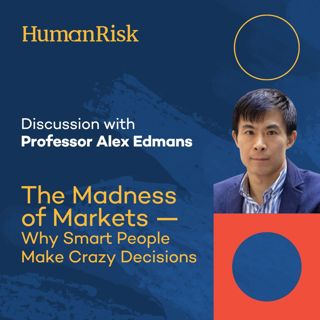
Professor Alex Edmans on the Madness of Markets — Why Smart People Make Crazy Decisions

Professor Alex Edmans on the Madness of Markets — Why Smart People Make Crazy Decisions

What can financial markets teach us about human behaviour? Why might the size of a CEO’s signature tell us something useful about the company they run? And why, even when smart investors know somethin...

13 Sep 1h 1min
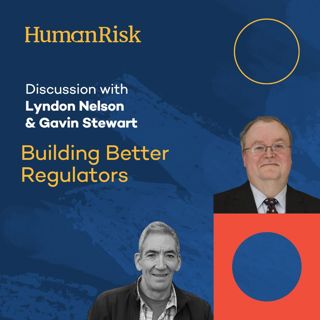
Lyndon Nelson & Gavin Stewart on Building Better Regulators

Lyndon Nelson & Gavin Stewart on Building Better Regulators

What if understanding regulation could help us spot when politicians are promising the impossible? Regulation sounds simple in theory. Something poses a risk, so we create rules and a regulator to con...

7 Sep 1h 23min
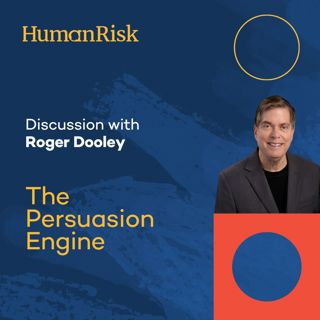
Roger Dooley on The Persuasion Engine

Roger Dooley on The Persuasion Engine

What if AI could help us understand people better, rather than simply replacing what humans do?Episode summaryHow can we use AI to become better at persuasion, communication and understanding human be...

1 Sep 59min
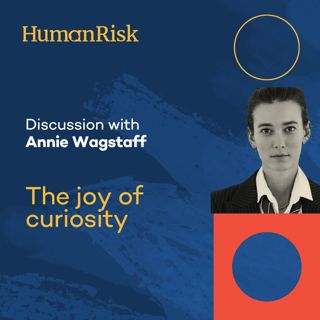
Annie Wagstaff on The Joy of Curiosity

Annie Wagstaff on The Joy of Curiosity

What’s the last thing you learned simply because you wanted to know?Episode summaryWhy do we feel the need to justify what we learn? My guest on this episode is Annie Wagstaff, a musician and composer...

23 Aug 1h
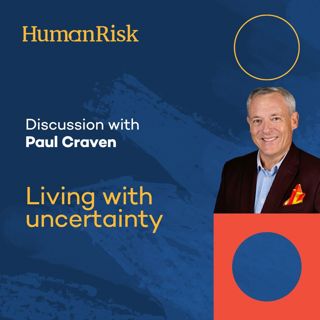
Paul Craven on Living With Uncertainty

Paul Craven on Living With Uncertainty

What happens when someone who spends his life thinking about risk, decision-making and human behaviour is confronted with an uncertainty he simply can’t control?Episode summaryMy guest is Paul Craven,...

15 Aug 51min
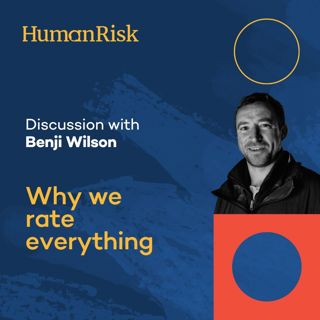
Benji Wilson on why we rate everything

Benji Wilson on why we rate everything

Why do we rate everything and why do we do so on a scale of one to five stars? What happens when systems designed to help us make better choices start influencing our behaviour in ways we don’t necess...

8 Aug 1h 4min
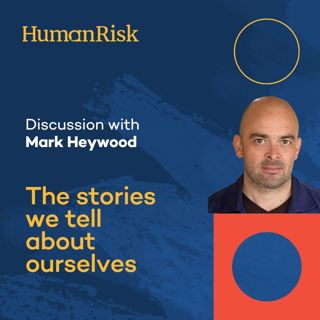
Mark Heywood on The Stories We Tell About Ourselves

Mark Heywood on The Stories We Tell About Ourselves

What parts of yourself have you learned to hide in order to be taken seriously? My guest on this episode is Mark Heywood, a friend of the show, returning guest and someone I've collaborated with on a ...

2 Aug 1h 21min

Populært innen Vitenskap

fastlegen
romkapsel
tingenes-tilstand
jss
liberal-halvtime
forskningno
sinnsyn
rekommandert
villmarksliv
rss-paradigmepodden
fjellsportpodden
tomprat-med-gunnar-tjomlid
grunnstoffene
nordnorsk-historie
rss-nysgjerrige-norge
tidlose-historier
psykopoden
rss-rekommandert
rss-inn-til-kjernen-med-sunniva-rose
smart-forklart